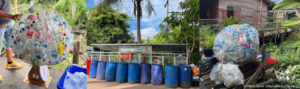
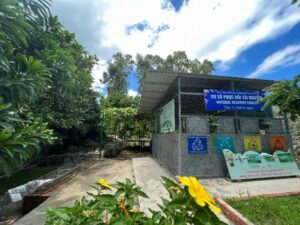
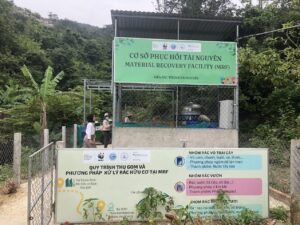
Waste collection is a basic service that about two billion people globally still do not have access to (Kaza et a., 2018). Providing a reliable, robust and universal collection service will help to protect public health by combatting open dumping, burning, and plastic leakage from uncollected waste. Plastic Smart Cities have worked on two levels to improve waste capture, particularly in underserved areas, through community-based waste management models and formalised collection systems.
Formal collection systems supported by PSC interventions focus on expanding waste collection services, improving logistics, and integrating digital tools to enhance efficiency. In several cities, innovative aggregator apps have been introduced to connect households with waste collectors, improving waste collection rates.
Community-based waste management empowers local groups, including waste banks, neighbourhood associations, and informal waste workers, to set up localised initiatives. These models have emerged due to limited basic waste services. Highly populated peri-urban areas, economically challenged and informal settlements, and remote rural communities are most affected by a lack of regular and reliable collection service. Incentives are sometimes offered, where residents can exchange segregated recyclables for financial or in-kind rewards, introducing the role of waste banks.