Sustainable Financing

Sustainable Financing as an enabling framework in waste management

Sustainable financing refers to the mobilisation and allocation of financial resources in a way that promotes a circular economy through environmentally and socially responsible initiatives. A triple bottom-line approach that includes economic, social, and environmental outcomes is needed to ensure long-term sustainability.

Sustainable financing is essential for effective waste management, which involves costly stages like collection, transportation, treatment, and disposal. Without adequate funding, municipalities face infrastructure gaps that lead to poor waste handling, open dumping, and environmental harm. Continuous investment in recycling and treatment technologies is crucial to improve systems and reduce pollution, especially in regions with limited financial capacity

Sustainable financing is key to advancing circular waste management by funding infrastructure, recycling systems, public awareness, and innovation to reduce plastic leakage. Through public-private partnerships, government incentives, and creative instruments like pay-as-you-throw and deposit refund schemes, financing mechanisms can shift focus upstream—encouraging waste prevention and recycling over landfill disposal. This multi-pronged approach supports long-term environmental protection and accelerates the transition to a circular economy.

Blended finance is a strategic approach that combines public concessional funds with private sector capital to unlock investment in high-impact waste management infrastructure, especially in developing cities facing financial constraints. By rebalancing risk-return profiles and leveraging public resources, blended finance mobilizes commercial investment to close funding gaps, support sustainable development, and transition from donor dependency to self-sustaining waste solutions. This model is vital for scaling climate-smart infrastructure and advancing circular economy goals.

Visit: https://plasticsmartcities.org/blended-financing/

Packaging Material Fees are a sustainable financing tool that require manufacturers to pay based on the volume and type of packaging they introduce to the market, helping fund waste collection, recycling, and treatment through Producer Responsibility Organizations (PROs). By internalizing the environmental costs of plastic pollution, these fees incentivize companies to reduce virgin plastic use and support circular economy goals. Widely adopted in Europe, Japan, and South Korea, Packaging Material Fees offer a scalable solution for emerging economies like Indonesia, where they could generate millions in revenue for waste management. Effective implementation depends on strong governance, transparent reporting, and tailored operational models.

Visit: https://plasticsmartcities.org/packaging-material-fees/

Extended Producer Responsibility (EPR) is a policy framework that shifts the responsibility for plastic waste collection, sorting, and recycling to producers, encouraging them to design low-impact, resource-efficient products. By easing the financial burden on municipalities and promoting shared accountability, EPR systems generate significant revenue—such as €1 billion annually in Germany—and support the development of robust waste infrastructure. Widely adopted through both mandatory and voluntary schemes, EPR is a key driver of circular economy goals, especially in developing regions where public funding alone cannot meet growing waste management demands.

Visit: https://plasticsmartcities.org/extended-producer-responsibility/

Bankable Nature Solutions (BNS) are private-sector-led, revenue-generating projects that address environmental challenges—such as plastic pollution and waste management—while delivering a risk-adjusted return on investment. Unlike traditional conservation efforts, BNS are designed to be financially viable, enabling scalable impact across sectors like climate-smart agriculture, renewable energy, and sanitation. By leveraging public and private capital, BNS help cities overcome infrastructure gaps and attract investment for sustainable development, making them a powerful tool for advancing circular economy goals in emerging markets.

Visit: https://plasticsmartcities.org/bankable-nature-solutions/

Advanced Disposal Fees (ADFs) are non-refundable charges added to products at the point of sale to cover the environmental costs of waste collection and processing. By applying a “polluter pays” principle, ADFs help fund recycling programs, market development, and public education, while encouraging manufacturers to reduce plastic use and design more sustainable products. Transparent ADFs can influence consumer behavior and drive source reduction, making them a powerful tool for addressing plastic pollution and promoting circular economy practices.

Visit: https://plasticsmartcities.org/disposal-fee/

Case Study on Sustainable Financing

Sustainable Financing

Improving the Financial Sustainability of Thailand’s MRFs

Thailand

Related Reports and Publication

These resources on local policy & regulation include materials developed by WWF as well as external sources.

Towards Circular Systems Lessons Learned Plastic Smart Cities_Featured Image
Towards Circular Systems: Lessons Learned Plastic Smart Cities
WWF Position Paper
WWF Position: Plastic Crediting and Plastic Neutrality
Navigating Plastic Management_Tools for Government Action Planning
World Bank | Navigating Plastic Management: Tools for Government Action Planning
Making the Global Plastics Treaty work for Micro-, Small-, and Medium-sized Enterprises
WWF | Making the Global Plastics Treaty Work for Micro, Small, and Medium-sized Enterprises
Solving Plastic Waste Roadmap for a Sustainable Future
Kearney | Solving Plastic Waste: Roadmap for a Sustainable Future
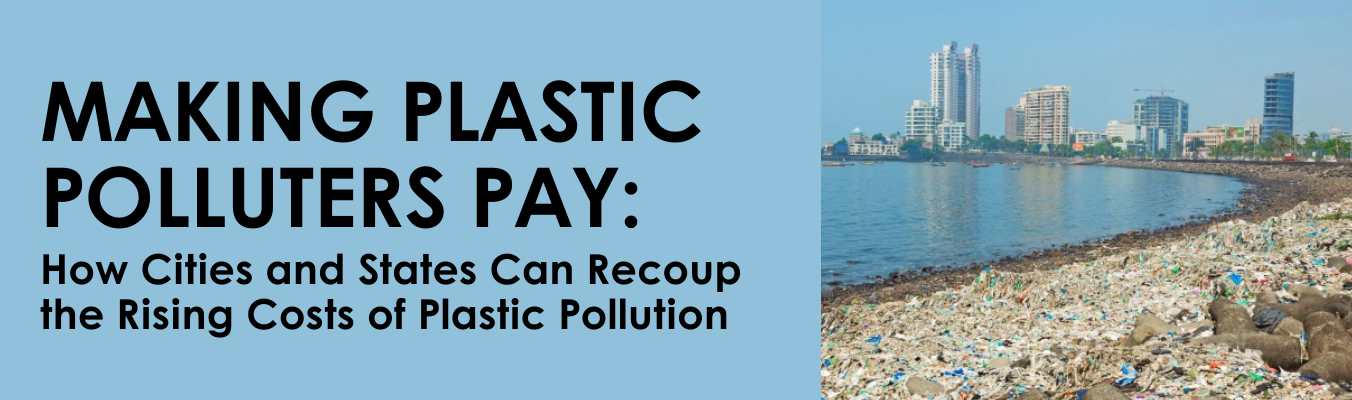
Making Plastic Polluters Pay: How Cities and States Can Recoup the Rising Costs of Plastic Pollution
Center for International Environmental Law | Making Plastic Polluters Pay: How Cities and States Can Recoup the Rising Costs of Plastic Pollution
Sentosa playbook for reducing disposables
WWF Singapore | WWF Singapore x Sentosa Disposable Playbook
Case Study - CITY-LEVEL LEARNINGS FOR THE GLOBAL PLASTIC POLLUTION TREATY
WWF | Case Studies from Asia: City-Level Learnings for the Global Plastic Pollution Treaty
EPR REPORT
OECD | Extended Producer Responsibility: Basic Facts and Key Principles
REPORT - Putting and end to plastic pollution
WWF | Putting an End to Plastic Pollution
REPORT - BREAKING DOWN HIGH-RISK PLASTIC PRODUCTS
WWF | Breaking Down High-Risk Plastic Products
REPORT - TOWARDS A TREATY TO END PLASTIC POLLUTION
WWF | Towards a Treaty to End Plastic Pollution
REPORT - A NEW TREATY ON PLASTIC POLLUTION
WWF | A New Treaty on Plastic Pollution – Perspectives from Asia

Sustainable financing refers to the mobilisation and allocation of financial resources in a way that promotes a circular economy through environmentally and socially responsible initiatives. A triple bottom-line approach that includes economic, social, and environmental outcomes is needed to ensure long-term sustainability.

The Problem

Waste management encompasses various stages, including collection, transportation, treatment, and disposal, each of which requires substantial financial resources.

Insufficient funding often leads to inadequate infrastructure and services, hindering waste collection and recycling efforts.

Municipalities and governments may struggle to allocate enough funds to support comprehensive waste management systems, resulting in improper waste disposal practices like open dumping or uncontrolled incineration, which have severe environmental and health consequences.

Moreover, recycling and waste treatment technologies demand continuous investments, making it challenging for some regions to adopt or upgrade their waste management facilities.

Potential Solutions

Sustainable financing mechanisms can generate funds for waste management infrastructure, recycling facilities, awareness campaigns, research and development, and other initiatives that address plastic waste leakage.

Addressing the financing issue requires a multi-faceted approach, involving public-private partnerships, government incentives, and innovative funding mechanisms to ensure the sustainable management of waste and safeguard the environment for future generations.

In particular, by allocating funds to upstream waste management and moving beyond investments for end-of-life treatment of waste, sustainable financing mechanisms can help accelerate the transition to a more circular and sustainable economy. Sustainable and innovative financing instruments can be designed to incentivise waste producers to divert waste from landfills toward recycling. Examples include both rewards (recycling incentives) and charges (pay-as-you-throw and deposit refund schemes).

Sustainable Financing Approaches

No posts found

Related Stories

Plastic Smart Ports
Plastic Smart Ports Project Launched to Reduce Plastic Leakage and Protect Marine Habitats in the Mediterranean 
A major step has been taken in the fight against plastic pollution in the Mediterranean with the official...
Read More
Indonesia Youth Sustainability Index Report 2025 launch
WWF-Indonesia & YouthLab Indonesia Launches Youth Sustainability Index Report 2025
WWF-Indonesia Plastic Smart Cities and YouthLab Indonesia launched the Youth Sustainability Index Report...
Read More
PSC at IUCN and ACCPP
Plastic Smart Cities at the IUCN World Conservation Congress & ASEAN Conference on Combatting Plastic Pollution
Learning Session at IUCN World Conservation Congress  In collaboration with IUCN, WWF Plastic...
Read More

More Resources


  1. United Nations Environment Programme Finance Initiative (2022): Diving Deep: Finance, Ocean Pollution and Coastal Resilience: Launched at The Economist World Ocean Summit, the guidance focuses on the problem of solid waste pollution—including plastics—and coastal infrastructure projects. It provides easy-to-follow recommendations on where to challenge companies to adopt clear sustainable practices, to avoid financial transactions with companies that have no sustainable transition plan in place and to seek out opportunities in ocean-related sectors where there is evidence of sustainable practice, for example designing product for reuse, repair, and recycling at end of life. 

  2. Sustainable Blue Economy Finance Principles

  3. The Plastic Circularity Investment Tracker: Monitoring Capital Flow to Tackle the Plastic Pollution Challenge

  4. Sustainable financing and policy models for municipal composting
    Organic waste management can deliver big benefits to cities at a relatively low cost, but rates of composting is low in most cities. This report looks at the ways that cities can use composting to reduce municipal organic waste and provides good practice examples. The report is aimed at Global South cities but draws on experience from across the globe.

Analysing six case studies in Austria, Bangladesh, Brazil, Bangalore, Sri Lanka and Europe, the report outlines the strategies, financing mechanisms and policies that can create the right environment for a successful municipal composting project.