After nearly five years of dedicated work and collaboration with over 30 partners to prevent plastic leakage into nature, WWF-Indonesia hosted a book launch for its compilation of human-centred stories – celebrating the core value that drives the initiative: collaboration.
The book documents inspiring journeys of 12 Local Champions from 11 selected partners across Jakarta, Bogor, and Depok, whose courage and actions have sparked significant change in their communities. Behind every successful program are the individuals known as Local Champions. These grassroots drivers refused to stay silent in the face of environmental degradation, choosing instead to design and implement local solutions.
The book, written by senior journalist Sonya Helen Sinombor, captures these extraordinary stories. The 12 figures featured were largely selected by the partners themselves, ensuring that the narratives represent those who are actively moving the needle in waste management within their specific areas.
The Vital Role of Women in Solving the Plastic Crisis

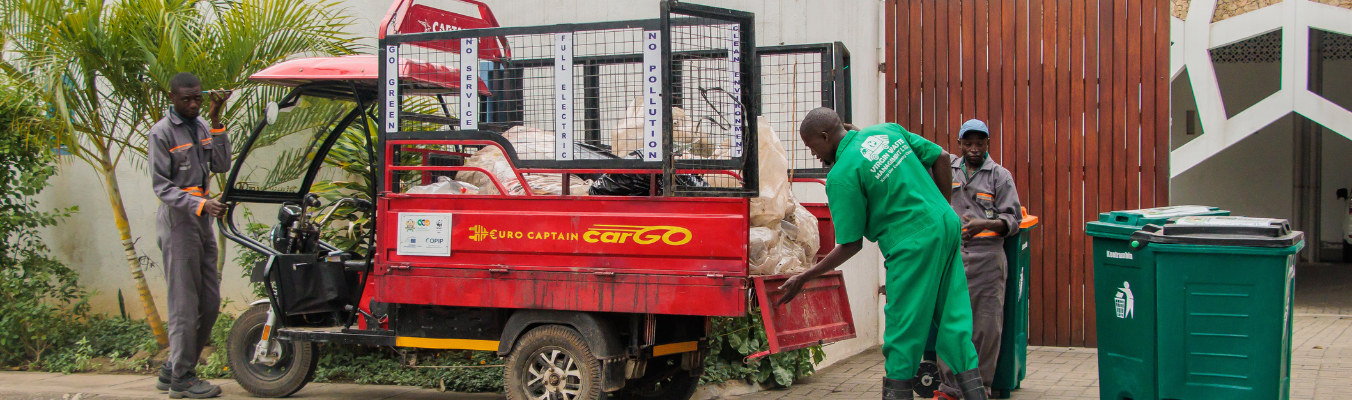
Behind the massive efforts to tackle Indonesia’s plastic waste crisis lies a powerful force for change: women. Nine out of the twelve featured Local Champions are women. They lead and mobilise the work on the ground, transforming their roles into grassroots’ leadership. These champions are the primary force driving behavior change, encouraging communities to manage waste at its source: the household.
This vital role is precisely why the Deputy Minister of Women’s Empowerment and Child Protection (PPPA) of the Republic of Indonesia, Veronica Tan, was attended the event, to celebrate how these women, through their daily leadership, have become the backbone of environmental protection and the true catalysts for a cleaner, plastic-smart society.
The stories of these Local Champions illustrate the transformative power of women as the primary engines of environmental and social change. From Sulis, who elevated the MBR Waste Treatment Site to award-winning status through “Zero Waste Integrated Urban Farming,” to Reny Kusdini, a teacher who slashed school waste by 70%, these leaders prove that expertise takes many forms.
Housewives like Chevie Mawarti, Gilang Tria Mamesti, and Tri Riyani have turned personal concern into community-wide mobilisation, establishing bank waste systems directly from their doorsteps. Meanwhile, Fauzia Prapita Sari has redefined the value of waste by linking it to healthcare and education, and Aprillah has demonstrated how upcycling plastic can provide economic independence for women.
On the frontlines of nature, Iyum Yuliana breaks gender stereotypes in river conservation, while Tapsiah serves as a vital mentor, scaling the impact of the Recycling Village initiative. Together, they represent a movement where personal initiative meets collective resilience.These grassroots drivers utilise creativity and perseverance to transform pollution into circular economy, the real solutions to these problems.
Here are some of the stories of local champions driving changes in their communities.
The Transformation of TPST Mutiara Bogor Raya

Under the leadership of Ani Hayu Sulistyowati (known as Sulis), the Mutiara Bogor Raya (MBR) Integrated Waste Treatment Facility (TPST) has evolved into Takesi (Integrated Waste Management Creative Park). Partnering with PSC Indonesia, the facility’s progress was driven by Sulis’s personal concern over the growing waste crisis in her community. The journey began when unsightly piles of waste prompted residents to establish a waste-sorting site (with local government support). However, the operation initially ran poorly. Waste continued to accumulate without any real sorting or processing.
Everything changed when Sulis took over as the manager. Despite being a newcomer to the field of waste management, she began with deep observations to identify the root causes of the failure. She systematically tackled chaotic management structures, undisciplined human resources, and poorly maintained facilities. Gradually, Sulis resolved critical issues such as employee welfare and fee arrears, while building strategic relationships with stakeholders to ensure a seamless collection and management process.
A major milestone was the successful handling of organic waste. By keeping sorting at the core of the operation, she established a dedicated composting program. Today, the facility has transformed into more than just a waste site. It is an integrated hub called Takesi, which includes a Cooperative that serves as an economic engine for the surrounding community.

Sulis’s story is a powerful testament that a background in waste management is not a prerequisite for impact. Through a willingness to learn, she solved local environmental issues, mobilised her community, and successfully shifted the public’s perception of waste from a burden into a resource.
Leading a 70% Waste Reduction at SMPN 16 Depok
Reny Kusdini, a junior high school teacher in Depok, has earned the nickname “Bu Sampah” (The Waste Lady) from her students and colleagues, a title of respect reflecting her tireless efforts to transform the school’s relationship with waste.

As a crafts teacher, Reny reduced the school’s waste volume by 70% in less than a year. Her journey began with a simple yet powerful requirement: mandating that all 1,000 students bring their own reusable water bottles and lunch containers. This single rule immediately shifted the entire school ecosystem.
Despite having no formal background in waste management, Reny was driven by a deep concern for the environment and her students’ future. In her craft and gardening classes, she teaches that creativity isn’t just about the final product, but about utilising available resources, including waste. However, she realised that recycling alone cannot solve the crisis. She pivoted her strategy to focus on reduction within the school grounds.
Building on her initial 2023 initiatives, SMPN 16 Depok officially joined the Zero Waste School Plastic Smart Cities Programme in 2024. This partnership helped her overcome technical challenges and implement a strategic plan that resulted in binding policies against single-use plastics in the school environment.
Reny’s mission is far from over. She continues to develop integrated waste-management programs to further reduce the school’s footprint. Most importantly, Reny now envisions replicating this successful model in other schools, proving that one dedicated educator can spark a systemic shift in the school community.
Turning Waste into Gold: The Journey of Sorting House Teratai Putih
Waste has become source of income and even a gold investment in the community where Chevie Mawarti lives. Together with a group of local women, she pioneered Rumah Pilah Teratai Putih (White Lotus Sorting House) as a hub for community waste sorting and processing.
Chevie’s concern for the environment turned her into a community mobiliser, encouraging neighbors to collect and deposit their waste at waste banks. Her interest in waste management was first sparked when she witnessed firsthand the massive, mountain-like piles of trash at the Bantar Gebang Landfill.

In her community in Jakarta, Chevie and her neighbors don’t just trade their sorted waste for cash, they save it to earn gold. While this might sound improbable, the residents’ diligence in sorting has proven successful. By Eid 2025, several members had already earned 1 gram of gold from their waste savings accumulated over 6 to 12 months.
To make this possible, they partnered with Bank Sampath Gunung Emas (Golden Mountain Waste Bank), a partner of PSC Indonesia. Introducing the “save waste for gold” concept proved to be a powerful motivator, inspiring local women to start sorting their household waste.
When Rumah Pilah Teratai was first established in February 2024, Chevie faced numerous challenges, especially in building new habits within the neighborhood. However, her persistence paid off, leading to a significant behavior change. Residents began to realise that waste is not just trash, but a valuable resource that can serve as a source of income.
What started as a movement led by housewives has now caught the attention of the men in the community, who have begun sorting waste at home to contribute to the deposits. Beyond inorganic waste, the Teratai community has also expanded into processing organic waste into compost and creating upcycled products such as eco-enzymes, soap, and candles made from used cooking oil.
The Plastic Smart Cities Initiative: Real Solutions for Urban Centers
The journeys of Sulis, Reny, and Chevie are more than individual success stories; they are a blueprint for urban transformation. By documenting these 12 Local Champions, it serves as a powerful reminder that the most effective solutions to the plastic crisis are those built on human connection, local wisdom, and persistent grassroots leadership. These drivers have proven that systemic change does not always begin with high-level policy, it begins at the kitchen sink, the school gate, and the community waste bank.
While each city faces unique regulatory and policy challenges, the PSC network in Indonesia has successfully cultivated best practices in waste management through equal institutional partnerships focused on environmental protection and conservation.