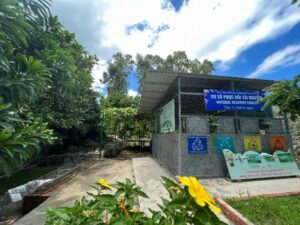
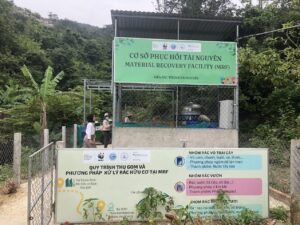
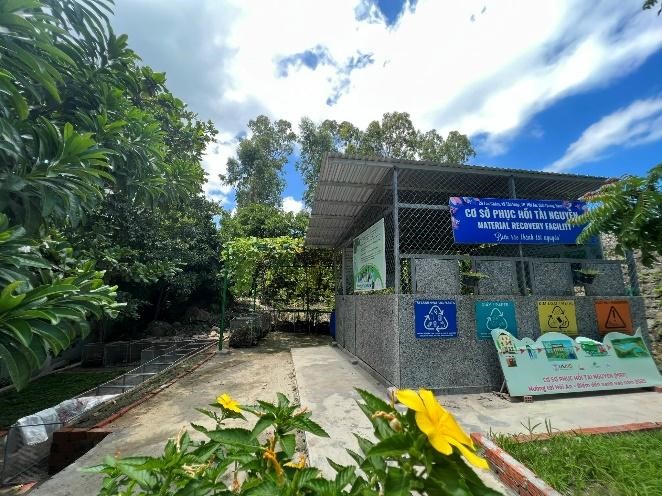
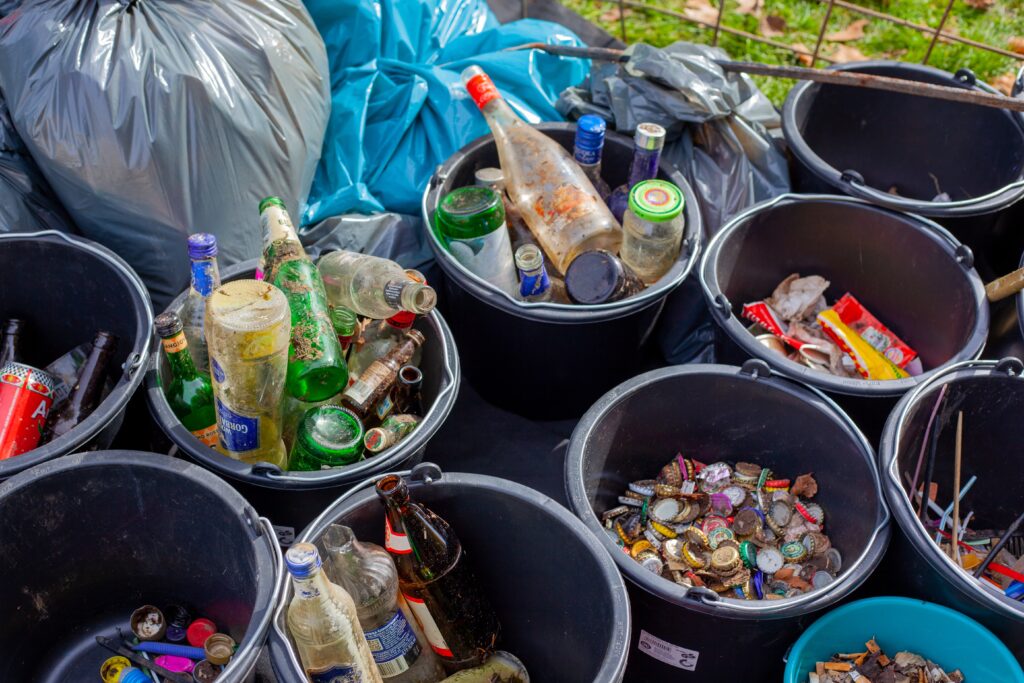
Recovery includes any process that extracts value from waste, including material recovery or energy recovery. Recycling refers to the process of reintroducing materials into the production cycle to create new products by sorting, cleaning, and processing materials into secondary raw materials that can replace virgin resources. Beyond recycling, recovery also encompasses the utilisation of recovered materials for composting (for compost-like output e.g. used for landscaping), material recovery (for solid recovered fuel/refuse derived fuel), anaerobic digestion (for biogas and digestate), and incineration (for electricity or heat) (UN-Habitat, 2021). See WWF’s position on chemical recycling for more information on implementation principles.
Recovery and recycling initiatives are integral to PSC’s approach, focusing on enhancing the capacity and efficiency of material recovery facilities (MRFs) and waste banks, by supporting existing infrastructure through the provision of equipment and infrastructure, while also facilitating the establishment of new facilities where necessary. More than just setting up the recovery and recycling process, addressing factors such as waste collection prior to recycling, and subsequent market linkages for recyclable waste are also key. The recovery and recycling stage rarely involves only investing in equipment and facilities, but also in service and value chains.
When materials have been processed in recovery and recycling facilities, offtakers are needed to purchase output materials. Having offtakers ensures that recyclables, especially plastic, do not end up as waste again. If there is no market for recycled plastics (or other materials), they may be discarded, either because they are too low-value or because the recovery or recycling process has not been optimised. It is essential to have multiple offtakers in the market to ensure that the recycled materials have different potential uses.