Case Study
Viet Nam: Cu Lao Cham
WWF Involvement: April 2021 to December 2022
Focus Area: Recovery and Recycling
PSC Approach: Recycling
Systemic Intervention: Systems and Infrastructure
© WWF-Viet Nam
Key Lessons Learned
- Geographic isolation calls for localised recycling solutions: High transport costs and limited access to recycling markets present ongoing challenges for remote areas. Developing on-island recycling initiatives and forming partnerships with buyers can help create sustainable demand for recovered materials.
- Selecting appropriately scaled equipment supports operational efficiency: The mismatch between shredding and mixing machinery in small-scale island settings highlights the importance of choosing technology that is proportionate to local processing needs and volumes.
- Building financial sustainability is key to strengthening long-term programme resilience: Developing self-financing mechanisms – such as incorporating waste management fees or generating revenue from recycled products – can help ensure programme continuity and reduce dependence on external funding.
Background
Cu Lao Cham, an offshore island in Viet Nam, covers nearly 76km² across 16 islands. The island has been a pioneer in implementing waste separation at source (WSAS) since 2009. Over the years, significant efforts and investments from the local government and non-profit organisations have focused on training residents to develop waste-sorting habits.
During the initial phases, the WSAS programme yielded positive results with strong community participation. However, in recent years, its effectiveness has declined. Gaps in awareness and inconsistent waste handling at the disposal stage have continued to place pressure on the surrounding environment and ecosystems within the Cu Lao Cham – Hoi An World Biosphere Reserve.
To address these challenges, the People’s Committee of Tan Hiep Commune and the Management Board of Cu Lao Cham Marine Protected Area launched a pilot Material Recovery Facility (MRF) in Bai Ong village in 2020 receiving organic waste from 30 households (120 households in 2021), followed by a second MRF in Bai Huong in 2022, serving 81 households (WWF, 2024b). Both these MRFs recycle organic waste through composting, recover high-value recyclable waste (metals, plastics and paper) and low-value plastics, and produce eco-detergent from fruit peels.
Recognising the positive results of the MRF model, the authorities of Tan Hiep commune collaborated with the Management Board of Cu Lao Cham Marine Protected Area to install a new MRF in Bai Huong village.
Objectives
- Implement a community-driven initiative to improve solid waste sorting and recycling across Cu Lao Cham Island.
- Replicate the MRF in Bai Huong and other areas based on two phases: a re-setting phase (i.e. improving the current MRFs’ efficiency) and a spreading phase (i.e. expansion of recycling activities and integration of more stakeholders).
Key Successes
- Increased community participation and WSAS: The MRF model has engaged local residents, creating active participation in waste sorting and recycling. Participation increased from 30 households in October 2021 to 200 in December 2023. Before the MRF, 70% of Bai Ong village sorted their waste at source, compared to 85% in 2022.
- Technical improvements and value-added products: Investments in technology, such as shredders for organic waste and equipment for multi-purpose detergents, have improved resource recycling rates and economic viability.
- Organic waste recycling rates were initially low: Before the introduction of suitable equipment, manual recycling processes yielded only 5 to 10% recycling of organic waste. Improved results have been observed following the integration of shredding technology.
Key Challenges
- Reduction in plastic leakage: The initiative contributed to 30 tonnes of leakage reduction over two-years, though further gains were constrained by logistical challenges, limited infrastructure, and equipment that was not always well suited to local conditions.
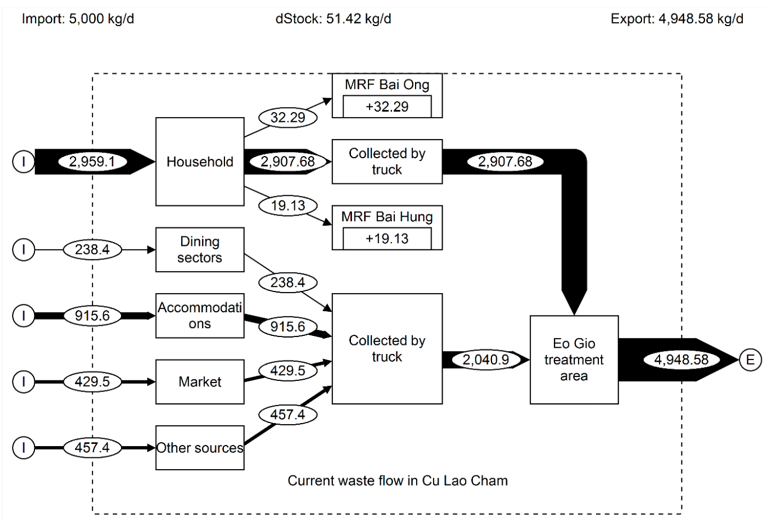
- Absence of controlled disposal facility limits incentives for recycling: The existing uncontrolled Eo Gio disposal site currently offers a lower-cost alternative to recycling, which reduces the comparative attractiveness of recycling. Advancing economically viable disposal infrastructure could help shift incentives in favour of recycling efforts.
- Transportation and market access remain ongoing challenges: Due to the island’s geographic isolation, transporting recyclable materials to mainland markets is costly and logistically challenging.
- Workforce recruitment and retention presents difficulties: Recruiting and retaining workers for waste collection and recycling is a continuing challenge, as the sector often faces low wages and physically demanding work.
- Machinery alignment with operational scale requires further refinement: Some equipment, such as shredding and mixing machines, has proven mismatched with the scale of current MRF operations, indicating an opportunity to further tailor technological choices to local needs.
Resources
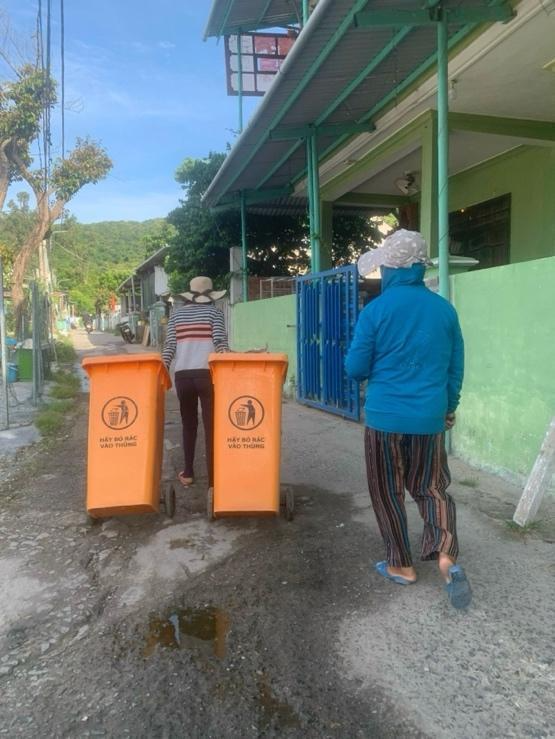
- Human Resources: Two workers in charge of collecting the sorted waste from households and operating the MRF.
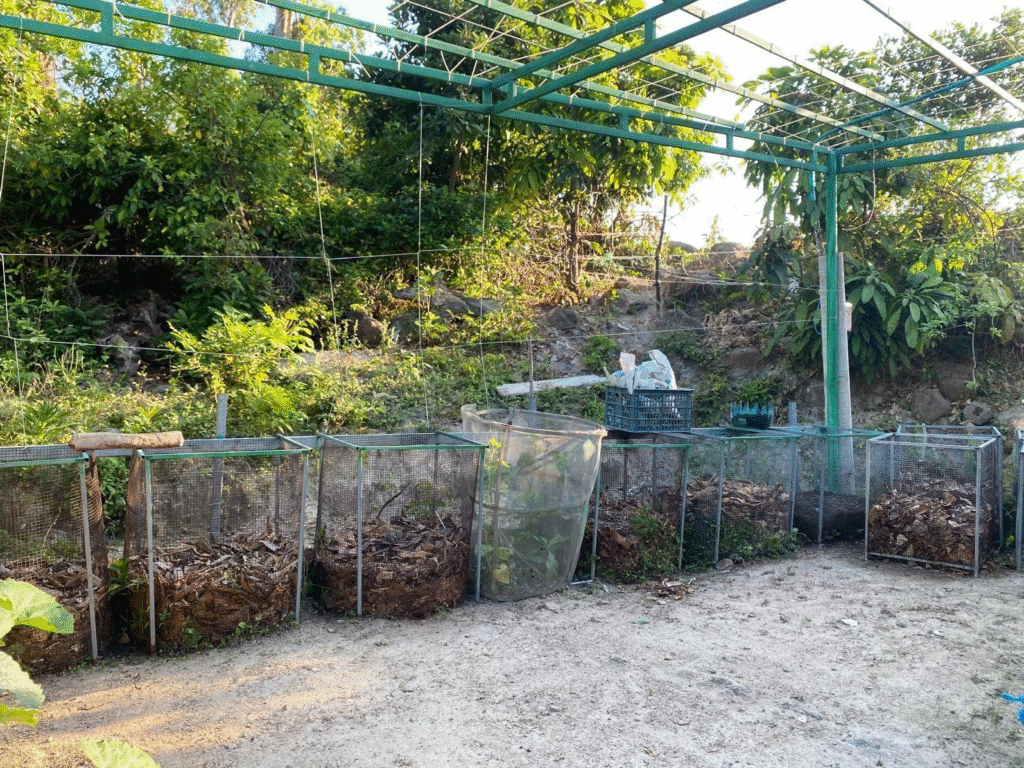
- Infrastructure: The MRF is 20m2 and covered by a roof. It includes a composting area, detergent production and inorganic waste drop-off.
- Stakeholders/Partnerships: WWF provided funding for the design and implementation of SWM concepts; the Global Incinerator Alliance, and Pacific Environment for the “Zero Waste Tour” with local schools.
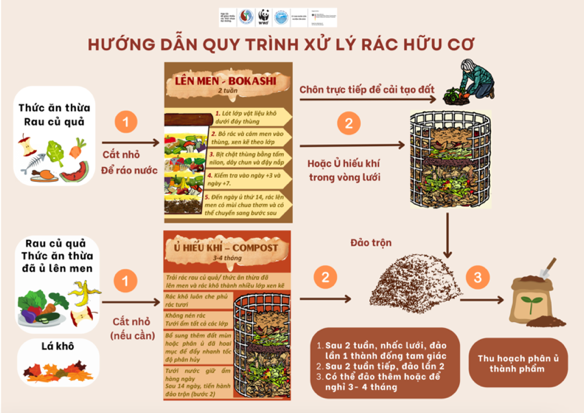
- Technology: Dry waste is composted in static piles; wet waste is put into compost bins with probiotics or worms. Some types of fruit peels are separated and reused to make multi-purpose cleaning detergent. All high-value and low-value recyclables are recycled or sold as scrap, and the remaining waste is transported to a centralised treatment facility for burning or to landfill.
Enabling Factors
- Strong municipal leadership and cross-agency collaboration: The initiative was led by the People’s Committee of Tan Hiep Commune in close cooperation with the Management Board of Cu Lao Cham Marine Protected Area. This partnership enabled clear institutional support and facilitated smooth implementation of the pilot and expanded MRF models.
- Community ownership and phased rollout: The project prioritised local involvement from the outset. By starting with 30 households and gradually scaling up to 200, the approach fostered familiarity and built trust, helping to improve participation rates from 70% in 2021 to 85% in 2022 in Bai Ong village.
Risks & Opportunities
- Limited access to local recycling markets may affect financial viability: The absence of nearby recycling industries means that materials must be transported to main islands for processing. Addressing this challenge through expanded logistics, partnerships, and scaling efforts could help improve economic feasibility.
- Long-term financial sustainability remains a key consideration: Ensuring continued viability will likely require diversification of income sources. At present, revenue from waste collection represents only 5% of total solid waste management system costs, highlighting the potential to strengthen financial mechanisms.
© WWF-Viet Nam
© WWF-Viet Nam