Sitting at the top of the waste hierarchy, waste reduction is considered the most vital solid waste management (SWM) option. Targeting interventions on preventing waste before it enters the system addresses plastic pollution upstream.
Many interventions can support the reduction and prevention of waste generation, including policy instruments (e.g. extended producer responsibility (EPR)), awareness raising campaigns, SUP bans, and economic instruments (e.g. pay-as-you-throw).
With the ongoing global efforts for corporate net-zero, sustainable development goals, and the ambition of many countries towards a legally-binding Plastics Treaty, the trend in the 3R (reduce, reuse, recycle) is currently shifting towards ‘reduce and reuse’, and away from a reliance on ‘recycle’.
Reuse and refill model piloting is essential for testing the operational feasibility and consumer acceptance of transitioning away from single-use plastics.
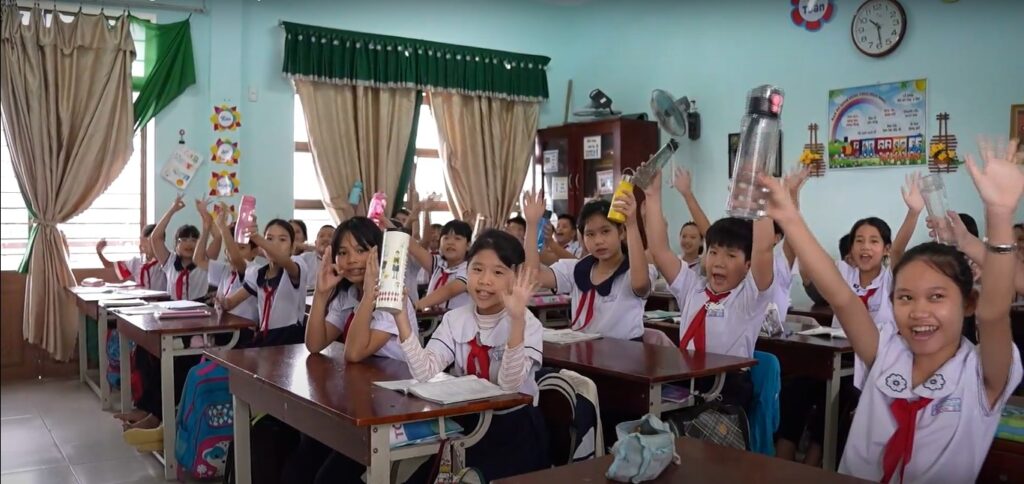
Effective plastic management begins with prevention. Our collection of reduction case studies showcases how the Plastic Smart Cities programme works with local authorities, schools, and communities to eliminate avoidable waste before it enters the environment.
Sitting at the top of the waste hierarchy, waste reduction is considered the most vital solid waste management (SWM) option. Targeting interventions on preventing waste before it enters the system addresses plastic pollution upstream. Waste generation rates mostly depend on income-level, but this can also be influenced by socio-cultural patterns and climatic conditions (Kaza et al., 2018). Many interventions can support the reduction and prevention of waste generation, including policy instruments (e.g. extended producer responsibility (EPR)), awareness raising campaigns, SUP bans, and economic instruments (e.g. pay-as-you-throw).
With the ongoing global efforts for corporate net-zero, sustainable development goals, and the ambition of many countries towards a legally-binding Plastics Treaty, the trend in the 3R (reduce, reuse, recycle) is currently shifting towards ‘reduce and reuse’, and away from a reliance on ‘recycle’.