Case Study
Thailand: Trang City, Trang Province
WWF Involvement: January 2023 to March 2025
Focus Area: Reduction, Collection
PSC Approach: Behavioural Change, Community-based Waste Management
Systemic Intervention: Knowledge Strengthening, Systems & Infrastructure
Key Lessons Learned
- Regular monitoring ensures long-term results: Establishing regular check-ins by a dedicated local team every two to three months (as recommended by Tide Ocean) may help reinforce best practices, maintain engagement, and gently encourage ongoing improvements beyond occasional plastic-related workshops alone.
- Designing curricula that aligns with student comprehension boosts participation: Designing school curricula to closely match students’ age and comprehension levels, and including interactive or game-like elements, can help maintain student interest and encourage more active involvement.
- Offering financial incentives may positively influence student participation and healthy competition: Providing opportunities for students to earn small financial rewards through partnerships with waste banks and junkshops can encourage sustained participation in recycling activities and promote friendly competition.
- Engaging parents and the community amplifies behavioural change beyond school: Extending outreach to parents and community members through targeted educational campaigns and financial incentives can reinforce students’ waste management behaviours at home, promoting broader and lasting behavioural change.
Background
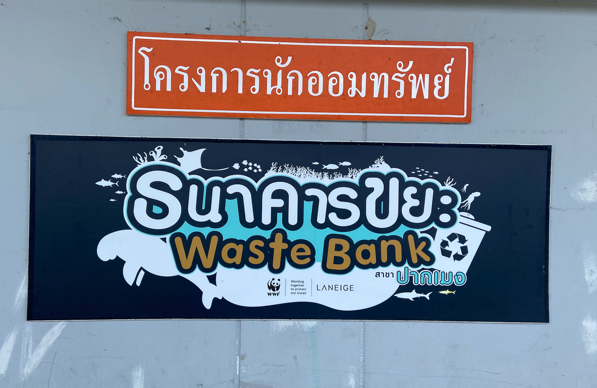
Pak Meng School in Trang, Thailand, piloted a holistic approach to plastic waste management from initiating educational activities for the reduction of plastic usage to installing a waste bank system. WWF-Thailand launched this project to provide technical expertise on project design and implementation, while Tide Ocean (a recycler) and PreZero International also partnered with WWF, leading on the implementation of educational workshops on plastic pollution’s impact on marine ecosystems. WWF supported the school with establishing partnerships with junkshops, creating a structured system that motivated students to engage in waste separation. This included implementing waste separation bins and a composting area with the aim to instil waste management habits in young students by incorporating hands-on activities and financial incentives.
Objectives
- Enhance student awareness of marine plastic pollution and the importance of waste reduction through interactive workshops and beach clean-ups.
- Improve waste practices at the school through separation at source, recycling practices, and reducing plastic pollution from the school grounds.
- Provide access to a waste bank and junkshops where students could sell recyclables for financial rewards.
Key Successes
- Educational Workshops: students initially were unaware of how to separate waste for recycling, but learned to do this with the provision of waste separation bins and practical workshops. Reusable bags and mugs were also provided to students during the workshops with the intention to reduce the use of plastic bags and bottles, which students could use at a water refill station that was provided by Tide Ocean.
- Waste bank and student incentives: A waste bank was implemented at the school, where students opened accounts to track their disposal efforts. Each time a student correctly disposes of recyclables, their contribution is logged. Prizes and financial rewards are given to students based on their participation level.
- Junkshop partnership: Every two to three months, a junkshop visits the school to purchase recyclables, buying PET and glass bottles, paper, cardboard, and steel. Students directly earn money from the junkshop for their recyclables – 10 THB/kg (0.30 USD/kg) – with the highest earners receiving prizes from the school, creating healthy competition among students. The school collects around 90 tonnes of plastic waste each year.
- Organic waste management: Food waste is regularly collected and donated to local farms for animal feed, reducing landfill waste. To promote repurposing, students also engage in paper mâché projects, creatively repurposing old homework into new materials. The amount of scattered waste throughout the school has significantly decreased since the programme’s start.
Key Challenges
- Plastic Pollution Curriculum: while Tide Ocean developed a school curriculum on plastic waste, integrating it into existing school subjects presented challenges due to existing demands of the curriculum and that some of the content was not fully aligned with student comprehension levels, resulting in educational activities limited to the workshops.
- Waste Segregation: Having multiple waste separation bins helped to generate interest and engagement in waste separation, however, there is room for greater consistency in practice to improve the quality of the organic waste and use of the composting facility.
- Community Support: there was a gap in parental awareness of waste management, which made it more difficult for students to maintain consistent practices outside of school.
- Space Constraints: The low frequency of junk shop visits (every 2–3 months) required for adequate space and organisation for storage.
- Weekly beach clean-ups: were initially carried out by students, but due to challenges in managing large groups, they were later adapted into monthly activities through a supervised volunteering initiative.
- Staff Turnover: knowledge retention was affected by frequent staff changes, making it more difficult to consistently access the right information.
Resources
- Stakeholders and infrastructure: Tide Ocean led three capacity building workshops on plastic pollution for Pak Meng School. Activities included painting reusable cloth bags and mugs, playing educational games, and creating an activity book for the children. They developed a school curriculum on plastic waste, provided a water refill station, waste separation bins, and reusable bags. Other activities held by WWF included a workshop on plastic pollution’s impact on marine ecosystems, waste collection, beach cleanups, and additional educational workshops. Five separation at source bins were introduced alongside training for school personnel and students.
- Human resources: 18 teachers were trained by Tide Ocean and who educated 240 students about waste management.
Enabling Factors
Financial incentives: The combined model of a waste bank and junkshop partnership was useful in supporting participation and behaviour change through structured reward systems.
Risks & Opportunities
- Sustaining long-term enthusiasm and engagement among students and households requires ongoing effort and to be continued.
- Dependence on external funding and support: Without continued input from consultants or business partners, maintaining certain components – such as the waste bank and educational workshops – may pose challenges over the long term due to financial constraints and maintaining efforts.
- Embedding this waste bank into school operations would support sustainability of the initiative.