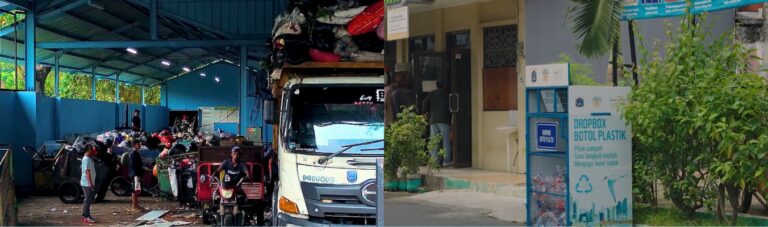
Sustainable financing is key to advancing circular waste management by funding infrastructure, recycling systems, public awareness, and innovation to reduce plastic leakage. Through public-private partnerships, government incentives, and creative instruments like pay-as-you-throw and deposit refund schemes, financing mechanisms can shift focus upstream—encouraging waste prevention and recycling over landfill disposal. This multi-pronged approach supports long-term environmental protection and accelerates the transition to a circular economy.
Blended Financing
Blended finance is a strategic approach that combines public concessional funds with private sector capital to unlock investment in high-impact waste management infrastructure, especially in developing cities facing financial constraints. By rebalancing risk-return profiles and leveraging public resources, blended finance mobilizes commercial investment to close funding gaps, support sustainable development, and transition from donor dependency to self-sustaining waste solutions. This model is vital for scaling climate-smart infrastructure and advancing circular economy goals.
Visit: https://plasticsmartcities.org/blended-financing/
Packaging Material Fees
Packaging Material Fees are a sustainable financing tool that require manufacturers to pay based on the volume and type of packaging they introduce to the market, helping fund waste collection, recycling, and treatment through Producer Responsibility Organizations (PROs). By internalizing the environmental costs of plastic pollution, these fees incentivize companies to reduce virgin plastic use and support circular economy goals. Widely adopted in Europe, Japan, and South Korea, Packaging Material Fees offer a scalable solution for emerging economies like Indonesia, where they could generate millions in revenue for waste management. Effective implementation depends on strong governance, transparent reporting, and tailored operational models.
Visit: https://plasticsmartcities.org/packaging-material-fees/
Extended Producer Responsibility (EPR)
Extended Producer Responsibility (EPR) is a policy framework that shifts the responsibility for plastic waste collection, sorting, and recycling to producers, encouraging them to design low-impact, resource-efficient products. By easing the financial burden on municipalities and promoting shared accountability, EPR systems generate significant revenue—such as €1 billion annually in Germany—and support the development of robust waste infrastructure. Widely adopted through both mandatory and voluntary schemes, EPR is a key driver of circular economy goals, especially in developing regions where public funding alone cannot meet growing waste management demands.
Visit: https://plasticsmartcities.org/extended-producer-responsibility/
Bankable Nature Solutions (BNS)
Bankable Nature Solutions (BNS) are private-sector-led, revenue-generating projects that address environmental challenges—such as plastic pollution and waste management—while delivering a risk-adjusted return on investment. Unlike traditional conservation efforts, BNS are designed to be financially viable, enabling scalable impact across sectors like climate-smart agriculture, renewable energy, and sanitation. By leveraging public and private capital, BNS help cities overcome infrastructure gaps and attract investment for sustainable development, making them a powerful tool for advancing circular economy goals in emerging markets.
Visit: https://plasticsmartcities.org/bankable-nature-solutions/
Advanced Disposal Fees (ADFs)
Advanced Disposal Fees (ADFs) are non-refundable charges added to products at the point of sale to cover the environmental costs of waste collection and processing. By applying a “polluter pays” principle, ADFs help fund recycling programs, market development, and public education, while encouraging manufacturers to reduce plastic use and design more sustainable products. Transparent ADFs can influence consumer behavior and drive source reduction, making them a powerful tool for addressing plastic pollution and promoting circular economy practices.
Visit: https://plasticsmartcities.org/disposal-fee/