WWF | Tipping Point: How Coordinated Market Can Transform Global Plastic Value Chain
After four years of negotiations, the world is still waiting for a global treaty capable of ending plastic pollution. A large majority of countries have continued to support an effective treaty with binding measures across the full life cycle of plastics – but progress has been repeatedly deadlocked in efforts towards universal agreement. This report explores […]
2030 strategy – No Plastic in Nature Initiative: Driving Systems Change in the Global Fight Against Plastic Pollution
Despite growing global awareness, the plastic pollution crisis continues to escalate. More than 30,000 tonnes of plastic leak into our oceans every day, posing increasing threats to ecosystems, economies, and human health. The WWF No Plastic in Nature 2030 Strategy sets out a comprehensive blueprint to stop environmental plastic pollution by transforming the global plastics […]
Towards Plastic Smart Islands: Scaling Solutions to Plastic Pollution across the Coral Triangle
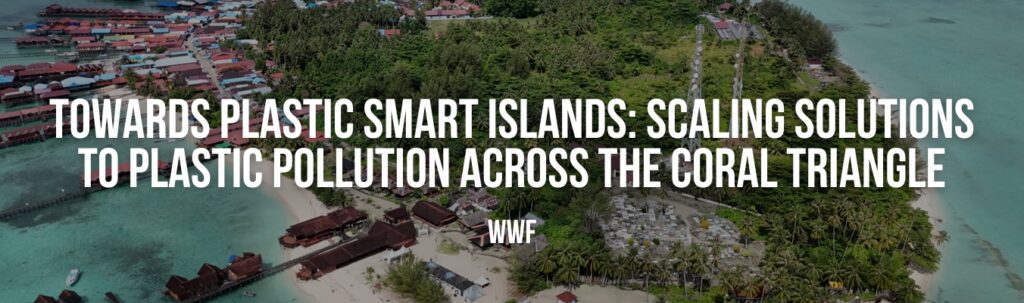
For the archipelagic states of the Coral Triangle, encompassing more than 27,000 islands across six nations, plastic pollution presents an immediate existential threat to human health, community livelihoods, and marine biodiversity. While large urban centres generate the highest gross volume of single-use products, isolated coastal hubs bear a disproportionately high environmental burden, frequently struggling with […]
Packaging EPR in Practice: Eight Key Implementation Insights from Chile
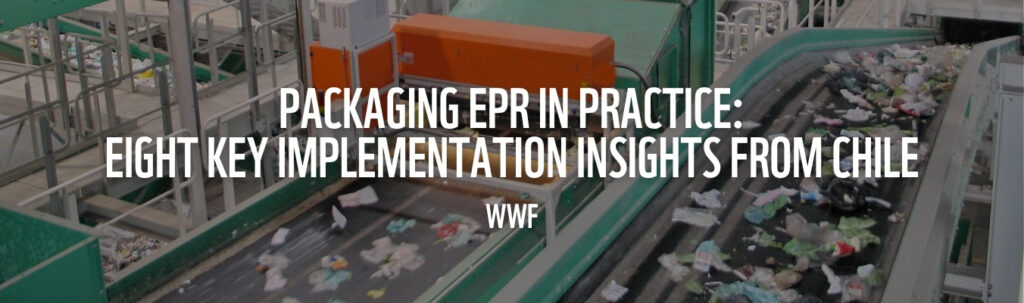
These insights are based on a regional study tour conducted in Chile from May 11-16, 2026, organized as part of the Clean Caribbean project, implemented by WWF Germany and WWF Mesoamerica and funded by the German Federal Ministry for the Environment, Climate Action, Nature Conservation and Nuclear Safety (BMUKN), with the participation and support of […]
WWF | Playbook: Reuse at the Point of Sale
While legal frameworks provide the necessary structure for circularity, the ultimate success of reusable packaging often hinges on the split-second decisions made by consumers at the counter. The “Reuse at the Point of Sale” playbook explores the power of behavioural science—specifically “nudging”—to shift consumer habits towards more sustainable choices without restricting their options. By summarising […]
WWF | Handbook: Reuse at large-scale events

As the global events industry moves towards a more sustainable future, the environmental footprint of large-scale gatherings like festivals and concerts is under increasing scrutiny. Shifting from single-use plastics to circular systems is no longer just a trend, but a logistical and legal necessity. This practical handbook, developed by the “mehrweg. einfach. machen.” alliance, provides […]
WWF | Reuse on Christmas Market: Guidelines for Municipality

As traditional Christmas markets across Europe strive to align with modern sustainability goals, the transition from single-use plastics to circular systems has become a priority for local governments. To support this shift, WWF Germany and the “mehrweg. einfach. machen.” alliance have released a comprehensive set of guidelines designed to help municipalities implement scalable reuse systems. […]
WWF Vision Statement: Responsible Use of Alternative Materials to Address Plastic Pollution
Plastic pollution is an urgent environmental crisis that demands a significant reduction in plastic production and a shift away from fossil-based feedstocks. While many look to materials like paper, metal, or glass as a primary solution, substitution must be applied thoughtfully as part of a broader suite of interventions. To ensure positive outcomes for both […]
WWF Policy Brief | Rethinking Participation and Effectiveness: Collective market power as the driving force for an effective treaty to end plastic pollution

Negotiations on an international legally binding instrument to end plastic pollution have reached an impasse. While a clear majority of countries now support binding measures across the full life cycle of plastics, progress has been repeatedly stalled by a small group of states opposing such measures. Resolving this will require negotiators to lift their gaze […]
WWF | How to Implement Extended Producer Responsibility (EPR) for Government and Businesses

Extended producer responsibility (EPR) aims to ensure that product manufacturers are made financially responsible for various parts of the life cycle of their products, including take-back, recycling and final disposal at the end of their useful life. In this way, it aims to apply what is often referred to as the ‘polluter pays principle’. EPR […]