As traditional Christmas markets across Europe strive to align with modern sustainability goals, the transition from single-use plastics to circular systems has become a priority for local governments. To support this shift, WWF Germany and the “mehrweg. einfach. machen.” alliance have released a comprehensive set of guidelines designed to help municipalities implement scalable reuse systems. By providing a clear roadmap for everything from status analysis to logistical execution, these guidelines offer a practical solution to reduce the environmental footprint of seasonal events, potentially avoiding thousands of tonnes of waste and $CO_{2}$ emissions annually.
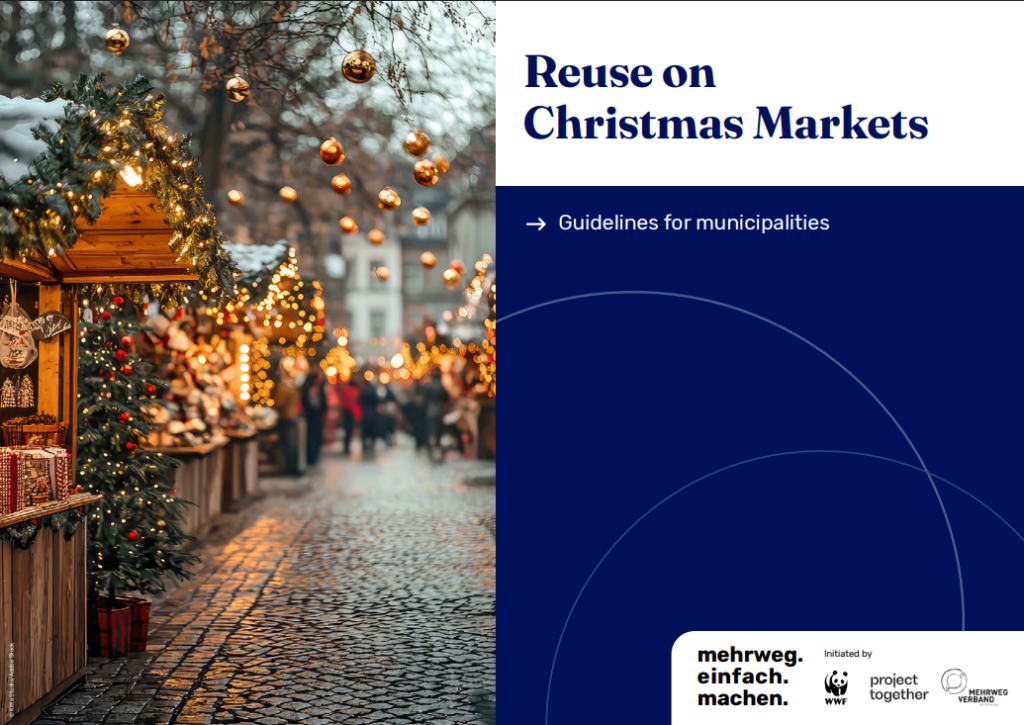
Reuse on Christmas Markets: Guidelines for Municipalities serves as a strategic manual for local authorities looking to transition to zero-waste event management. The document outlines a structured three-phase approach:
- Analysis Phase: Provides tools for documenting the initial situation, identifying stakeholders, and assessing the potential for systemic change within existing market structures.
- Planning Phase: Evaluates the technical merits of different reusable models, specifically comparing “pooling services” (external providers) versus “individual systems” (municipality-owned), while addressing essential financing and accounting mechanisms.
- Implementation Phase: Offers actionable advice on logistical management, including professional sanitisation, storage, and the communication strategies needed to ensure high public adoption.
Supported by successful case studies from cities across Germany, the document demonstrates that with the right governance and operational clarity, municipalities can successfully eliminate disposable tableware and lead the way toward a more sustainable and climate-resilient holiday season.