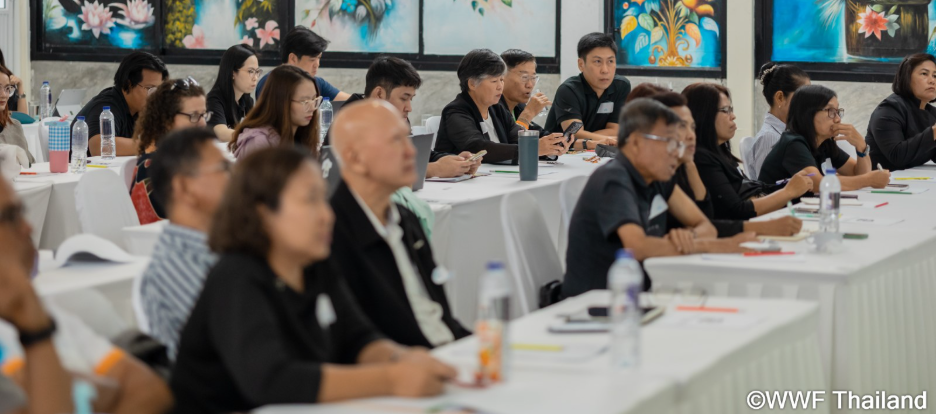
Building on the project’s activities to support informal waste pickers (known colloquially as saleng in Thai) in Surat Thani, training sessions on Extended Producer Responsibility (EPR) and human rights were conducted in March 2026 with the participation of representatives from Trang and Koh Tao municipalities, EPR experts, businesses, WWF, and over 80 informal waste pickers. This multi-stakeholder meeting focused on bridging the gap between high-level policy and the essential workers who are on the front lines of waste management, yet often excluded from decisions about waste management systems.
EPR: Connecting Communities to Circular Solutions for Better Livelihoods
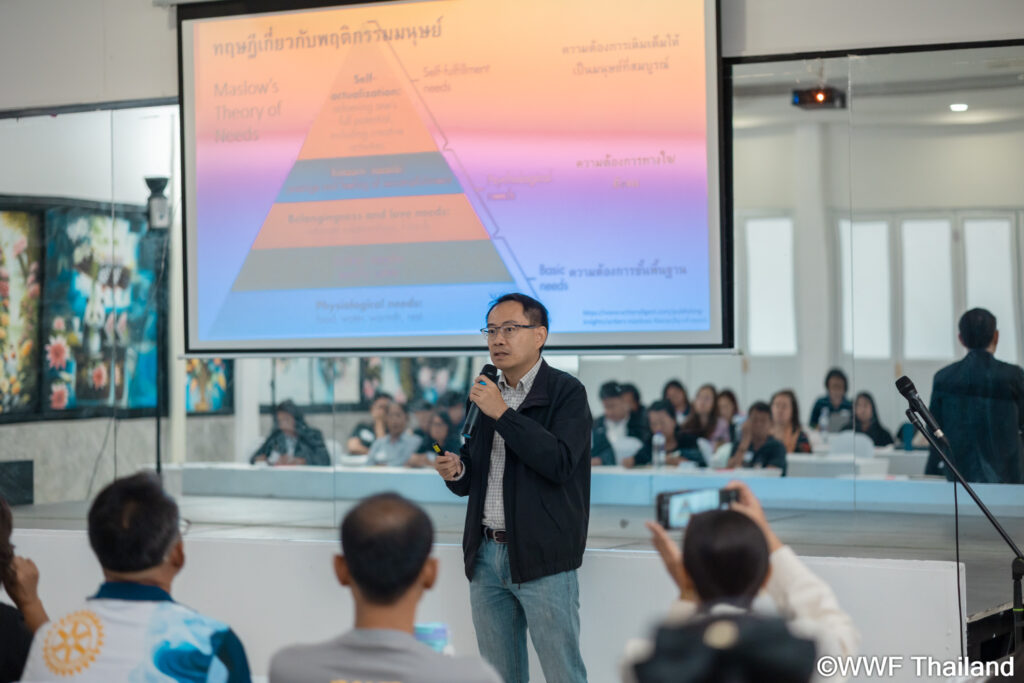
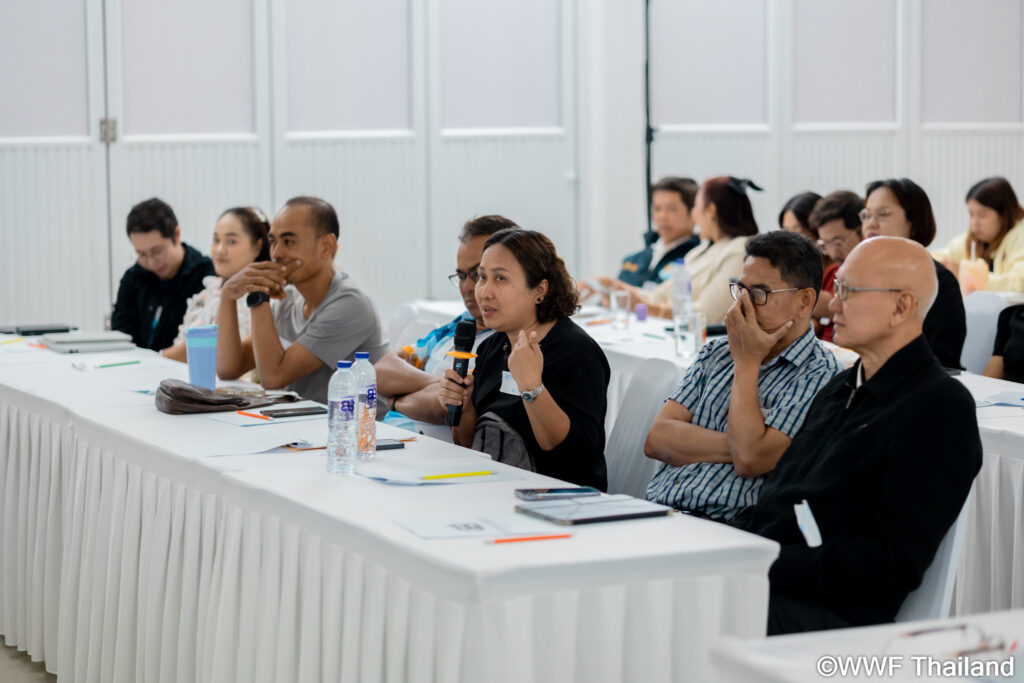
The primary focus of the two-day workshop aims to provide the audience with an understanding of the EPR system, explore sustainable waste management, and how collaboration among municipalities, communities, junk shops, and informal waste workers can be strengthened.
As part of the human rights training, the project introduced accessible financial mechanisms to support informal waste workers, including daily micro-savings, the Social Security Scheme, the Surat Thani Municipality Community Welfare Fund, and the National Savings Fund.
Scaling Impact: National Advocacy for the Saleng Association Model
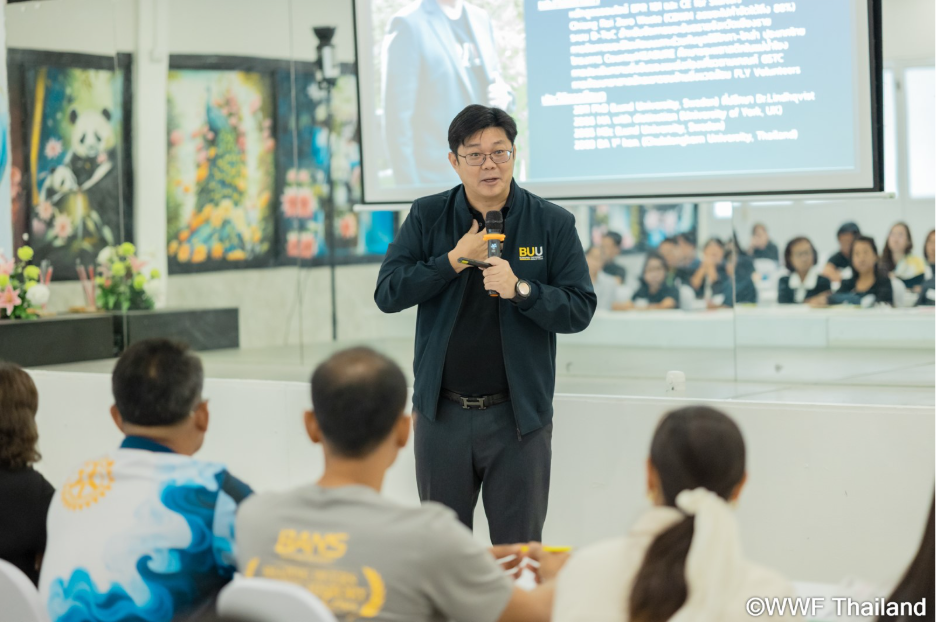
The event also marked the growing involvement from the Thailand Institute of Packaging and Recycling Management for Sustainable Environment (TIPMSE), which serves as the PRO agency in Thailand’s EPR ecosystem. TIPMSE is currently exploring the market for low-value plastic waste and supporting the local community in deploying waste management measures with EPR funding.
WWF-Thailand is working with TIMPSE in advocating for a national Saleng Association model to scale across provinces by developing a policy white paper or guidebook for interested municipalities to learn more about formally adopting a Saleng Association model.
Read more about the Saleng network in Thailand at: