ERIA, IGES | Plastic Pollution Countermeasures: Effective Global Actions and Case Studies from East Asia
Plastic pollution represents one of the most pressing environmental challenges in Southeast and East Asia, with seven ASEAN+3 nations ranking among the top ten global contributors to annual ocean plastic emissions. To address critical data gaps, low recycling rates, and waste management infrastructure deficits across the plastic value chain, the Economic Research Institute for ASEAN […]
WWF-Germany | Circular Economy Course

Mastering the transition to a climate-neutral and resource-efficient economy is essential for modern sustainable business practices. This course explores the core principles, economic benefits, and commercial opportunities of circularity, guiding organisations from baseline concepts and company operations to policy frameworks, WWF’s strategic vision, and human-centred society building. This course covers the following content:
WWF-Australia | The Case for Reuse: A Packaging Transformation in Australia

Australia’s packaging waste crisis cannot be resolved through recycling alone; establishing a robust reuse ecosystem is vital to prevent over 12 million tonnes of packaging waste from entering the market annually by 2040. Based on research by Deloitte and WWF-Australia, transitioning to reusable packaging models creates higher value-retention loops that cut emissions, lower supply chain […]
WWF | Transforming the Plastic Waste Market and Informal Worker Livelihoods in Coastal Kenya
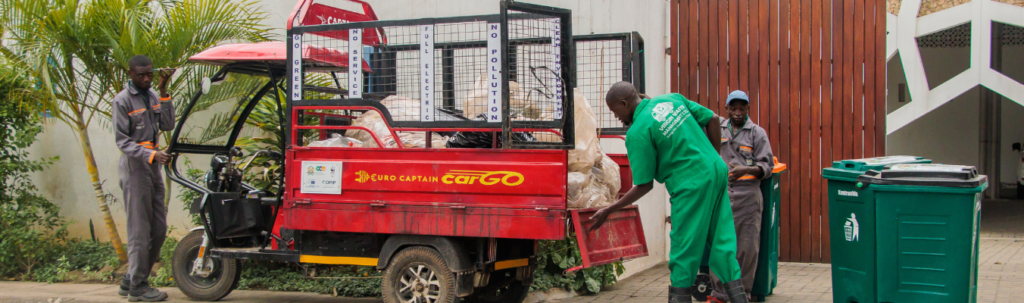
Case Study Kenya: MombasaWWF Involvement: January 2020- December 2024Focus Area: Collection/Recovery and Recycling/Enabling FrameworkPSC Approach: Collection & Separation; Sustainable FinancingSystemic Intervention: Policy Advocacy; Knowledge Strengthening; Systems & Infrastructure For more information, contact: Alex KubasuMombasa, KenyaEmail: akubasu@wwfkenya.org Key Lessons Learned Background Kenya has more than 500,000 tonnes of plastics produced per year, of which only about 15% is recycled. Inadequate solid waste management […]
Colombia National Plastic Action Partnership, Global Plastic Action Partnership | Plastic Pollution and Biodiversity in Colombia: Pathways for Environmental and Economic Resilience
Every year in Colombia, approximately 31,000 tonnes of plastic leak into aquatic ecosystems, 68,000 tonnes end up in soils, and more than 202,000 tonnes are openly burned. WWF Colombia, as the implementor of the Colombian National Plastics Action Platform (NPAP Colombia), with support from the World Economic Forum (WEF) through the Global Plastic Action Partnership […]
ERIA, IGES | Plastic Pollution Countermeasures: Effective Global Actions and Case Studies from East Asia
Plastic pollution represents one of the most pressing environmental threats facing the Association of Southeast Asian Nations (ASEAN) and East Asia, a region where seven nations account for approximately 65% of annual global plastic emissions into the ocean. Published jointly by the Economic Research Institute for ASEAN and East Asia (ERIA) and the Institute for […]
WRAP | Catalysing Systemic Action Against Plastic Pollution – A Roadmap for Purpose Driven Funders
Global plastic pollution is currently on a trajectory to triple by 2040, threatening irreversible harm to marine ecosystems, accelerating the climate crisis, and deepening social injustices within the informal waste sector. While downstream solutions like recycling receive the lion’s share of current funding, a major funding gap of over $67 billion per year persists, particularly […]
World Bank Group | What a Waste 3.0: Global Snapshot of Solid Waste Management Toward Circularity until 2050
As the global plastic crisis intensifies, understanding the trajectory of waste generation is essential for building resilient, plastic-smart urban centres. The World Bank’s latest publication, What a Waste 3.0: Global Snapshot of Solid Waste Management Toward Circularity until 2050, provides a critical data-driven roadmap. This report offers a comprehensive look at current waste management practices […]
C40 | Toolkit for cities: Practical actions to integrate informal waste workers into municipal solid waste management systems
As cities worldwide strive to meet ambitious zero-waste targets, the contribution of informal waste workers (IWWs) has become a cornerstone of sustainable urban management. This toolkit provides municipal authorities with a practical, step-by-step roadmap to recognise, protect, and integrate these essential workers into formal solid waste management systems. By prioritising social dialogue and inclusive policy-making, […]
UNDP, Viet Nam NPAP | Research on the integration of independent waste workers in solid waste management in Viet Nam
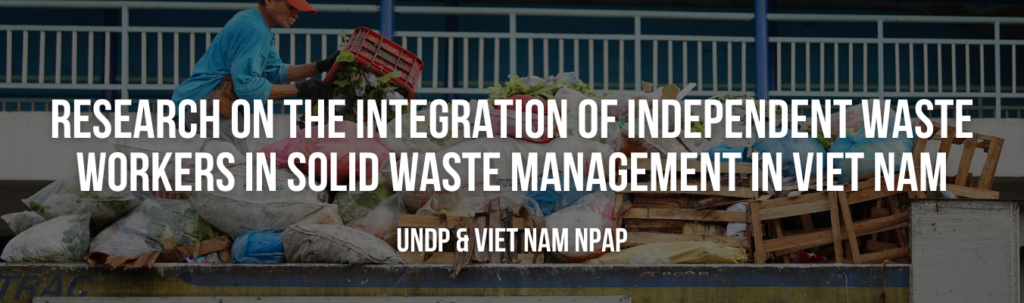
How can Vietnam achieve its ambitious target of increasing plastic recycling from 11% to 38% by 2030? The answer lies in the strategic integration of Independent Waste Workers (IDWWs). This 2025 study by UNDP Viet Nam provides a comprehensive roadmap for transitioning the informal waste sector into a formalised, rights-based system. By addressing institutional barriers […]