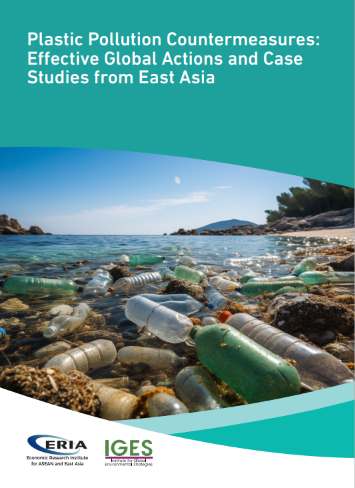
Plastic pollution represents one of the most pressing environmental challenges in Southeast and East Asia, with seven ASEAN+3 nations ranking among the top ten global contributors to annual ocean plastic emissions. To address critical data gaps, low recycling rates, and waste management infrastructure deficits across the plastic value chain, the Economic Research Institute for ASEAN and East Asia (ERIA) and the Institute for Global Environmental Strategies (IGES) published Plastic Pollution Countermeasures: Effective Global Actions and Case Studies from East Asia. This comprehensive handbook combines life-cycle impact assessments, ecological and human health risk analyses, and UN Global Plastic Treaty negotiation dynamics with practical policy tools such as Extended Producer Responsibility (EPR) and behavioural science interventions. By pairing macro-level policy frameworks with ground-level insights from eleven East Asian nations, the publication serves as an authoritative guide for researchers, business leaders, and policymakers accelerating the transition towards a sustainable circular economy.
Part I examines global and regional status quo trends, detailing ecological threats to marine biodiversity, microplastic and nanoplastic health risks across human organ systems, life-cycle greenhouse gas emissions, and key intervention levers including Extended Producer Responsibility (EPR), behavioural nudges, eco-design, and international treaty negotiations through the Intergovernmental Negotiating Committee (INC).
Part II features in-depth case studies from eleven countries (Cambodia, Indonesia, Lao PDR, Malaysia, Myanmar, the Philippines, Singapore, Thailand, China, Japan, and the Republic of Korea) addressing unique localised challenges such as riverine debris, archipelagic logistics, informal sector integration, and packaging recyclability standards. The handbook demonstrates that eliminating environmental plastic leakage requires a combined strategy of infrastructure investment, standardised data collection, strong legal enforcement, and regional multi-stakeholder collaboration.