UNEP, UNODC | How Waste Trafficking Hinders the Development of Circular Economies: Impacts, Challenges, and Solutions from SouthEast Asia
As global waste generation approaches critical thresholds, illegal waste trafficking has emerged as a major barrier to sustainable development across Southeast Asia. Between 2017 and 2021, ASEAN nations collectively imported more than 100 million tonnes of metal, paper, and plastic waste valued at nearly $50 billion, accounting for 17% of the global plastic waste trade […]
ERIA, IGES | Plastic Pollution Countermeasures: Effective Global Actions and Case Studies from East Asia
Plastic pollution represents one of the most pressing environmental challenges in Southeast and East Asia, with seven ASEAN+3 nations ranking among the top ten global contributors to annual ocean plastic emissions. To address critical data gaps, low recycling rates, and waste management infrastructure deficits across the plastic value chain, the Economic Research Institute for ASEAN […]
World Economic Forum | Plastic Pollution and Biodiversity: a Global Overview
Every year, an estimated 130 million tonnes of plastic waste are unmanaged or improperly discarded, polluting soils, waterways and seas. While efforts continue to promote a circular economy and pursue a global plastics treaty, far less attention has focused on how plastic pollution affects biodiversity and the ecosystem services that underpin economies and human well-being. […]
2030 strategy – No Plastic in Nature Initiative: Driving Systems Change in the Global Fight Against Plastic Pollution
Despite growing global awareness, the plastic pollution crisis continues to escalate. More than 30,000 tonnes of plastic leak into our oceans every day, posing increasing threats to ecosystems, economies, and human health. The WWF No Plastic in Nature 2030 Strategy sets out a comprehensive blueprint to stop environmental plastic pollution by transforming the global plastics […]
Towards Plastic Smart Islands: Scaling Solutions to Plastic Pollution across the Coral Triangle
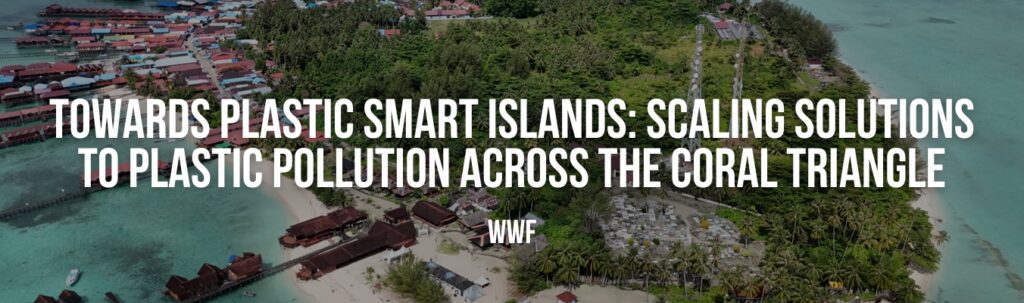
For the archipelagic states of the Coral Triangle, encompassing more than 27,000 islands across six nations, plastic pollution presents an immediate existential threat to human health, community livelihoods, and marine biodiversity. While large urban centres generate the highest gross volume of single-use products, isolated coastal hubs bear a disproportionately high environmental burden, frequently struggling with […]
Packaging EPR in Practice: Eight Key Implementation Insights from Chile
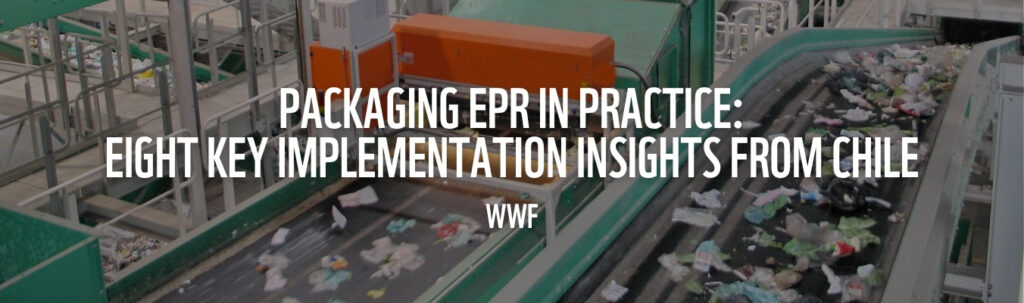
These insights are based on a regional study tour conducted in Chile from May 11-16, 2026, organized as part of the Clean Caribbean project, implemented by WWF Germany and WWF Mesoamerica and funded by the German Federal Ministry for the Environment, Climate Action, Nature Conservation and Nuclear Safety (BMUKN), with the participation and support of […]
GIZ | Scaling Reuse System Through Behaviour Change: Insights from Southeast Asia
Plastic pollution remains one of the most critical environmental crises in Southeast Asia, fueled by rapid urbanisation and an overwhelming reliance on single-use sachets and takeaway packaging. While recycling remains a vital part of the puzzle, true sustainability requires stopping waste at the source through scalable circular-economy initiatives. This comprehensive GIZ report explores how behavioural […]
UNDP, Viet Nam NPAP | Research on the integration of independent waste workers in solid waste management in Viet Nam
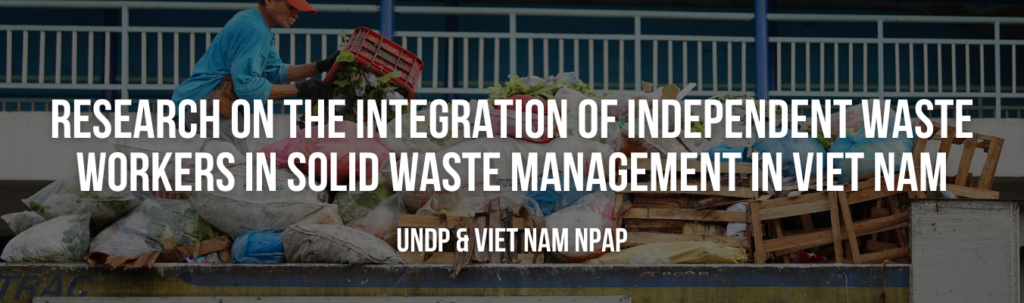
How can Vietnam achieve its ambitious target of increasing plastic recycling from 11% to 38% by 2030? The answer lies in the strategic integration of Independent Waste Workers (IDWWs). This 2025 study by UNDP Viet Nam provides a comprehensive roadmap for transitioning the informal waste sector into a formalised, rights-based system. By addressing institutional barriers […]
WWF | How to Implement Extended Producer Responsibility (EPR) for Government and Businesses

Extended producer responsibility (EPR) aims to ensure that product manufacturers are made financially responsible for various parts of the life cycle of their products, including take-back, recycling and final disposal at the end of their useful life. In this way, it aims to apply what is often referred to as the ‘polluter pays principle’. EPR […]
WWF | 15 Basic Principles Establishing an Effective Extended Producer Responsibility (EPR) Scheme for Packaging

As the global plastic crisis accelerates, with 11 million tonnes of plastic entering our oceans annually, the need for a systemic shift toward a circular economy has never been more urgent. WWF’s “No Plastics in Nature” initiative identifies Extended Producer Responsibility (EPR) as a foundational tool to bridge the gap between production and sustainable end-of-life […]