These insights are based on a regional study tour conducted in Chile from May 11-16, 2026, organized as part of the Clean Caribbean project, implemented by WWF Germany and WWF Mesoamerica and funded by the German Federal Ministry for the Environment, Climate Action, Nature Conservation and Nuclear Safety (BMUKN), with the participation and support of other WWF Initiatives, including Plastic Smart Cities (PSC). The study tour brought together representatives from seven Latin American countries to exchange experiences and explore practical approaches to packaging EPR implementation. The observations presented here draw on discussions with government agencies, municipal associations, producer responsibility organizations (PROs), waste management operators, national waste picker organizations, cooperatives, private sector actors and participating country delegations.
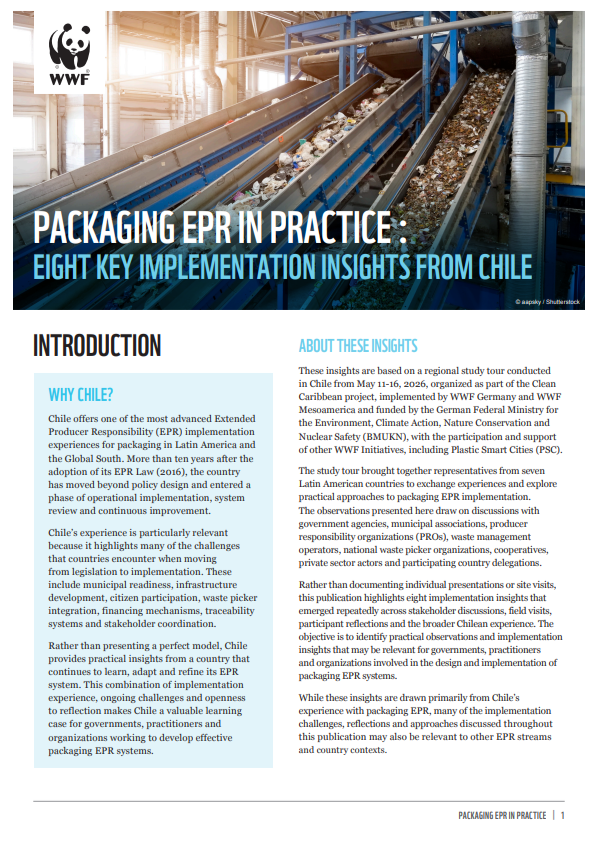
Chile offers one of the most advanced Extended Producer Responsibility (EPR) implementation experiences for packaging in Latin America and the Global South. More than ten years after the adoption of its EPR Law (2016), the country has moved beyond policy design and entered a phase of operational implementation, system review and continuous improvement.
Chile’s experience is particularly relevant because it highlights many of the challenges that countries encounter when moving from legislation to implementation. These include municipal readiness, infrastructure development, citizen participation, waste picker integration, financing mechanisms, traceability systems and stakeholder coordination.