Plastic pollution remains one of the most critical environmental crises in Southeast Asia, fueled by rapid urbanisation and an overwhelming reliance on single-use sachets and takeaway packaging. While recycling remains a vital part of the puzzle, true sustainability requires stopping waste at the source through scalable circular-economy initiatives. This comprehensive GIZ report explores how behavioural science can unlock the true potential of reuse systems across Indonesia, Vietnam, Malaysia, Thailand, and the Philippines. By breaking down the psychological barriers to sustainable consumption, this study provides a crucial roadmap for policymakers and businesses to design inclusive, convenient, and friction-free alternative packaging networks that turn climate awareness into lasting green habits.
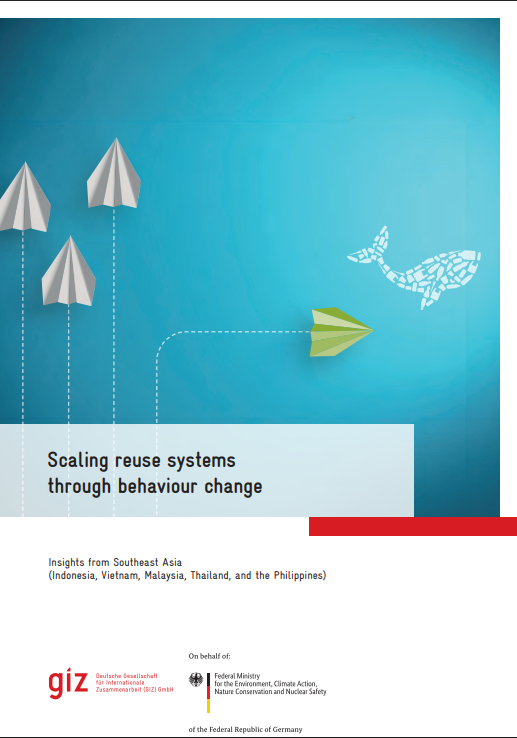
The GIZ publication provides a strategic assessment of how behavioural design dictates the success or failure of plastic waste reduction initiatives. Utilising established frameworks like Behavior-Centred Design (BCD), the COM-B Model, and the Fogg Behaviour Model, the report examines consumer choices across three critical phases: initial adoption, routine container returning, and community-wide collective engagement.
The text highlights a core thesis: behaviour change follows system design. While environmental awareness is growing in the region, pilot reuse programs frequently struggle to scale because they fail to compete with the unmatched convenience and low upfront costs of single-use plastics and sachet economies. Through local case studies—spanning neighbourhood refill structures, digital platform pilots, and traditional deposit-return schemes—the paper highlights that scaling reuse requires systemic interventions. The report concludes with clear, actionable recommendations: policymakers must anchor reuse into Extended Producer Responsibility (EPR) laws, operators must eliminate consumer return friction and maintain price parity, and all parties must actively integrate informal waste workers and women to build a truly equitable circular economy