Global plastic pollution is currently on a trajectory to triple by 2040, threatening irreversible harm to marine ecosystems, accelerating the climate crisis, and deepening social injustices within the informal waste sector. While downstream solutions like recycling receive the lion’s share of current funding, a major funding gap of over $67 billion per year persists, particularly in the underfunded upstream sectors and vulnerable regions of the Global South. To bridge this divide, a newly developed roadmap by WRAP outlines a coordinated framework built on three priority objectives—Reduce, Reuse, and Recycle—and seven transformative intervention levers. This framework empowers purpose-driven philanthropic funders to take calculated risks, de-risk private capital, and catalyse the long-term, systemic interventions needed to eliminate plastic pollution at its source.
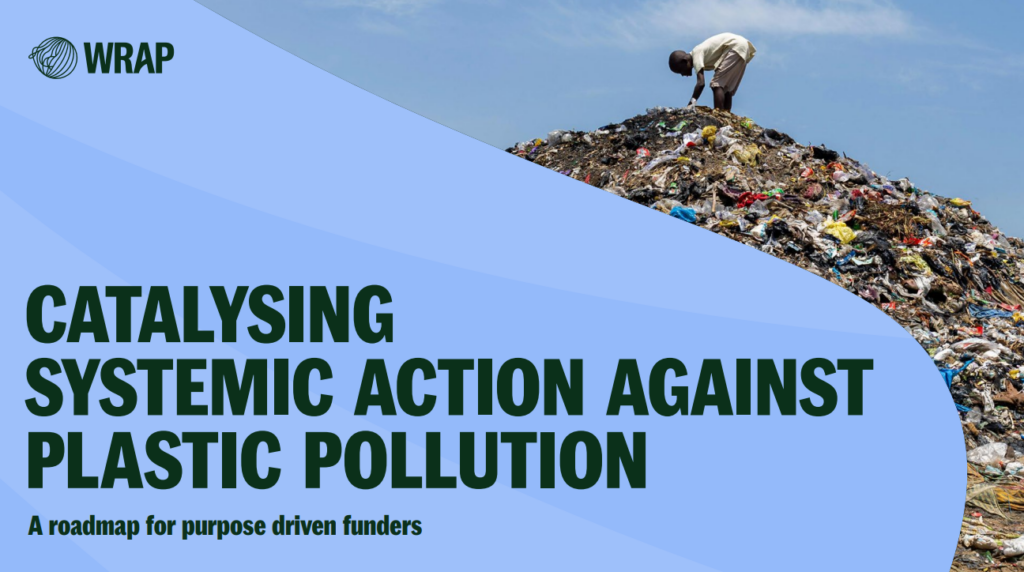
The WRAP report offers a strategic guide to maximising the impact of environmental and social investments. Plastic mismanagement directly accelerates biodiversity loss, public health crises, and carbon depletion. To counter this, the roadmap urges a shift from short-term fixes to long-term, system-level changes.
The core of the strategy relies on a multi-pronged framework:
- Three Priority Objectives: Prioritising Reduction of plastic production and consumption, transitioning from single-use to Reuse delivery models, and optimising Recycling to capture and reprocess essential plastics.
- Five Systemic Interventions: Funding game-changing material alternatives, championing robust municipal policy and global treaty governance, utilising behavioural science to shift social norms, strengthening infrastructure (especially for low-value materials), and centring a “just transition” that integrates and uplifts the world’s 40 million informal waste workers.
- Two Systemic Enablers: Advancing transparent, evidence-based data systems and supporting local leaders to coordinate regional and global knowledge sharing.
Ultimately, philanthropic capital plays a vital, agile role in de-risking early-stage circular economies. It helps open underserved markets and build local capacity in highly vulnerable areas like Small Island Developing States (SIDS).