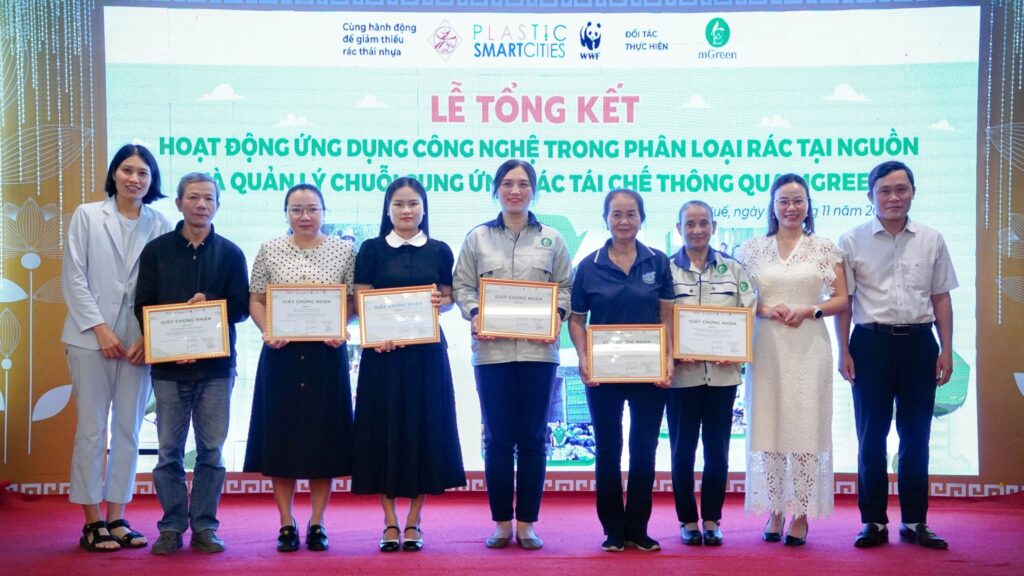
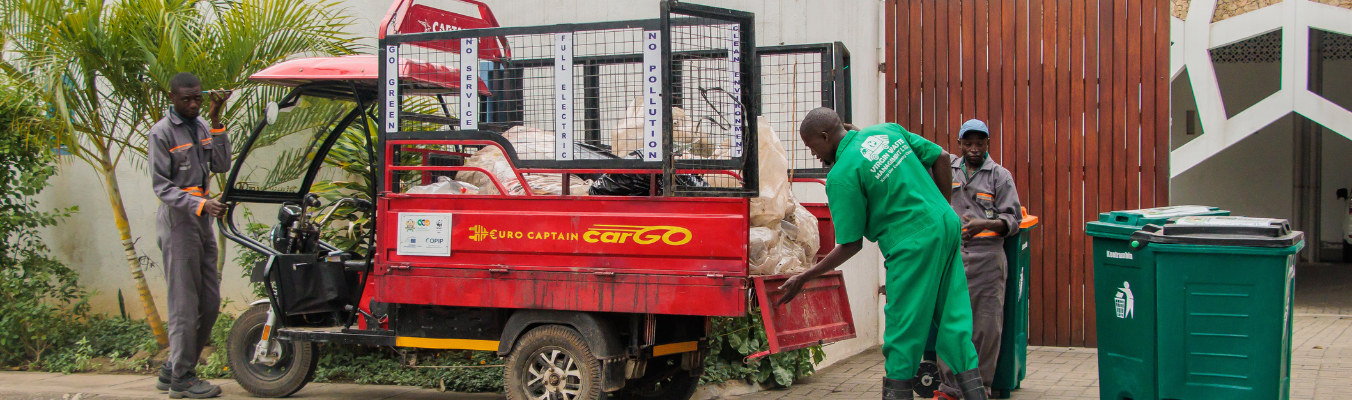
The Plastic Smart Cities (PSC) project in Viet Nam, in partnership with the mGreen social enterprise, has established a technology-enabled system to manage source-separated waste in Hue City. This intervention focuses on integrating the informal waste sector into a digital platform to improve the efficiency, traceability, and professionalisation of recyclable waste collection directly from households.
A Mobile Application for Recyclables Waste Collection: mGreen

The core of the intervention is the mGreen mobile application, which connects households directly with waste collectors. This application bridges the residents who have sorted their waste with the waste collectors. Users can either schedule a home collection, or bring their sorted waste to the exchange points. Users may choose to receive cash or reward points, based on the weight of recyclables they’ve collected.
With these incentives, accumulated points can be used for shopping, service payments, or redeemed for goods during events within the mGreen application. Furthermore, to ensure its long-term use, the application also functions as a linked digital loyalty card, so users can use it to earn and redeem points when dining, shopping, and using services at a wide network of partner stores and brands across sectors such as food and beverages, retail, entertainment, and household services.

By digitising the supply chain, the project has successfully engaged nearly 3,000 households in active waste sorting. This digital link ensures that recyclables are captured at the source and directed into a formal management system rather than ending up in landfills or the environment.
Since its launch in October 2023, the project has collected 210,000 kg of recyclables to date from 4,200 collection orders with a total of 8,500 transactions, including buy-sell and gift exchanges. More than 30,000 kg of used plastic packaging was traded online through the applications.
Engaging with Households and the Informal Sector: Efforts and Challenges
However, in making sure the mGreen application would serve its purpose in connecting sellers and buyers, the programme has to approach both parties. During the initial phase, users are limited and collection are small-scale. With more organised activities and community events such as the “I Appreciate Waste collectors” Contest and the Informal Waste Collectors Community Festival to promote the application, the application gained more users over time.
The project also promoted usage of the mGreen application through an online channel, Hue-S Platform, which was developed by the government. The platform supports digital interaction between citizens and local authorities, offering features such as administrative services, tourism information, environmental reporting, and community engagement tools which has been an effective way to communicate and persuade citizens to promote the application and connect with local stakeholders in Hue City.
Although the mGreen application offers a modern and easier way for waste pickers, it comes with its own set of challenges as most of the informal waste collectors were not tech-savvy, especially in using smartphones and navigating the application. After a period of implementation and support, they gradually became more confident in using the application.
By 2025, the application has expanded its features beyond households to connect the informal waste collectors with scrap dealers. By easing access to the buyers on the market, this provides a more reliable income for waste collectors. Furthermore, with two recycling factories joining the system, this is a strong indication that the volume of waste collected has met industrial standards.
Improving Informal Waste Collectors’ Welfare
The project also facilitated the establishment of three technology-based waste pickers cooperatives in Huong An, An Cuu, and Group No. 3 to improve the members’ welfare. As of now, there are 32 members of mGreen collectors that utilise the mGreen application to manage collection orders and navigate optimised routes. They collect waste directly from houses based on the information provided in the application.


This digital shift aims to transition waste picking from a precarious, informal activity to a managed, planned route. According to Hoang Thi Ha Vi, leader of Technology Waste Picker Cooperative No. 3, the system allows these groups to operate more professionally, “The mGreen technology system has greatly supported our sorting and collection activities while connecting us directly with licensed recycling units. Thanks to this, our cooperative operates more professionally and is moving toward becoming an official scrap business. We hope this activity will be implemented long-term to continue supporting all links in the collection and recycling chain.”
A Blueprint for Digitalised Urban Waste Systems
The success of the mGreen platform is the result of a coordinated effort between technology developers, local government, and stakeholders. Following mGreen’s win at the 2023 Hue Plastic Waste Reduction Initiative Contest, WWF-Viet Nam provided the strategic support necessary for implementation in Hue City. Previously, mGreen application has also been implemented in another city such as Ho Chi Minh and Hanoi. Other than the financial support, WWF-Viet Nam plays a role in bridging stakeholders to realise this implementation, especially with the local government, local waste collector groups, and the buyers. This has enabled mGreen to operate effectively across Hue City.


Currently, the Hue City Department of Agriculture and Environment is advancing a resource mobilisation plan to support the long-term sustainability and further development of the mGreen application. Regardless of the process, the implementation is still running with the support of the mGreen social enterprise.
The Hue City pilot serves as a scalable model for how cities can utilise digital tools to enhance waste collection. By integrating households, the informal waste sector, and now including recycling factories into a single digital ecosystem, the project aims to create a traceable and transparent waste value-chain, proving that systemic change in plastic management can be achieved through a combination of technological innovation and a just and equitable integration of the informal labour that is on the frontlines of waste collection.