Case Study
Indonesia: Bekasi, Bogor, Depok, Jakarta (Greater Jakarta)
WWF Involvement: December 2023 to January 2025
Focus Area: Recovery and Recycling
PSC Approach: Recycling
Systemic Intervention: Systems and Infrastructure
Key Lessons Learned
- Integrating the solid waste management (SWM) chain supports operational continuity: Collaborating with waste aggregators and sourcing supplementary materials contributes to building integrated solid waste management systems, while helping to maintain a steady feedstock for processing and ensuring continuous operational flow.
- Diversifying revenue and scaling volumes supports financial sustainability: Expanding processing volumes to reach economies of scale, alongside diversifying revenue streams, can contribute to long-term financial sustainability of waste management operations.
Background
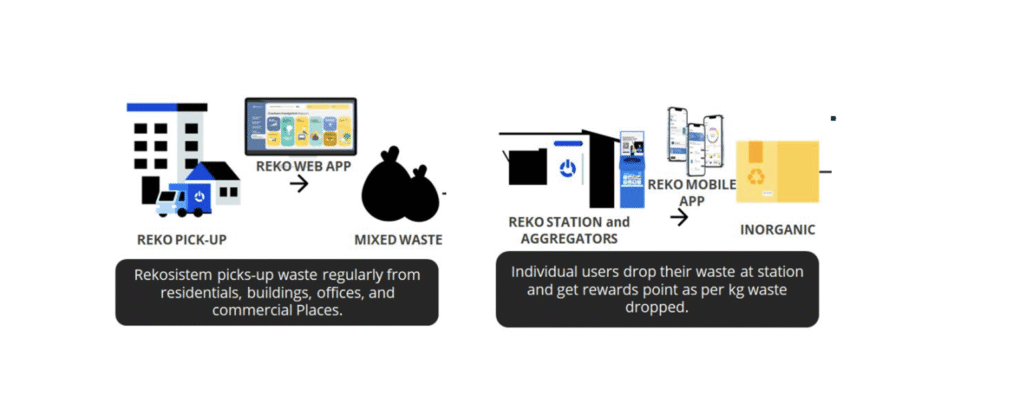
The privately operated RECO Consortium integrates REKOSISTEM and SweepSmart to improve plastic waste management through collection and sorting.
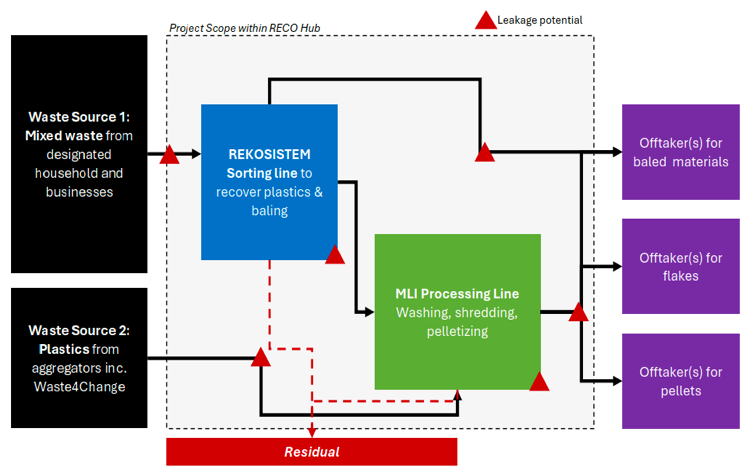
REKOSISTEM manages waste collection, picking up waste from households, businesses, and aggregators through a digitised tracking system. It also operates drop-off stations where users receive rewards per kilogram of waste.
SweepSmart provides technical expertise for system integration, using its Material Recovery Facility (MRF) model in Ambon to optimise sorting through semi-automated conveyor belts, ergonomic systems, and improved logistics.
RECO’s operations are designed to reduce plastic leakage into the environment, improve material circularity, and create economic opportunities for informal waste workers. The hub currently serves 3,467 clients (3,285 households and 182 businesses) in Greater Jakarta, including Bogor, Depok, and Jakarta.
Objectives
- Establish a high-capacity waste processing facility handling 20 tonnes of mixed waste daily.
- Provide sustainable employment opportunities for the informal waste sector.
Key Successes
- Waste processing and revenue growth: Since its launch, RECO has collected 4,000 tonnes of mixed waste plus 1,800 tonnes of plastics over 11 months, generating IDR 6.16 billion (USD 388,000) in revenue within its first operational year.
- Diversified revenue generation: Financial stability is maintained through a diversified revenue model, combining subscription fees from the REKOSISTEM service and material sales. This diversification mitigates financial risks, supporting long-term operational viability.
- Increased efficiency: The integration of sorting and processing equipment (baler and shredder) has driven an estimated 87% cost reduction per tonne, decreasing from USD 270.24 in 2023 to a projected USD 34.72 by 2025. As processing capacity scales to 6,085 tonnes annually, further cost efficiencies are expected.
Key Challenges
- Financial dependency: While revenue is currently being generated through collection fees and material sales, the operation continues to be supported by partner funding during this stage. Advancing toward financial self-sufficiency will likely require continued investment in infrastructure, workforce development, and scaled operations.
- Collection rates: Current collection rates remain below the project’s overall targets. Enhancing process efficiency and increasing collection volumes will be important steps toward meeting the goal of 6,085 tonnes per year. As of 2025, the annual collection stands at 1,589 tonnes.
- Scaling delays: Progress toward full operational capacity was slower than anticipated due to earlier delays in infrastructure development and equipment procurement. These have since been addressed, allowing for continued advancement.
- Operational complexity: Coordinating the activities of multiple consortium members introduced logistical and management considerations that required ongoing collaboration and adjustment to ensure alignment across the initiative.
Resources
- Support and infrastructure: WWF provided a grant which was used to enhance infrastructure, purchase machinery, and support operational costs. The investment improved material recycling efficiency by funding the development of sorting, washing, and shredding lines at the REKOSISTEM’s central hub in Bekasi City, bordering Jakarta. The facility now operates with a sorting capacity of 10 tonnes/day and a monthly processing capacity of 600 tonnes.
- Human Resources: 138 employees are employed including sorting and administrative personnel. Additionally, the facility employs five waste pickers, utilising their expertise to improve sorting efficiency, while reducing training costs, and providing stable employment opportunities.
- Stakeholders: Collaboration with aggregators such as Waste4Change and multiple offtakers ensures a steady supply of materials for continuous operations.
- Technology: The REKOSISTEM app is used to track waste flows, ensure quality assurance, and monitor environmental impact.
Enabling Factors
- Scalability potential: RECO’s modular consortium model offers flexibility to expand collection coverage and processing capacity. Partnerships with government actors – particularly those able to provide land or co-financing – could play a key role in supporting future growth.
- Financial sustainability: Continued revenue growth depends on increasing processing volumes and securing additional offtake agreements to ensure long-term financial resilience.
Risks & Opportunities
- Logistical and scaling barriers: As waste collection and processing activities grow, challenges related to transport, material storage, and supply chain coordination may become more complex. Strong logistics planning and optimised operational workflows will be critical to maintain efficiency across multiple waste sources.
- Risk mitigation strategies: Strengthening governance structures, implementing quality assurance processes, and further improving sorting efficiencies will be important for ensuring long-term impact and replicability.
© WWF-Indonesia