Case Study
Philippines: San Isidro
WWF Involvement: October 2022 to December 2024
Focus Area: Recovery and Recycling
PSC Approach: Community-based Waste Management
Systemic Intervention: Systems and Infrastructure
Key Lessons Learned
- Multi-stakeholder collaboration strengthens system resilience: Involving local government, community leaders, women’s groups, and waste worker cooperatives has helped create a more inclusive and integrated solid waste management system. These partnerships have been instrumental in building local ownership and supporting long-term sustainability.
- Strategic infrastructure placement supports efficient operations: Locating waste management facilities with transport logistics, worker accessibility, and material flow in mind can improve system efficiency and reduce operational costs by minimising unnecessary transport and handling.
- Integrating social inclusion policies requires sustained advocacy: The Gender and Plastic Policy Ordinance represents meaningful progress in protecting waste worker rights. However, bureaucratic delays have shown that policy adoption can be slow, reinforcing the importance of ongoing advocacy and planning for transitional measures.

Background
This initiative focuses on enhancing waste collection, processing, and value recycling to improve integrated solid waste management while promoting social inclusion and gender equity in San Isidro’s waste sector.
The city waste baseline assessment carried out through this project in 2021 revealed that out of the 30 tonnes of municipal solid waste generated daily in San Isidro, only 8% was collected, 15% of the waste was plastic, which had a recycling rate of only 13%. Solid waste from all 16 barangays are brought to the landfill, where residuals are disposed of in the Residual Containment Area (RCA) and some recyclables are sorted in the central material recovery facility (MRF), located in the RCA.
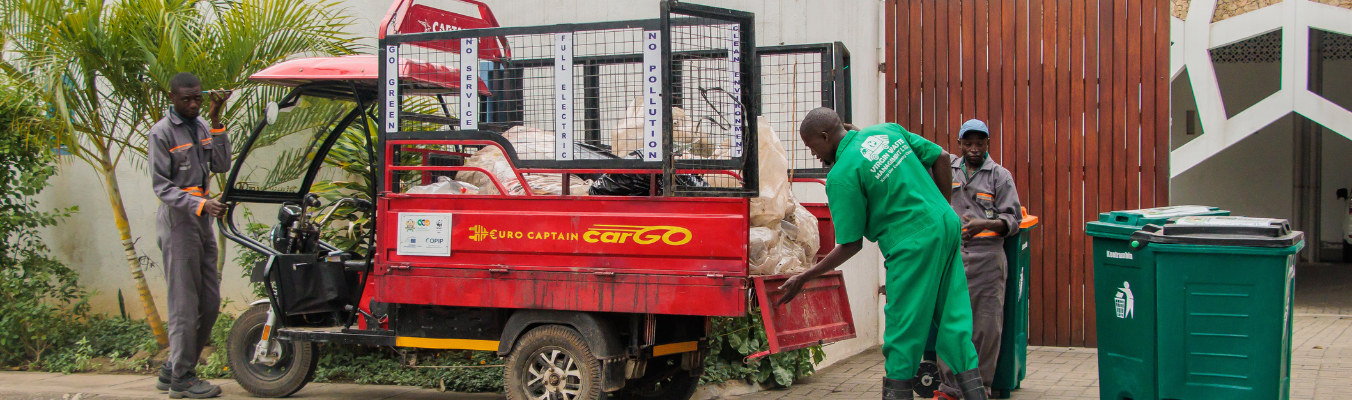
To tackle low collection services and recycling rates and support the ‘no segregation, no collection’ policy, WWF provided critical infrastructure, including motorcabs for waste collection and a centralised MRF in San Isidro to improve waste segregation and recycling efficiency. Waste collected by the Barangay La Union for example, is transported to the MRF, where members of Bituing Marikit Rural Improvement Club (BMRIC) — an informal waste worker group — sort, bale, and either sell or upcycle the materials.
A key component of this initiative is the integration of waste workers with the San Isidro Municipal Women’s Association (SIMWA). Upcycled products created from recovered plastics into plant pots and purses/bags by BMRIC members are handed over to SIMWA, who was trained by this project in marketing, business, and product development. As many waste workers are also members of the women’s group, this collaboration strengthens economic opportunities by linking waste recycling with livelihood opportunities. The initiative underscores the importance of human rights and social equity in addressing plastic pollution.
Objectives
- Strengthen waste collection and recycling systems in San Isidro through targeted infrastructure support.
- Influence policy-makers to include gender inclusion and social equity in San Isidro’s SWM system.
Key Successes
- Establishment of a centralised MRF and provision of infrastructure and vehicles (motorcabs) to Barangay La Union, enabling their collection of waste. The location of the central MRF at the landfill and RCA allows for greater operational efficiency.
- Provision of waste management and repurposing infrastructure and training to BMRIC and SIMWA for turning plastics into other products.
- Training SIMWA members in marketing, business, product development and proposal development which led to their securing of other grants.
- A Gender and Plastic Policy Ordinance for the BMRIC waste workers was drafted in 2022. The Ordinance supports a gender inclusive SWM system, declaring incentive systems, appropriating funds and other related purposes. Even though the ordinance is still under review by the committee, the local chief executive started providing waste workers with a monthly honorarium and personal protective equipment as a result of this advocacy.
Key Challenges
- Expanding collection coverage and infrastructure continues to present operational considerations: While improvements have been made, reaching currently underserved areas remains an area for further development, influenced by political dynamics and logistical conditions. For example, some of the existing collection equipment has not yet been optimally matched to the waste volumes along certain routes.
- Collection equipment capacity is smaller than route demands;
- Narrow access roads present challenges for the use of larger transport vehicles;
- Some areas remain difficult to service due to terrain or infrastructure constraints;
- Continued investment is needed to strengthen and extend service networks;
- Political and institutional coordination processes can hinder expansion timelines.
- Lengthy review of ordinance: The draft Gender and Plastic Policy Ordinance reflects an encouraging step forward. However, the approval process has progressed gradually, particularly in the context of upcoming municipal elections.
- Encouraging social acceptance and participation remains a longer-term goal: Collaborating with SIMWA (a women-led waste group) has generated meaningful economic opportunities. However, social stigma toward waste work continues to influence how community members perceive the sector. In some cases, outdated gender norms have affected recognition of female workers’ roles. Encouraging broader participation in waste segregation will benefit from continued community engagement, inclusive public education campaigns, and efforts to raise the visibility of SIMWA’s contributions.
- Creating stable markets for upcycled products is key to financial resilience: The project’s financial sustainability is closely linked to demand for its upcycled plastic products. Ongoing efforts to expand market reach and increase product appeal will be essential to ensure long-term revenue generation and impact.
Resources
- WWF Support: Provision of motorcabs for collection, training in marketing/business development for SIMWA members, ordinance draft, a sorting and storage area for recyclable materials, baling machine, melter, moulder for coasters and flower pots.
- Partnerships: Community leaders, SIMWA, BMRIC, MENRO (public collection service provider).
Enabling Factors
- Strategic MRF placement: Locating the central MRF at the landfill and RCA optimises efficiency in waste transportation, sorting and disposal.
- Multi-stakeholder collaboration: Partnerships with community leaders, women’s associations, public collection services, and informal waste worker groups have strengthened social inclusion and operational effectiveness.
- Active civil society: Linking waste collection and recycling to livelihood opportunities via SIMWA and BMRIC helps create an integrated solid waste management (SWM) system and raise awareness amongst the local communities.
Risks & Opportunities
- Equipment compatibility: Operational inefficiencies may arise if systems for collection, transfer, sorting, and disposal are not well-aligned – this could lead to higher costs, delays, and reduced recycling rates. For example, the motorcab provided to Barangay La Union was too small for the amount of waste to be collected along its collection route, requiring 3 trips to complete its round.
- Financial uncertainty: Reliance on external funding for equipment and waste worker incentives may hinder long-term sustainability if financial support is not secured.
- Strengthened business models for upcycled goods: to help ensure that recovered plastic and other materials are turned into value-added products with real market demand for sustainability.
- Regulatory delays: Without formal political engagement and adoption, policy proposals may remain unfulfilled.
- Local Government unit buy-in of ordinance: follow-up on the Gender and Plastic Policy Ordinance can support the formalising, institutionalising and scaling of plastic waste recycling activities with a just inclusion.
- Community buy-in and behavioural change: If local communities do not fully participate in waste segregation and recycling efforts, the impact of the initiative may be limited.