Case Study
Thailand: Koh Tao
WWF Involvement: July 2025 – June 2026
PSC Approach: Behavioural Change; Reuse and Refill
Focus Area: Reduction
Systemic Intervention: City Systems & Planning
For more information, contact:
Mr. Sarayut Thanasotorn, President
Koh Tao, Surat Thani, Thailand
Email: trashtreasuretao@gmail.com
https://www.trashtreasuretao.com/
Key Lessons Learned
- Need strategic logistics and communications for behavioural change to boost usage and return of containers – despite having a deposit fee, some containers were not returned due to consumers missing signage about returns, forgetting, or keeping them as souvenirs. Enhancing signage and communications along with extending return past events and having controlled entry/exit points may help to boost return rates. While vendor owners agreed to using the model, not all staff were entirely on board – more engagement with them to make all staff more comfortable with the process and understand the rationale for reusables may support enhanced participation.
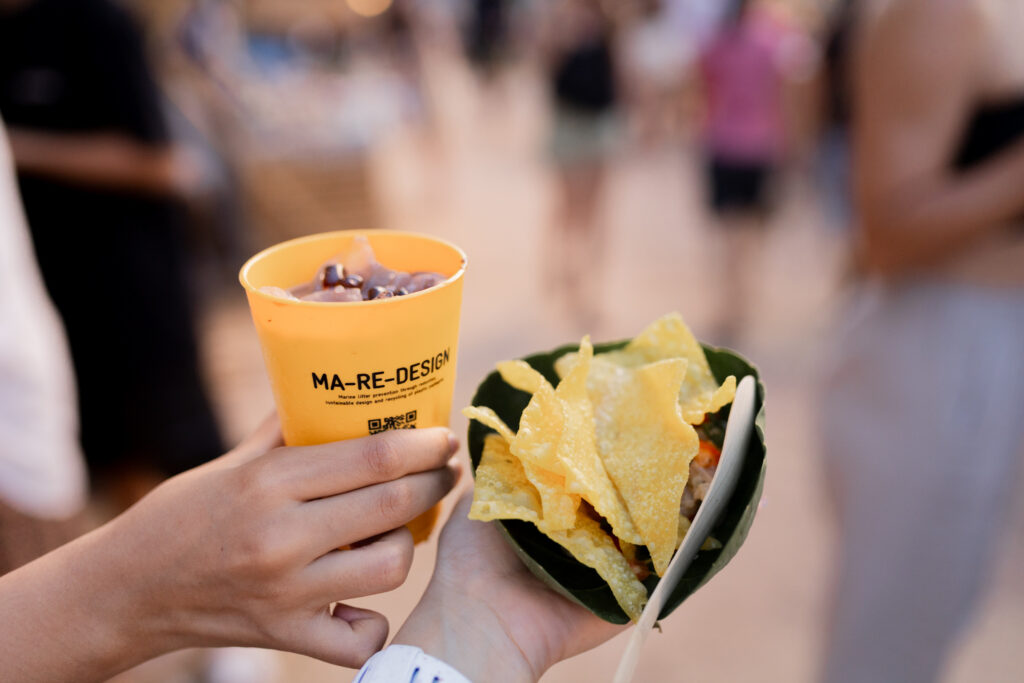
- Product design can help to enhance usage, return, and sustainability – the containers were designed with a logo to stand out, ensuring that event staff can easily remind users to return the containers. They were also made with good quality food-grade PP materials to reduce the likelihood of breaking, future models should consider ecodesign criteria for materials used. Containers were also designed in different shapes to accommodate relevant foods and drinks – the deposit fee was set at the highest cost of the product to ensure no losses. However, this high quality product resulted in people keeping the containers and the higher costs potentially discourages participation by some. Adding text on the cups including the enterprise’s name and messaging such as “Please return me” could help encourage users to return containers for reuse and more education on causes could enhance participation.
- Different types of events require tailored considerations – events with multiple independent food vendors are more challenging when there are a range of dish types to accommodate, while events with controlled entrances and centralised catering or an open buffet would be easier for this reuse model, reducing the number of dishware types required. The types of containers available for reuse and negotiations with vendors are key when scouting for potential users.
- Operational costs should be carefully assessed before implementation – hygiene, washing, water, electricity, labour, transportation, and storage all affect the financial viability of the reuse system. Seasonal variations, such as higher water costs during the dry season, should be incorporated into pricing and service fees to ensure long-term sustainability. For events that contract the enterprise for their reusable model, the organisers should bare the cost of lost dishware.
Background
Koh Tao in Thailand is one of Surat Thani Province’s most important tourism destinations. As tourism and local communities continue to grow, the volume of waste generated each year has also increased significantly. The reduction of waste alongside effective waste management is therefore essential to protect the island’s environment, strengthen the local economy, and maintain Koh Tao’s reputation as a world-class sustainable tourism destination.
Trash Treasure Tao Community Enterprise was established by representatives of the Koh Tao community with the support of WWF-Thailand, to promote a Circular Economy – in addition to establishing a waste bank, refill station, and learning center, one of its initiatives includes the introduction of a reusable dishware system through a deposit return system (DRS) to replace single-use products (SUPs) during events and eventually some daily operations. This concept was modelled after EcoCrew’s reusable packaging operations that are mainly in Bangkok.
Objectives
- Reduce single-use waste at events and daily operations for a cleaner Koh Tao.
- Establish a financially sustainable community enterprise that provides reusable dishware through a Deposit Return Scheme.
- Promote a circular economy by increasing the adoption of reusable alternatives to single-use products.
Key Successes
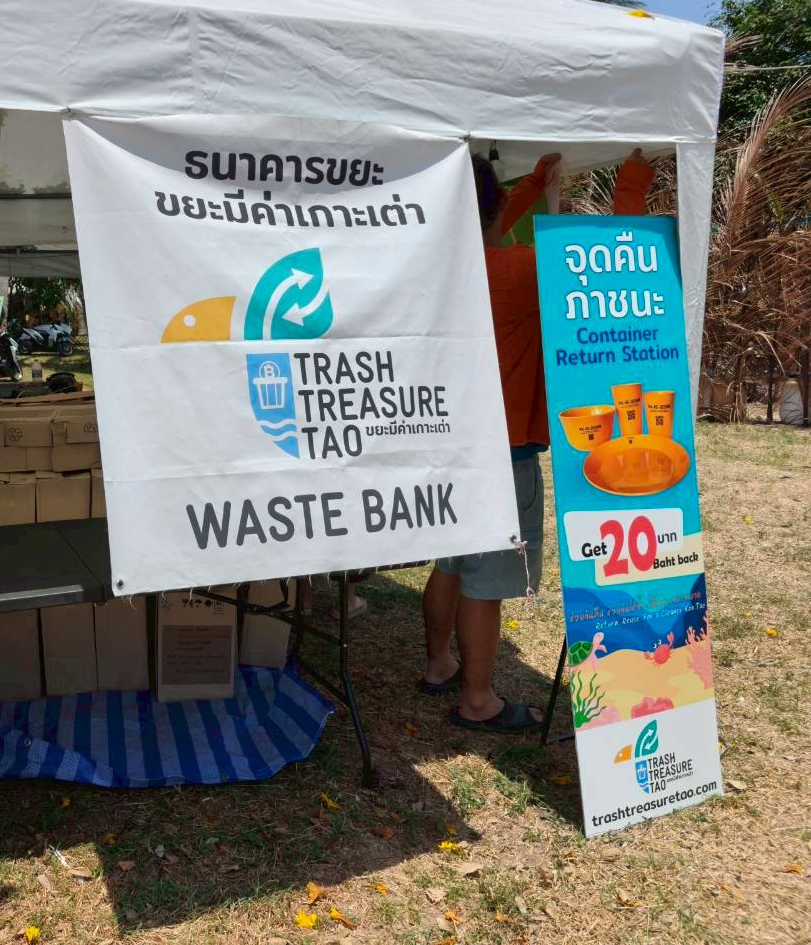
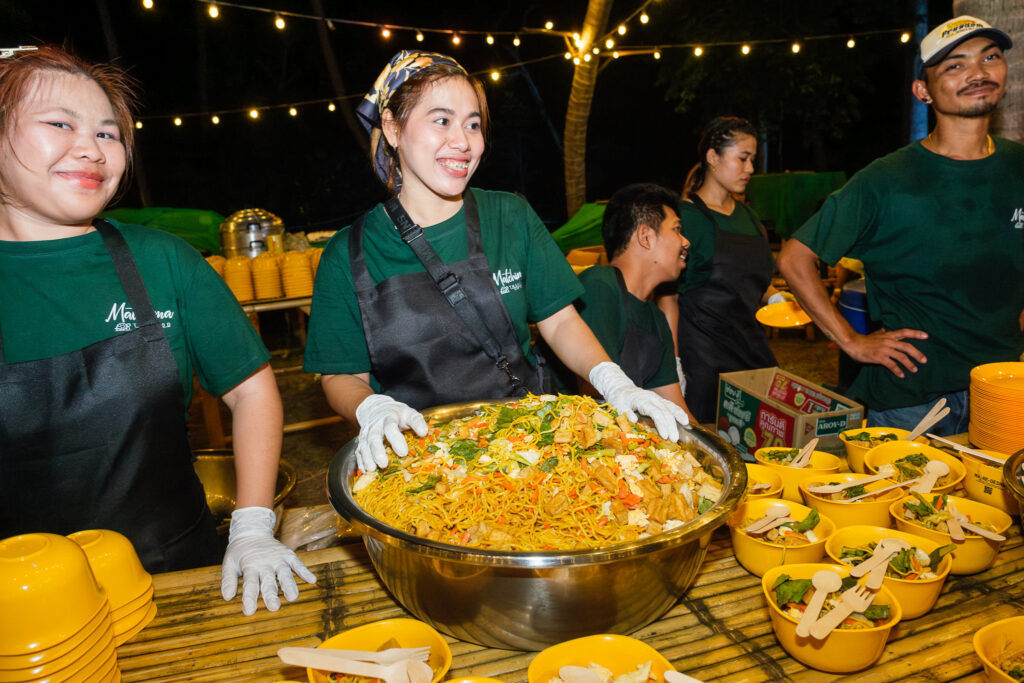
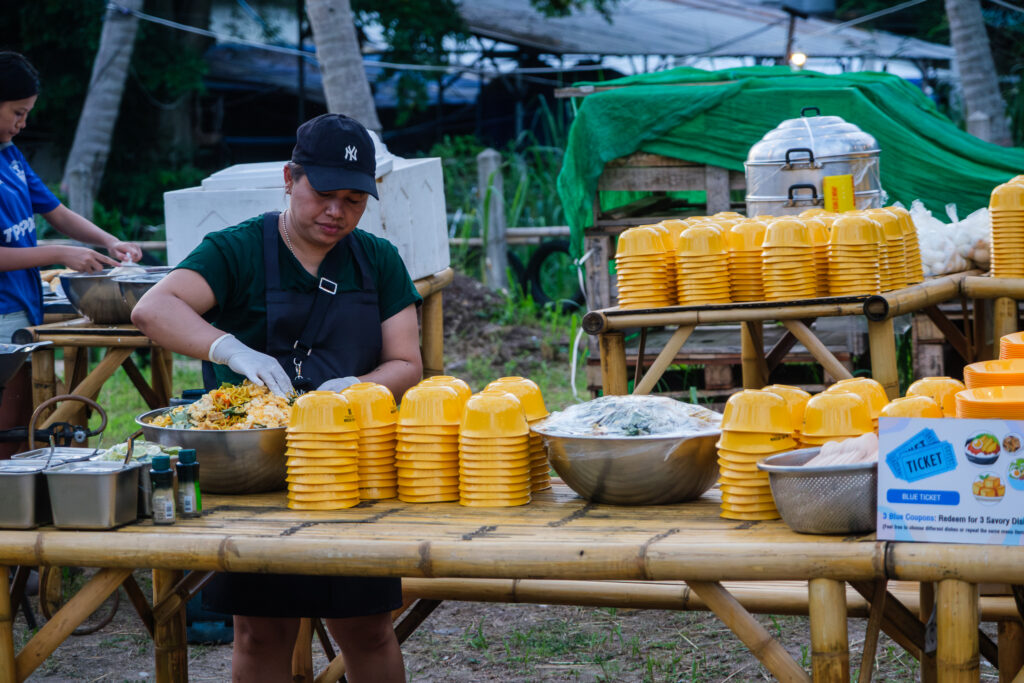
- Established a reuse model for dishware in Koh Tao: after learning from EcoCrew who was contracted by WWF-Thailand to supply the Koh Tao’s Spotlight event in 2025, Trash Treasure Tao started operations in time for Spotlight 2026, where bowls, plates, and two sizes of cups could be borrowed with a refundable deposit of 20 THB. Their successful operationalisation demonstrated that community-led initiatives can effectively support waste reduction and more sustainable event management on Koh Tao.
- Successfully equipped three events with DRS dishware and increased public awareness of reuse systems within a couple months of operations between May-June 2026: after applying the model at the three-day Spotlight 2026 event, which was attended by around 2,000 people per day, the reusable dishware was also used at a World Oceans Day event catering to about 350 people. Scuba Schools International (SSI), who attended one of the events, also expressed interest and hired Trash Treasure Tao to supply their event with 500 reusable cups, thus already expanding their reach.
- Significantly reduced waste generation at events with a high return rate, proving the feasibility of a reuse model in Koh Tao: though not all vendors at the Spotlight 2026 event took part in the reuse model, many did, resulting in the reduction of 9,931 pieces of SUPs and a return rate of about 10% through the support of event staff and the public. The World Oceans Day event reduced the use of over 3,000 containers, while the SSI party saved 500 SUPs, thus contributing towards a cleaner Koh Tao one event at a time.
Key Challenges
- Varied participation by vendors: although all vendors at Spotlight 2026 agreed to participate in the reuse model, only about 70% of them followed-through with collecting the reusables during the event and having the option. Some vendors also noted inability to fully take part as the dishware did not accommodate takeaway orders, their dishes would not fit on the reusables, concern that customers would be reluctant to pay the deposit, or that they just preferred the ease of SUPs.
- Labour-intensive operations: without the same capital as an established organisation such as EcoCrew who has the technological infrastructure and skills for QR code enabled return machines, this low-tech solution required more human resources to receive used dishware and refund the deposits. Staff needed to be trustworthy and trained with the ability to handle the cash flow.
- Inconsistent return by users: while there was a relatively high return rate of approximately 90%, this was largely due to the enthusiasm of some children and event staff who collected about 10% of stray reusable containers at the end of the event and returned them, keeping the deposit for themselves. Roughly 10% of dishware was not found – this was largely due to the lack of awareness or forgetfulness of consumers, or their decision to keep them as souvenirs. Despite a lot of signage around the event and some staff to monitor, the Spotlight 2026 event was too large to fully ensure compliance by users.
Resources
- Reusable dishware: about 26,000 pieces of plastic cups (340ml and 410ml), round plates (300ml), and round bowls (750ml) were procured.
- Staff: for the event with 2,000 attendees, there were two return stations each with staff taking two shifts over the course of the day with three people at a time.
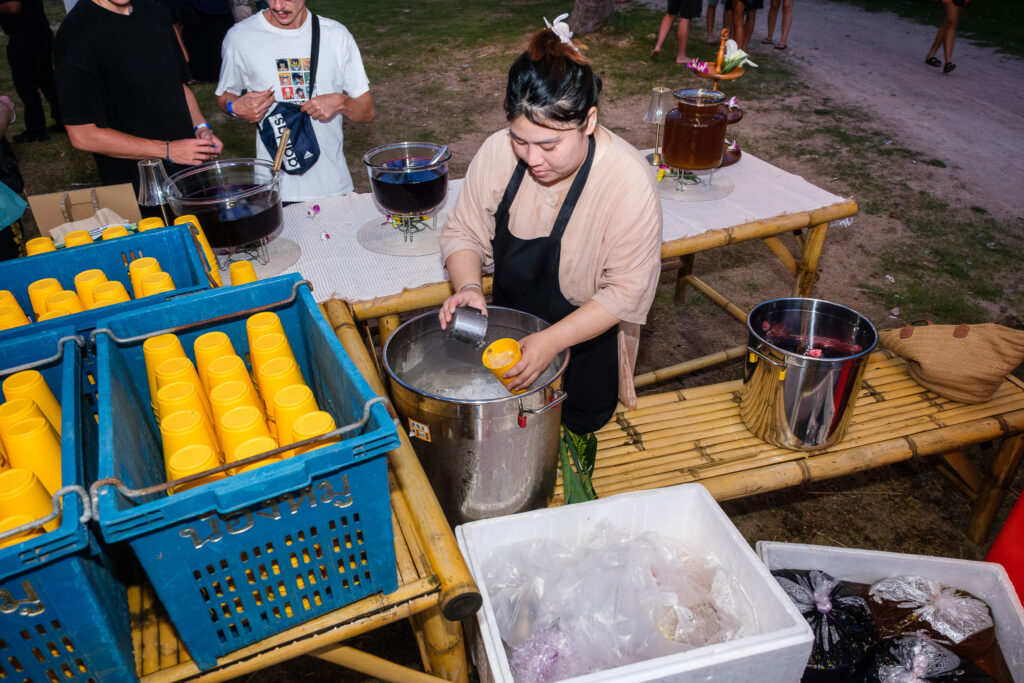
- Dish cleaning: manual washing was done by staff after each event. A restaurant-grade water-efficient dishwashing machine was later procured for the enterprise, which should support with more efficient water usage and human resources, while maintaining a high standard of hygiene.
Enabling Factors
- Strong partnerships and institutional support: Successful replication depends on collaboration among local governments, businesses, community organisations, event organisers, and other stakeholders. A dedicated organisation is needed to coordinate operations, while supportive policies, event guidelines, and stakeholder commitment help integrate the reusable container system into local waste management and circular economy initiatives.
- Sustainable business model and pperational capacity: A financially viable model is essential for long-term success. This includes an appropriate deposit and rental system, cost-recovery through washing and logistics services, and careful consideration of both fixed and variable operating costs throughout the year. Adequate infrastructure, such as high-quality reusable containers, storage, and water-efficient washing equipment, combined with standardised operating procedures, ensures the system can operate efficiently and scale over time.
- Community engagement and local adaptation: The system should be designed to fit local conditions, including event types, available infrastructure, seasonal resource constraints, and consumer behaviour. Clear communication, vendor training, and public awareness campaigns help build trust and encourage participation. Continuous monitoring and learning enable the system to be refined and adapted, supporting successful replication in different communities.
Risks & Opportunities
- Sustainability: while operations of this model is one part of the enterprise’s larger ambitions including the waste bank and refill station, there needs to be profitability for the overall reuse model to continue over time – this can come with increased business and leveraging of strategic opportunities. Added monitoring with consistent tracking of the outflow and inflow of containers would also improve logistics and understanding of losses.
- Expansion of business: as the issue of single-use products and waste gains awareness along with the ease of the reusable model at events and further advertising including the Trash Treasure Tao website, more like-minded businesses and event organisers may engage this enterprise for either events or daily operations. The enterprise could also offer a cleaning service for reusable containers outside of this enterprise. However, the service fee will need to be carefully planned for profitability.
- Scaling: for other locations looking to adopt a similar model, it is important to identify which costs remain fixed throughout the year and which are variable. This is especially key for operating expenses that may fluctuate such as cleaning costs as the price of water varies throughout the year, being significantly higher during the dry season in Koh Tao.: for other locations looking to adopt a similar model, it is important to identify which costs remain fixed throughout the year and which are variable. This is especially key for operating expenses that may fluctuate such as cleaning costs as the price of water varies throughout the year, being significantly higher during the dry season in Koh Tao.