Case Study
Kenya: Mombasa
WWF Involvement: January 2020- December 2024
Focus Area: Collection/Recovery and Recycling/Enabling Framework
PSC Approach: Collection & Separation; Sustainable Financing
Systemic Intervention: Policy Advocacy; Knowledge Strengthening; Systems & Infrastructure
For more information, contact:
Alex Kubasu
Mombasa, Kenya
Email: akubasu@wwfkenya.org
Key Lessons Learned
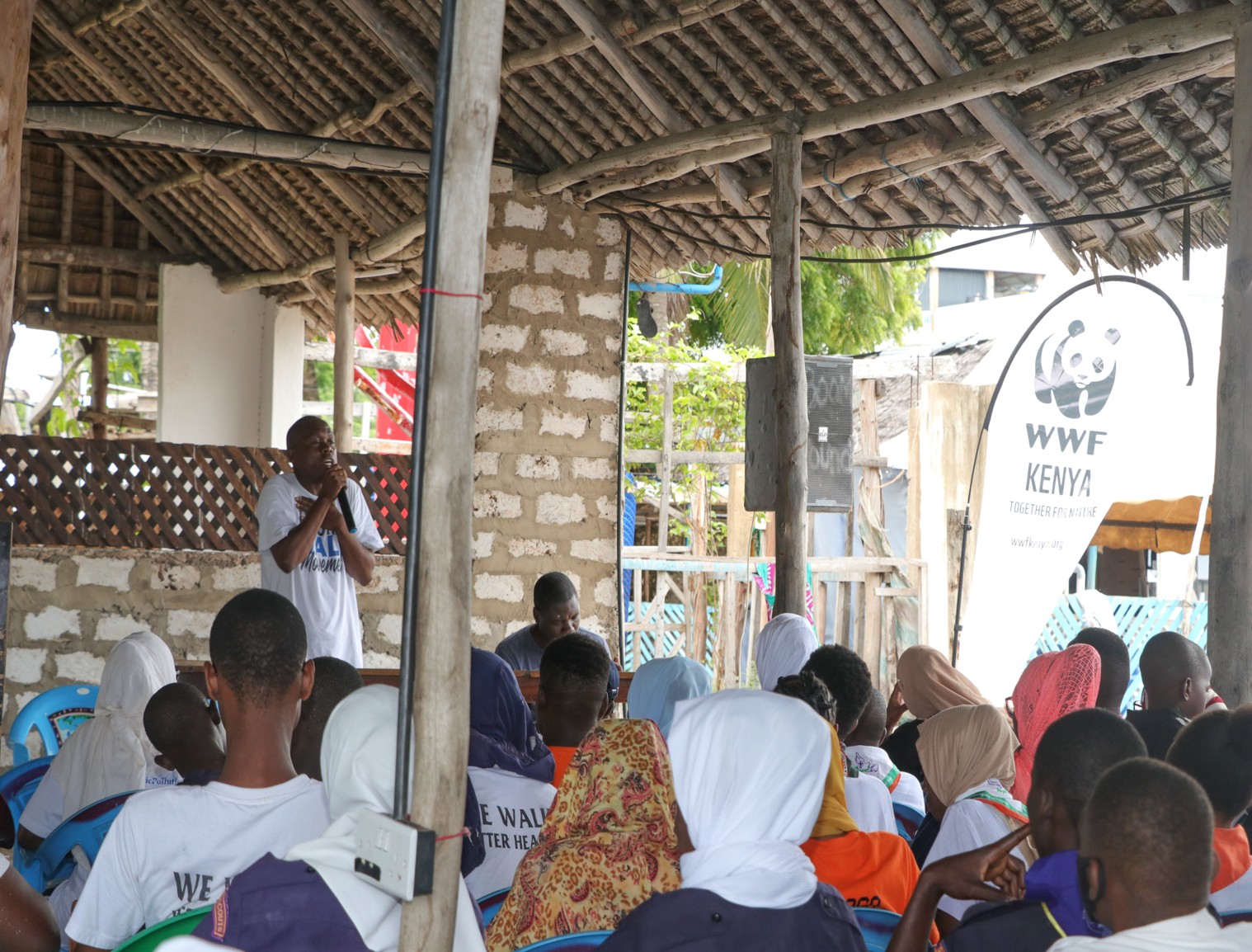
- Collaboration empowers individuals and their livelihoods – the formalisation of waste collectors bringing multiple cooperatives together and advancing responsible business conduct (RBC) strengthens their rights, recognition, and inclusion in decision-making:
- As different cooperatives were brought together as a collective, their bargaining power increased. Formalisation allowed members to advocate for their needs together and ensure that their efforts are recognised by both local and national authorities.
- Responsible business conduct promoted fair labour practices, business formalisation, and ethical waste management standards for the informal sector.
- Waste worker livelihoods were strengthened with increased rights, safety, and business skills, along with a more established market for plastics, workers gained higher profits, more than doubling the daily income for casual workers at sorting and aggregation centres from USD1.50/day in 2020 to USD3.80/day in 2024, as well as improved healthcare and knowledge.
- Upgrading tools can enhance productivity – investing in equipment and technology-driven solutions connects waste managers with market linkages and boosts efficiency: providing tools including a digital platform helped to link waste managers to the market by connecting sellers with buyers and vice versa, thus improving efficiencies of the process. Providing one-off equipment such as vehicles also advanced manual hand-labour into motorised capacities.
- Upskilling waste workers boosts recycling supply and demand – transforming waste into a business creates an economic opportunity and increases waste collection, reducing plastics in nature: providing trainings on how to run a waste management business enabled the strengthening of the value chain and the creation of market linkages for waste. Waste workers were empowered to develop profitable businesses through increasing their collection capacity.
Background
Kenya has more than 500,000 tonnes of plastics produced per year, of which only about 15% is recycled1. Inadequate solid waste management infrastructure has left many illegal dumpsites across the coastal counties, resulting in plastic leakage into the environment. Mombasa, a coastal county in southeastern Kenya, has also historically had a fragmented waste sector with over 3,000 informal waste collectors operating without legal frameworks, under precarious conditions with unfair wages or inaccessibility to the market. In Mombasa, the Waste to Value project has proven that plastic waste can be transformed into opportunity.
Objectives
The overarching goal of the project was to transform plastic waste management in Mombasa County into a sustainable and commercially viable circular economy by creating decent jobs, increasing plastic recovery and recycling, strengthening the plastic value chain, and reducing plastic pollution through public-private partnerships.
- Outcome 1: Improved livelihoods and decent employment through a strengthened plastic value chain.
- Outcome 2: Increased plastic collection, sorting and recycling capacity.
- Outcome 3: Demonstrated a scalable business model for circular economy.
Key Successes
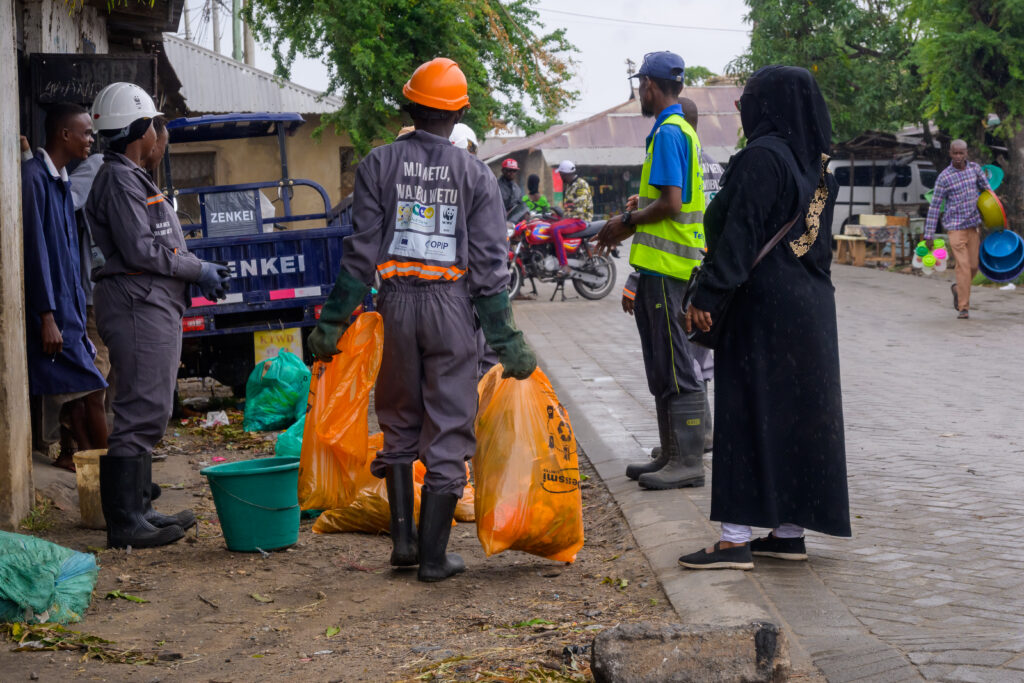
- Created sustainable employment and increased income opportunities for waste collectors, particularly youth and women in this male-dominated sector: The project created 286 decent jobs with a more diversified population (growing from 43 men to 119 men, 58 women, and 109 youth), as well as trained and organised over 700 waste collectors, of which 515 received improved income opportunities through continued engagement.
- Established a commercially viable recycling value chain that significantly increased plastic recovery and processing, recovering over 44,000 tonnes of plastic waste: The project facilitated the collection of 2,152.94 tonnes of plastic waste through trained waste pickers. Additionally, 7,828.28 tonnes was sorted and sold at sorting stations and buyback centres2. Commercial partners processed a total of 44,801.37 tonnes of plastic, supported by expanded sorting infrastructure, improved technologies and strengthened recycling partnerships. Some recovered plastics were also turned into valuable products such as water tanks made of recycled plastics.
- Demonstrated a scalable circular economy model that attracted investment, strengthened private sector participation and influenced policy: The project leveraged DKK 1.69 million in additional funding, supported establishment of 13 new buy-back centres, introduced Responsible Business Conduct, advanced Extended Producer Responsibility (EPR) implementation, and demonstrated commercially viable recycling innovations for replication across Kenya.
Key Challenges
- Limited access to finance and investment: Many waste collector groups, cooperatives, and small and medium-sized enterprises lacked access to affordable credit and investment capital to purchase equipment, expand operations and improve business performance. This resulted in slow business growth and continued dependence on donor support, limiting long-term sustainability and ownership of project interventions.
- Slow adoption of Responsible Business Conduct standards: Small aggregators and community-based organisations faced financial and technical constraints in implementing RBC requirements, including the provision and replacement of personal protective equipment (PPE) and compliance with workplace safety standards. As a result, the uptake of responsible labour practices and occupational health and safety measures progressed more slowly than anticipated.
- Weak data collection and management systems: Waste collectors initially lacked structured systems for recording waste volumes, income and operational performance, resulting in inconsistent and incomplete project data. Although digital tools and capacity building improved reporting, weak data management affected project monitoring, evidence-based decision-making, and performance tracking during implementation.
- Key commercial partner and implementation adjustments: Misunderstandings with a key partner disrupted the original implementation plan for establishing sorting stations and expanding activities beyond Mombasa. The project responded by onboarding Mr. Green Africa and PAKPRO as new commercial partners and refocusing implementation within Mombasa County, requiring adaptive management to maintain project delivery and achieve intended outcomes.
Resources
- Blended financing of DKK 12.9 million (approx. USD 1.2 million), combining Danida/DMDP core funding with co-funding from the European Investment Bank and The Coca-Cola Foundation to cover equipment, logistics and infrastructure.
- A multi-sector partnership of six organisations – WWF-Kenya, WWF-Denmark, Plastix A/S, Jil Industries, PAKPRO and Mr. Green Africa – each contributing technical expertise in recycling, policy development or market linkages, plus close collaboration with the Mombasa County Government.
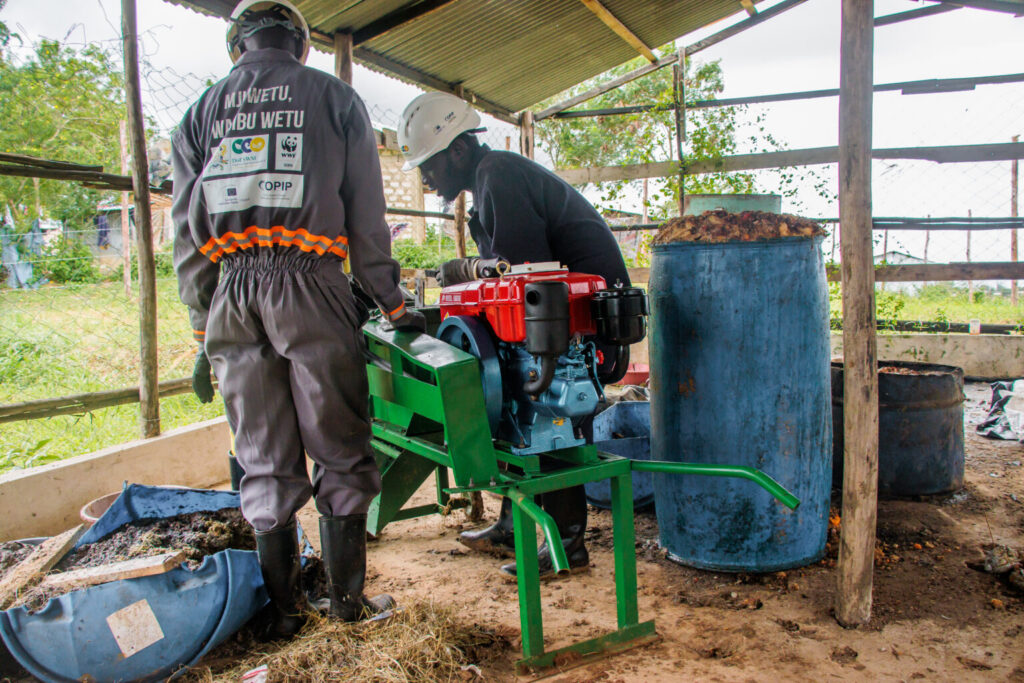
- Capacity-building and data infrastructure, including a training manual for waste managers, the WWF-Kenya Centre of Excellence Data Management System, and a WhatsApp-based learning platform (developed with Elewa, a software development company in Kenya) for remote training of collectors.
Enabling Factors
- Established commercially viable business models: The project demonstrated that plastic collection, sorting and recycling can generate sustainable livelihoods while creating value for private sector partners, making the model attractive for replication in other counties. The revenue generated from waste collection, sorting, and the sale of recyclable materials are sustaining the operations as a portion of the revenue is allocated to cover operational costs, administration, equipment maintenance and business development.
- Strong public-private partnerships: Collaboration between county governments, waste collector cooperatives, recyclers, Producer Responsibility Organizations and development partners created a coordinated implementation model that can be adapted in other regions.
- Supportive policy and institutional framework: Alignment with the Sustainable Waste Management Act of 2022, EPR Regulations of 2024, and county waste management policies provides an enabling environment for scaling circular economy initiatives across Kenya.
- Strengthened local institutions and market systems: The establishment of waste collector cooperatives, buy-back centres and the Pwani Circular Economy Association created sustainable local structures to coordinate waste collection, market linkages and stakeholder engagement beyond the project period.
Risks & Opportunities
- Increased competition from an influx of new, unaffiliated waste collectors attracted by the sector’s growing profile diluted collection volumes for some project-affiliated groups, requiring continuous reinforcement of market linkages with recyclers.
- Kenya’s mandatory EPR regulation, introduced in July 2022 and gazetted in 2024, is driving continued demand from Producer Responsibility Organizations for organized waste collectors, creating a durable market pull beyond the project’s lifetime. EPR fees provide incentives to recyclers and collectors, slightly improving the unit price of collected plastics and other materials.
- A second phase of this project has kicked off following the success of Waste to Value project in Mombasa, which validated a viable recycling business model. The new Danida Green Business Partnerships “Closing the Loop” project will run from 2025-2030 – covering five additional counties, this phase aims to create jobs and strengthen material traceability to support reporting under Kenya’s emerging EPR system.
- Government of Kenya (GoK), 2021. National Solid Waste Management Strategy. Ministry of Environment and Forestry, Nairobi. ↩︎
- A plastic buy-back centre in Kenya is a collection point where waste plastic, usually PET bottles, HDPE containers, and other recyclable plastics, is bought from the public (often waste pickers, collectors, households, and small businesses) by weight, then sorted, cleaned, and aggregated before being sold on to recyclers or processors. ↩︎