Under the MA-RE DESIGN project, Trang City and Koh Tao municipalities commenced their Plastic Smart Cities journeys in 2025. In Trang, the emphasis was on strengthening the municipal, community, and informal sector foundations needed for future circularity. While in Koh Tao, the work focused on overcoming island-specific barriers to recover low-value materials. This article will focus on Koh Tao’s effort as of July 2026.
Waste Infrastructure Gaps Threaten Koh Tao’s Environment
Koh Tao is internationally recognised for its coral reefs, sea turtles, and frequent whale shark sightings. However, such great popularity comes with a risk to the environment. Oceans face a serious threat from waste, especially as a small island with limited space and access, high consumption of single-use products from high tourism traffic, and the high cost of transporting waste to the mainland for recycling overwhelming landfills and posing a greater risk of waste leakage into nature.
Koh Tao welcomed over 700,000 tourists in 2025, and with such high seasonal demand from visitors, hotels, restaurants, and retail businesses, the volume of waste significantly increased. However, before systematic interventions were introduced, source separation and recovery arrangements were fragmented and inconsistent, resulting in contamination and limiting the quantity and quality of materials that could be recovered.
WWF-Thailand’s approach goes beyond stand-alone waste collection or sorting activities. The project connects source separation, local aggregation, material preparation, transportation, mainland off-takers and behaviour change into an integrated recovery pathway that can function within the constraints of an island.
Building Koh Tao Waste Management System: Involvement from the Local Business and Communities
To build a system for low‑value materials, the project began with glass as the first commodity. Although glass is recyclable, its weight, storage requirements and transport costs has made it a low- or negative-value material on an island. The operational system starts with segregation at the business and household level, after which the materials are brought to local aggregation points for temporary storage. The materials are then prepared according to the requirements of each recycling pathway. Glass bottles and beverage cartons can be aggregated without washing, while multilayer packaging, bags and films need to be cleaned and dried before transportInstead of creating a new, costly method to ship them to the mainland, the project integrates the process into existing passenger transport, utilising backhaul routes to deliver the materials to the mainland off‑takers.
Glass serves as an initial proof-of-system. Building on this foundation, additional materials (including selected plastic packaging, beverage cartons, EPS foam and stretch or shrink film) are being assessed and progressively integrated according to available storage, transport and off-taker requirements. The main goal is to direct plastic into the recycling system for collection, segregation, and reprocessing, allowing these materials to continue creating value in an endless loop, extending the useful life of materials and reducing disposal and leakage.
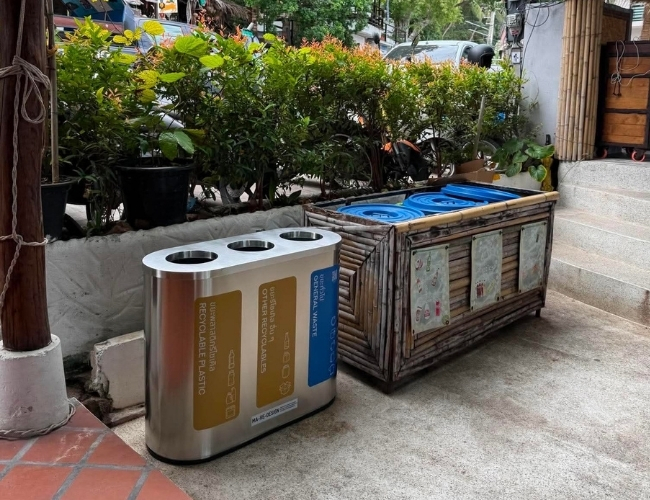
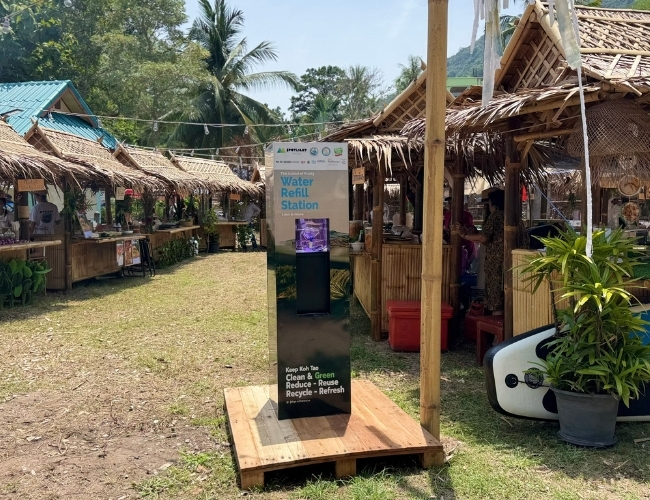
Koh Tao has also begun advancing single-use plastic reduction measures in selected beaches, dive sites and tourism areas, with the intention of progressively expanding participation across the island. This movement will not only limit the direct impact of plastic leakage into the ocean, but will also be part of behaviour change needed on the island. Additionally, there were 30 sets (3 bins per set) of waste bins and 6 water refill stations installed, particularly in tourist areas to accommodate their needs.
Businesses’ Role in Advancing Waste Management
Since the source of the materials comes from not only households but also businesses such as hotels, restaurants, shops, and tourism, the system must also include the business sector on the island. WWF-Thailand has successfully engaged with some companies to collectively signed a commitment to reduce plastic waste.
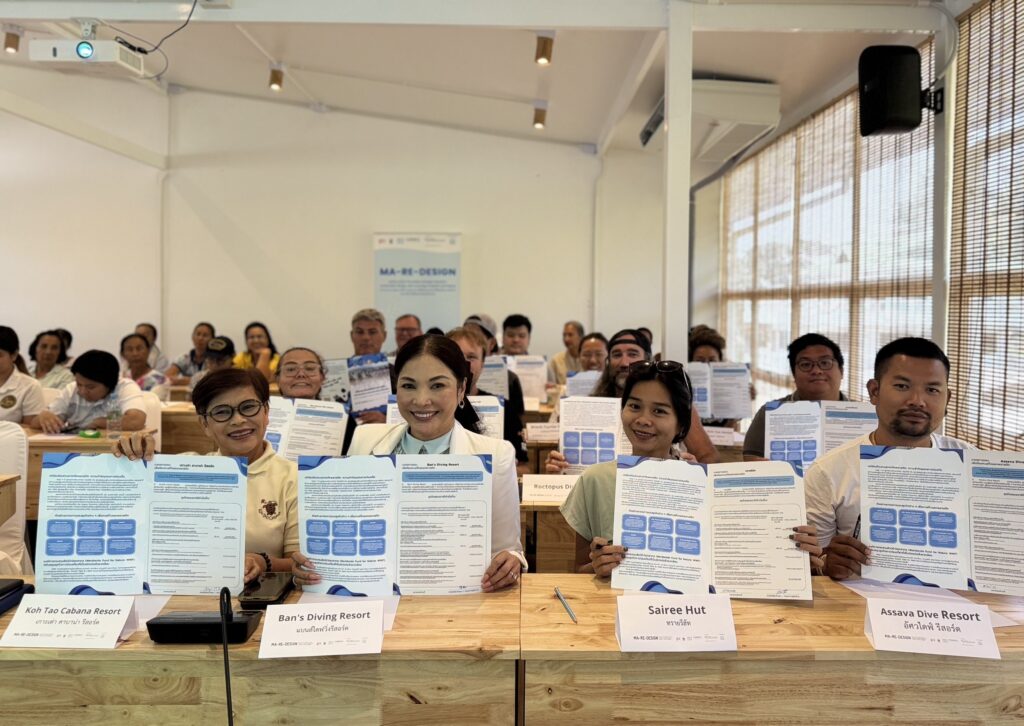
Business owners were exposed to the plastic problem and learned it was both a crisis and an opportunity, thus agreeing to removing single-use plastics or switching to alternative packaging. Between February and September 2025, twenty tourism businesses signed the ‘Towards Plastic-Free Oceans’ commitment, pledging to reduce selected single-use plastics, strengthen source separation and improve staff awareness. This commitment complements the broader ‘Koh Tao: Say NO to Single-Use Plastic’ campaign led by the Koh Tao Tourism Association and supported by WWF-Thailand. Participating businesses have varied levels of adoption, with some beginning to reduce plastic bags and other selected single-use items, and others adopting alternatives or strengthening waste separation among staff.
Working with the Local Community Enterprise: Trash Treasure Tao
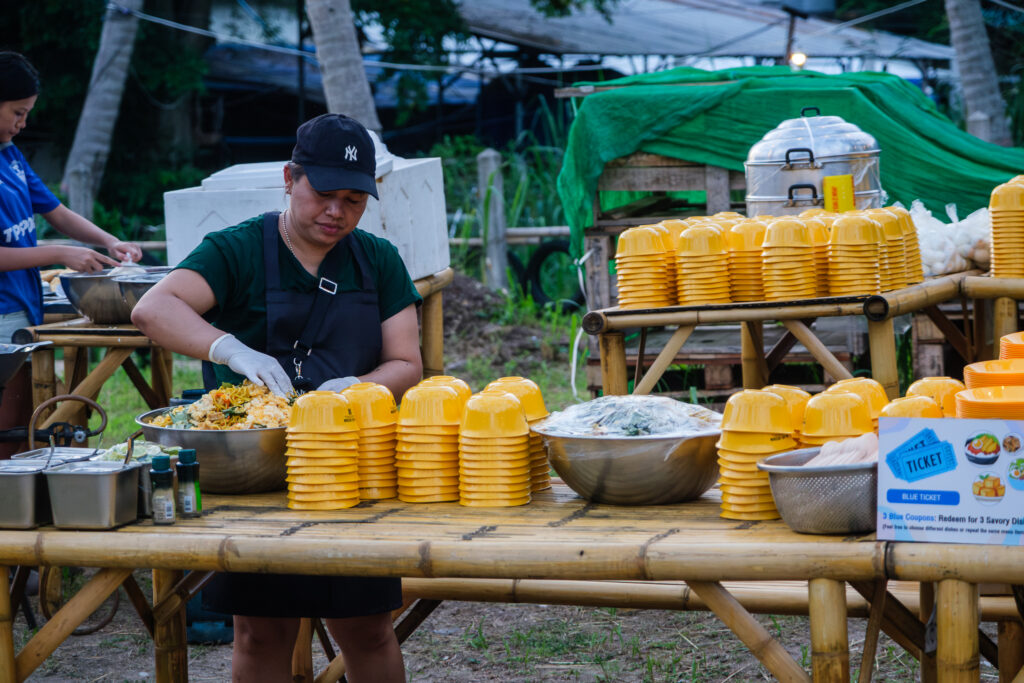
The project also supported the establishment of Trash Treasure Tao, a local community enterprise designed to provide an island-based platform for aggregating and preparing low-value materials for transfer to mainland recycling markets. Construction of the facility has been completed, with full operations scheduled to begin in August 2026. Prior to the full launch, a deposit return system pilot for events was introduced during Spotlight Koh Tao in May 2026. Once operational, the enterprise is expected to manage material aggregation, buying, compaction, and coordination with transporters and off-takers. These diversified activities expect to generate profit and create a circular economy, improving waste management in Koh Tao and ensuring sustainability of the system.
Also read case study: “Trash Treasure Tao: A Community Enterprise Piloting Reuse at Events in Koh Tao“
Organic Waste Treatment System to Boost Recyclable Materials Collected
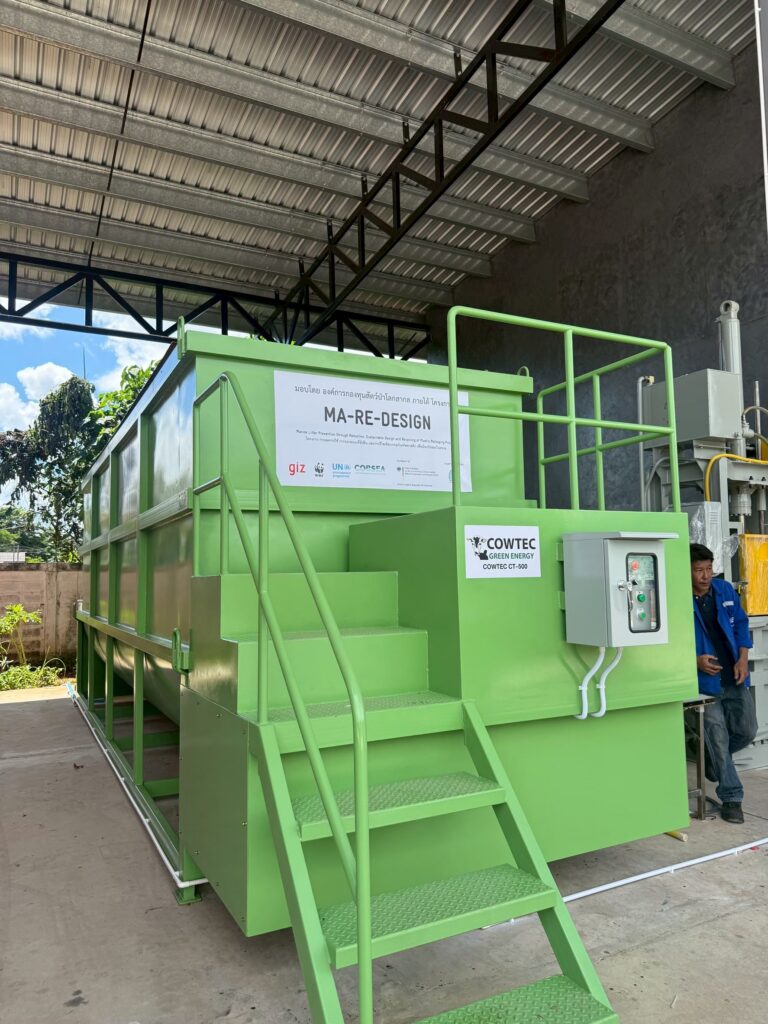
A large percentage of waste in Koh Tao consists of organic waste – without proper management, it contaminates recyclable materials and lowers their chances of being recovered back into the recycling system. High-quality materials that are uncontaminated will attract higher values, thus highlighting the importance of segregating organic waste from recyclables.
A centralised organic-waste treatment system was developed with a design capacity of up to 500 kilograms per day. Koh Tao Municipality collects organic waste for treatment daily, while the resulting compost is made available to the public free of charge. Biogas generated by the system can be used through a cooking stove installed adjacent to the facility, recovering organic materials for multiple usages while allowing for cleaner recyclables
Koh Tao’s Pathway Towards a Plastic Smart and Circular Island
The focus of this project is to build a system where there are buyers and sellers for recyclables, to help reduce the waste from leaking into the ocean. This pilot is designed to move beyond isolated activities and establish an operational model with the potential for long-term financial and institutional viability.To realise this circular system, the MA-RE-DESIGN project engaged and worked with municipalities, communities, and tourism businesses, community organisations and local service providers. Together, Koh Tao has put in place several institutional, behavioural and physical foundations needed to reduce plastic leakage. The next phase will be to operate, monitor and refine these connected systems and demonstrate their long-term environmental and economic performance.
WWF Thailand is part of the MA-RE-DESIGN project implementation team along with GIZ, UNEP – COBSEA. While GIZ is focusing on the upstream effort for packaging waste management through EPR and PRO to promote a more environmentally friendly packaging design, WWF Thailand complements the project through direct implementation on the ground through pilot projects in 2 municipalities.