Case Study
Viet Nam: Phu Quoc
WWF Involvement: July 2024 to December 2024
Focus Area: Collection
PSC Approach: Formal Collection
Systemic Intervention: Systems and Infrastructure
Key Lessons Learned
- Securing formal integration and buy-in from stakeholders is essential: Long-term success of the collection system relies significantly on securing formal support and coordination among local authorities, public service management boards, and residential areas. Extensive stakeholder engagement during the pilot phase proved crucial in aligning these different groups.
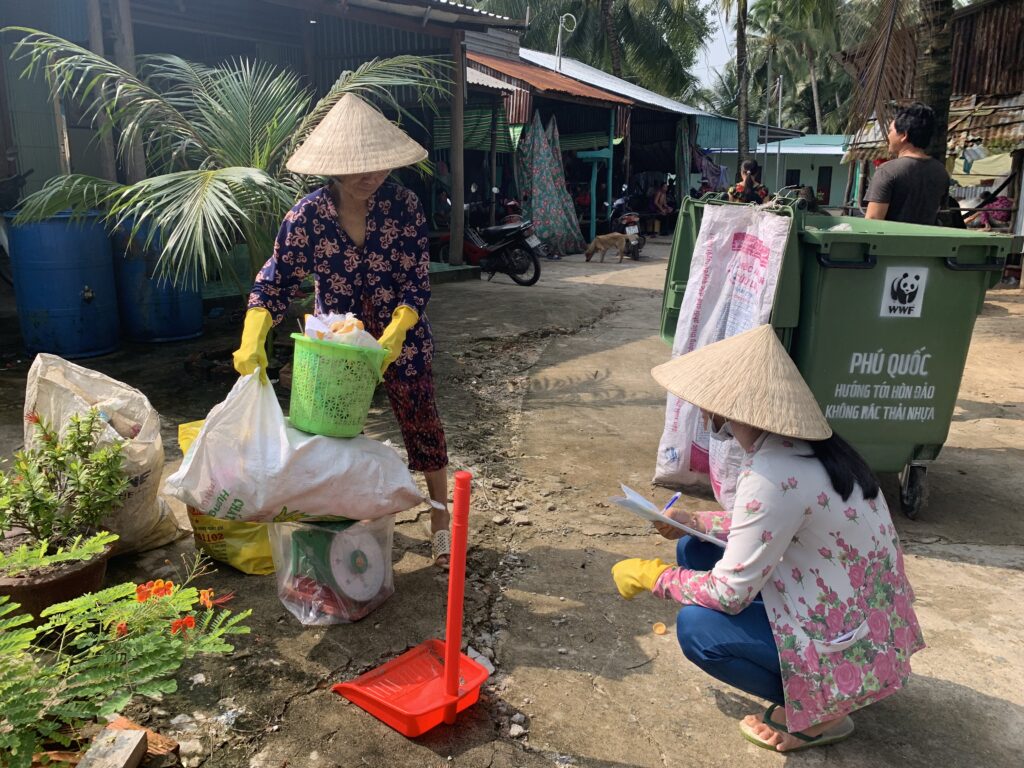
- Waste audits and incentive-based initiatives effectively reinforce waste management practices: Initiatives such as waste audits, sorting activities, and incentive schemes such as “Waste Exchange for Gifts” successfully strengthened participant commitment to proper waste management practices.
Background
Phu Quoc, known as the “Pearl Island,” has experienced rapid tourism growth, leading to increasing environmental pressure, particularly in waste management.
Through a baseline plastic leakage study conducted through this project, 45 households in Neighbourhood 8 in Duong Dong Ward were experiencing ongoing waste disposal challenges contributing to environmental pollution with waste entering Duong Dong river and nearby marine ecosystems in the absence of regular collection services (WWF KII 05, 2024).
In response, a pilot waste collection model was introduced by the local government to provide structured and expanded waste collection services, reduce pollution, and increase community participation in proper waste disposal and sorting.
Objectives
- Expand waste collection coverage to Groups 6 and 7 of Neighbourhood 8 which was not previously served.
- Reduce the leakage of plastic waste and other recyclables into the environment, particularly in hotspot areas along rivers and beaches.
- Encourage household participation in proper waste disposal and sorting.
Key Successes
- Collection coverage: Within three months, the pilot programme collected nearly seven tonnes of household waste, including recyclables from the previously underserved communities. Based on the average rate of daily waste generation and composition, it was estimated that 687 kg (10% of total waste) of plastic waste was prevented from entering the environment.
- Behavioural change: Achieved over 90% participation rate in active waste segregation from households in the target collection area within the first few months of operation. This was achieved through incentive programmes including ‘Waste Exchange for Gifts’. As well as awareness raising campaigns to encourage participation, ultimately reducing the amount of waste leakage and littering observed in the target hotspot areas along rivers and beaches.
- Community financial commitment: 41 out of 45 households voluntarily contribute 30,000 VND/month (USD 1.20) to sustain the collection system, which is based on the current collection fee regulated by the city authority and collected by the public service.
- Established a collaborative model involving the local government, public service provider, and residents that showed promise for long-term sustainability. This will be handed over to the local government after the testing period.
Key Challenges
- Formalising the integration of the new collection route into the MSWM system required extensive coordination: Aligning with existing systems involved significant effort and collaboration across multiple government agencies.
- Ensuring consistent payment of the collection fee presented challenges: While most households contributed regularly, a small number of households (4 out of 45) paid the collection fee inconsistently, suggesting room for improved engagement on payment mechanisms.
- Establishing trust and buy-in from the community took time: In areas with no prior formal waste collection, building trust in the system and securing community participation required ongoing engagement and awareness efforts.
Resources
- Support: WWF covered the initial operational costs, purchase of additional collection bins and waste collection trucks. They also brought together the local authorities, public service management board, and residential communities. They collaborate and their technical expertise was given to local partners to design the collection system, establish routing, and train collection workers.
- Human Resources: Waste collectors, community leaders, and volunteers.
- Equipment: Waste bins, collection vehicles, and materials for public awareness campaigns.
- Stakeholders: People’s Committee of Duong Dong Ward, Urban Works Management Board, local residents, and businesses, which helped to secure the project’s success.
Enabling Factors
- Strong political will and commitment from local authorities to improve waste management services.
- Availability of funding and technical support from development partners to kickstart new initiatives.
- Presence of active community groups and resident associations that can facilitate engagement and participation.
- Opportunities to integrate new collection models into existing MSWM systems.
Risks & Opportunities
- Availability of government budget allocations and operational support: to sustain new collection systems, the People’s Committee of Duong Dong Ward will need to maintain budgetary and operational commitment to ensure continuity.
- Coordinating across different government agencies and departments responsible for waste management remains a challenge, with multiple departments involved in local waste management responsibilities that needs to be upheld.
- Introduction of new collection systems may unintentionally disrupt existing informal waste livelihoods. Formalising informal waste workers can help mitigate these impacts through their inclusion within the focal collection systems.
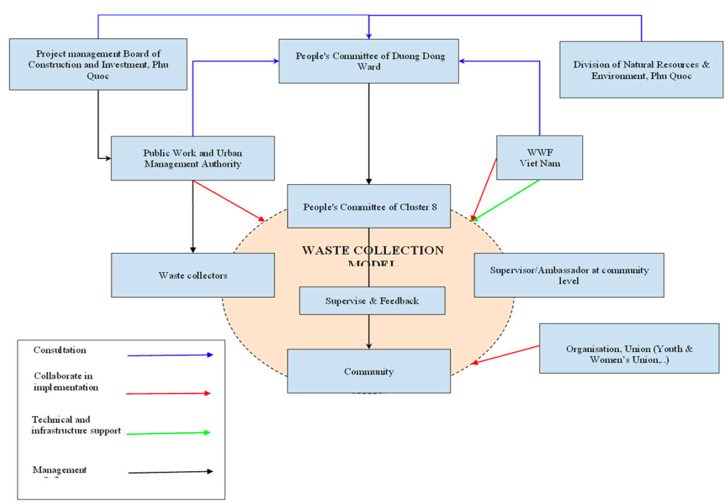
© WWF-Viet Nam