Case Study
Indonesia: Bogor
WWF Involvement: March 2023 to December 2023
Focus Area: Collection
PSC Approach: Community-based Waste Management
Systemic Intervention: Systems and Infrastructure
© WWF-Indonesia
Key Lessons Learned
- Capacity-strengthening in business skills enhances operational sustainability: WWF’s provision of capacity building in sales, business management, and financing emerged as particularly impactful for Bank Sampah (BS) Kenanga Waste Bank, effectively equipping the team with essential skills that strengthened their operations and supported long-term viability.
- Financial incentives increase participation and integration of waste management practices: Providing financial benefits such as cash savings and utility bill payments through the waste bank successfully motivated community participation, facilitating the integration of waste management into residents’ daily routines.
- Black Soldier Fly (BSF) cultivation offers effective organic waste reduction: While BSF cultivation has proven effective in reducing organic waste, its sensitivity to climate variations highlights the importance of careful management practices and contingency planning to maintain a stable and productive BSF system.
- Digital waste management systems improve efficiency with appropriate user education: Adopting digital tools such as waste management applications significantly improved operational efficiency, though effective implementation required educating users on correctly confirming and managing data.
Background
Established in 2017, BS Kenanga waste bank serves as a model for community-driven waste management in Bogor City, integrating plastic waste collection, organic waste processing, and digital transactions while offering financial incentives to its customers. The waste bank operates under Government Regulation (PP) No. 18 of 2008 and Regional Regulation (PERDA) No. 9 of 2012, which mandate systematic waste management at the community level.
BS Kenanga has earned recognition for its impact, winning Best Waste Bank in Bogor City at the Bogor Ku Bersih event (2021) and securing 2nd place in the Self-Help Residential category in both 2021 and 2022. Beyond waste collection, it functions as an educational hub, attracting university students and receiving over 60 study visits in 2022 after being recognised as Bogor City’s first “Trash-Free RT” in February 2022. It currently has over 200 customers (63 digital and 150 conventional customers) from households and businesses (Nofita et al., 2024).
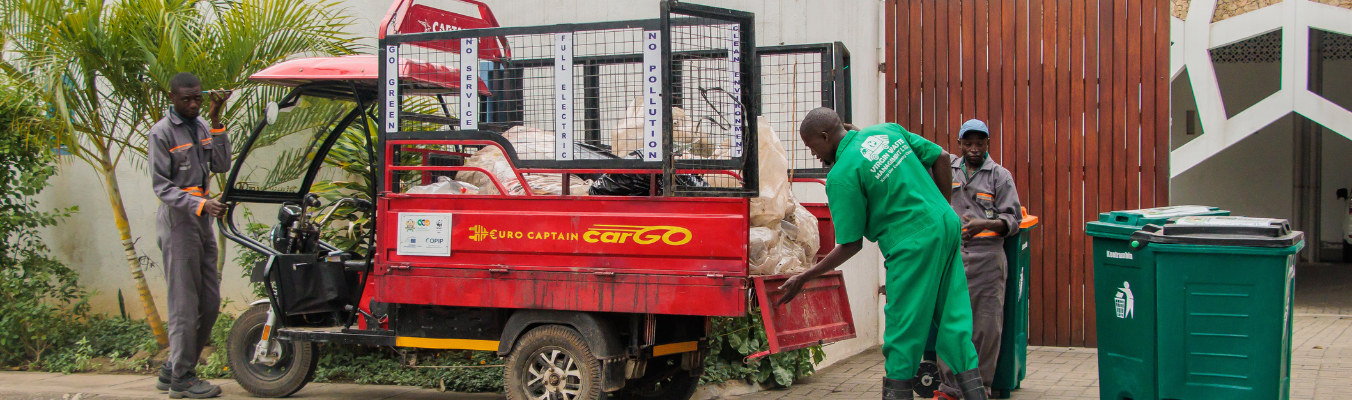
In March 2024, assistance was received from the Ministry of Cooperatives and small and medium enterprises (SMEs) (Kemenkop). This was an institutional capacity enhancement, upgrading from a Waste Bank to a Cooperative, and the support was a three-wheeled motorcycle from PT Permodalan Nasional Madani, a state-owned enterprise focused on empowering micro, small, and medium enterprises as well as cooperatives.
Objectives
- Establish an integrated waste management system for both organic and non-organic waste.
- Engage residents of Babakan Village in sustainable waste management practices through incentives.
- Introduce BSF organic waste processing to reduce landfill waste and generate additional community revenue.
Key Successes
- Customer incentives: Customers earn money for depositing separated waste at BS Kenanga, which can be withdrawn anytime or used for utility payments, including gas and electricity, or school fees via the PPOB (Online Bank Payment Point).
- Customers have adopted digital waste banking via an app launched by start-up Octopus, then the PSC Aplikasi Data Sampah Indonesia (AKSI) application, allowing customers to log waste details, schedule pickups, increasing accessibility. However, this requires user training to ensure correct data input.
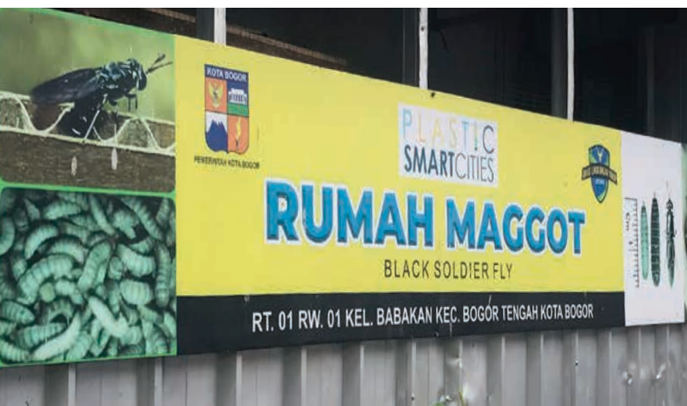
- In 2021, a BSF facility was established, encouraging customers to donate organic waste for compost production. The compost is returned to the community, and the larvae are sold as animal feed with any sales proceeds used to provide groceries for local residents. This initiative modestly reduces landfill waste by 12 to 15 kg/day.
- Capacity building and training provided by WWF in sales, business management, financing, and technical skills significantly strengthened BS Kenanga’s efficiency, organisation, and financial planning. As a result, the waste bank has been able to expand waste collection, improve customer engagement, and hopes to move towards profitability in 2025.
- BS Kenanga has made a significant contribution to the waste free RT initiative in the area. As pioneers, they have consistently excelled and emerged as champions. Moreover, BS Kenanga is regularly designated as a model site by the Environmental Agency (DLH) for Adipura assessments.
- In 2023, BS Kenanga received the Raksa Prasada Award from the Governor of West Java. This award is a recognition from the Governor of West Java in the field of environmental conservation that have demonstrated commitment and tangible actions in environmental preservation in West Java.
Key Challenges
- Small processing space at the waste bank, requires some materials to be transferred to other waste banks.
- Shredding equipment is not yet in place, so some organic waste streams are directed to external facilities for additional processing
- Rainy season affects BSF production, as BSF requires significant sunlight for optimal growth.
- Cardboard waste revenue has declined, due to a 70% drop in market price, making it currently less profitable than plastic waste.
Resources
Support and infrastructure: WWF provided capacity building for the waste bank, a vehicle to facilitate waste collection, a laptop, and a mobile phone to manage digital waste transactions and connect households directly to waste pickers, as well as 18 processing ponds within their BSF house (14 m²).
BS Kenanga have 20 drop boxes and supplied organic waste bins to their customers who bring their waste to the nearby waste collection points (TPS). The waste bank’s processing capacity is 1.5 to 2 tonnes/month (Nofita et al., 2024).
Human Resources: 27 personnel are employed to manage and operate the waste bank, including an administrative and waste processing team.
Stakeholders: Partnerships are established with the community, schools, restaurants, hotels, and businesses.
Enabling Factors
- WWF’s capacity building and training in sales, business management, financing, and technical skills have been recognised by BS Kenanga as particularly impactful, significantly contributing to improved operations and long-term sustainability. With this foundation in place, BS Kenanga is aiming to achieve profitability in the near term.
- Supportive government regulations have created an enabling framework for community-level solid waste management, offering a strong policy foundation that empowers and legitimises local initiatives.
- Strategically placed waste collection dropboxes in schools, restaurants, hotels, and businesses have supported source separation and improved logistics, helping to streamline collection and transport processes.
Risks & Opportunities
- BSF quality: Organic waste processing using BSF remains sensitive to climate, particularly during periods of excessive rain, which can affect output and consistency.
- Market fluctuations: The prices of recyclable plastic materials are subject to change, which may impact profitability and financial planning.
- Further government support: Providing incentives for community-based waste management through provision of financial incentives or infrastructure support to expand wider uptake and scale of waste bank role across Bogor.
- Dependency on external digital applications: this form of connectivity and data management heavily relies on an external platform where sustainability may be uncertain as exemplified by the exit of the Octopus app.