Case Study
Thailand: Surat Thani
WWF Involvement: January 2023 to December 2024
Focus Area: Collection
PSC Approach: Community-based Waste Management
Systemic Intervention: Systems and Infrastructure
Key Lessons Learned
- Leadership qualities significantly influence replicability of community initiatives: The success of Lung Dum waste bank is closely tied to the unique leadership qualities of Mr Lapon Phuekdej. Replicating similar initiatives elsewhere would likely depend on identifying or developing leaders who possess comparable dedication and community trust.
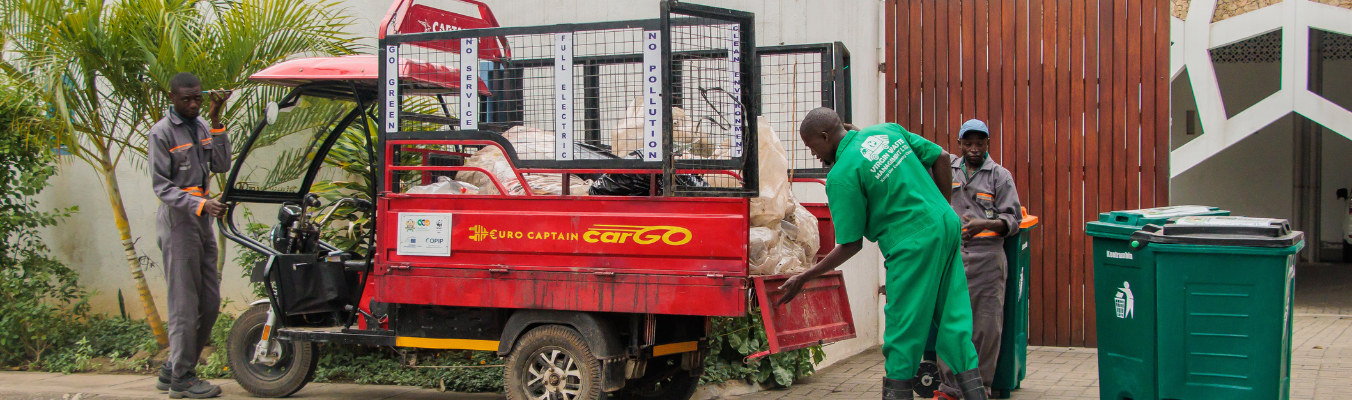
- Investments in suitable equipment and infrastructure can enhance operational efficiency: Having access to appropriate equipment, such as larger collection trucks, can considerably boost efficiency by increasing waste collection capacity and reducing transport frequency. At the same time, initiatives aiming to replicate this model would need to carefully consider the significant financial investment required for equipment and maintenance.
- Strong collection systems rely on both infrastructure and community buy-in: Lung Dum shows that pairing volunteer-driven collection with municipal support and reliable offtakers creates an effective collection model that maximises recycling and minimises landfill waste.
Background
Lung Dum waste bank started in the Wat Potawas Temple Community of Surat Thani, Thailand. Founded by the community leader Mr. Lapon Phuekdej, also known as “Lung Dum” or “Uncle Dum”. The initiative utilised a Buddhist temple as the central hub for waste sorting and community activities.
Since then, Lung Dum has evolved into a community recycling social enterprise (as well as a waste bank) operating under the Surat Thani Provincial Administrative Organisation. This transition was officially marked in February 2024 (WWF, 2024).
Objectives
- Reduce the volume of waste going to the landfill by increasing recycling and recycling rates.
- Educate and engage the community about the importance of proper waste management.
- Provide financial incentives to encourage community participation, including scholarships, elderly care, and funeral expenses.
Key Successes
- Improved recycling rates through household separation of waste, thereby reducing recyclable waste volumes being sent to the disposal site by 10 tonnes/month and thus reducing landfill costs for local governments.
- Established a network of 180 volunteers actively sorting and selling recyclable waste for Lung Dum, with an additional 161 household participants who separate their waste for collection.
- The revenue generated supports various community programmes, including educational scholarships, elderly care, and coverage of funeral expenses, sustaining the welfare of participants. Additionally, the project allocates 30% of profits to community benefits including scholarships and salaries, while the remaining 70% supports operational costs, including land rental, staff wages, and truck maintenance.
Key Challenges
- Price volatility of recyclable plastics presents challenges for financial planning and long-term sustainability.
- The existing collection fleet has a relatively small capacity, which increases the frequency of trips and associated costs. At the same time, ongoing constraints in accessing larger-scale investment capital have made it more difficult to acquire larger vehicles that would support logistical efficiency.
Resources
Support: Operations are supported through revenue from waste sales and additional financial incentives from WWF, amounting to 3 THB/kg (0.10 USD/kg) of plastics, as well as the construction for a new warehouse to run operations.
Infrastructure: Lung Dum used local radio broadcasts to educate and also conducted training sessions to raise awareness about proper waste management.
Stakeholders: Surat Thani Municipality partnered with Lung Dum, connecting him to relevant organisations that enabled him to act as a speaker and share knowledge on waste separation. While the collaboration with Wongpanit (a local MRF) ensures a reliable offtaker and market for sorted waste.
Human resources: A team of 180 community volunteers help collect and sort waste.
Enabling Factors
Dedicated community leadership and engagement by Uncle Dum, combined with financial incentives and community benefits, successfully motivated residents to participate and contribute.
Government support: Surat Thani government supplied essential equipment and established key connections, facilitating operations and enabling expansion.
Risks & Opportunities
- Reliance on charismatic community leadership: The initiative’s continued momentum and replication to other locations could be impacted if leadership does not carry the same level of influence and trust within the community.
- Availability of infrastructure and funding: may influence the pace of operations and shape the potential for future scaling. Establishing sufficient space and engagement by the community will support long-term operations.
- Price volatility of recyclables: Need for government intervention to stabilise secondary plastic market.