Case Study
Indonesia: Depok
WWF Involvement: November 2022 to April 2024
Focus Area: Collection
PSC Approach: Community-based Waste Management
Systemic Intervention: Systems and Infrastructure

Key Lessons Learned
- Rumah Harum waste bank took the time to deeply engage with the community, building trust through consistent service, strong relationships, and visible results: It became a respected figure in the community by educating residents, creating community-centred solutions, and working with various stakeholders. Trust-based, transparent, and responsive approaches were key to long-term success and sustainability.
- High operational costs may limit scalability and continuity: Storage capacity, transportation, and labour demands can hinder growth and long-term implementation, especially when cost efficiency is not addressed early in program design.
Background
Established in 2013 as one of seven major waste banks in Depok, Indonesia, BSI (Bank Sampah Induk or ‘Waste Bank’) Rumah Harum’s aim was to promote community-driven waste management. Since then, the others have closed down.
Rumah Harum introduced dropbox collection systems at supermarkets, schools, and government institutions, allowing residents to easily deposit their recyclables, handling waste from over 110 unit waste banks. It successfully processes and sorts a wide variety of materials, including plastics, paper, metals, glass, household tools, and electronic waste (e-waste).
It also serves as an educational hub for universities and government agencies, such as the Ministry of Public Works and Housing and the Ministry of Environment and Forestry, to learn about community-based waste management. They transitioned to a Cooperative and also received the Raksa Prasada Award in 2023 from the Governor of West Java, earning the title of the best community-based Central Waste Bank in the province.
Objectives
- Improve waste management practices in the local communities by promoting source separation and recycling.
- Engage and empower the community to take an active role in managing their waste.
- Develop a sustainable and scalable model for waste collection, sorting, and processing.
Key Successes
- BSI Rumah Harum is the only fully operational Central Waste Bank in Depok and collaborates with another PSC partner offtaker, Waste4Change. The waste bank manages around 60 to 80 tonnes of materials per month.
- The waste bank grew from receiving waste from 60 unit waste banks, in 2018, to 110, in 2023, involving 700 to 1,000 people actively separating their waste, including schools, supermarkets, government offices, and mosques effectively collecting and channelling this waste to the central facility (Norita et al., 2024).
- Developing strong relationships and trust with the local communities, leading to their active participation and support. Their strong ties to the local community are what kept this waste bank still operational after seven other waste banks closed down.
- Expanding the range of materials collected, including plastics, metals, glass, and e-waste.
Key Challenges
- Storage costs and space availability: The limited availability of land contributes to higher storage costs and presents practical considerations for the scalability of operations.
- Fluctuating waste market prices: For example, sorted PET bottles with printed screens sell for less than the same bottles without printed screens, consequently increasing labour requirements and associated costs through manual removal.
- Sales and marketing for low-value plastic waste remain an ongoing area for development: While high-value plastics are sold smoothly, identifying consistent and sustainable outlets for low-value plastics continues to present challenges.
- Warehouse operations are under pressure due to the volume and diversity of incoming materials: The facility accommodates a range of waste types from Unit Waste Banks, and current storage capacity places constraints on how waste can be organised, managed, and processed.
- Transportation and labour costs: Collection requires minivans and pickup trucks, which adds to operational expenses. Employees often work extended hours (until 22:00) to meet demand.
- Reaching and serving a larger percentage of the population in Depok: Currently, less than 10% of the population participates in waste separation and collection activities, with the remainder of waste typically sent to landfills.
Resources
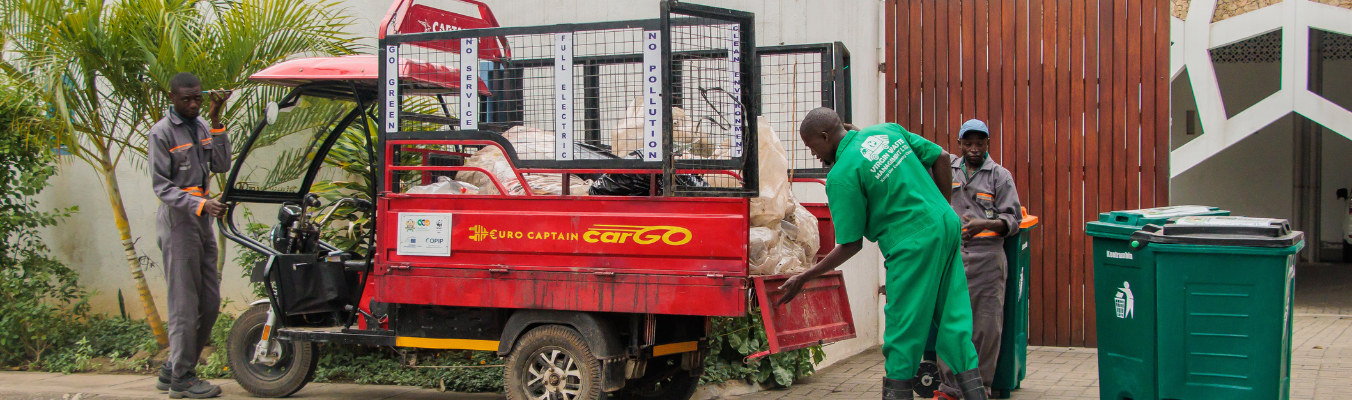
- Support and infrastructure: WWF provided four trucks to facilitate waste transport, a baler, an extruder, a shredder and warehouse space to improve operations. More than 27 dropboxes were also provided for PET plastics, glass, and cardboard collection. They also received a three-wheeled motorcycle from an investment firm.
- Human Resources: 20 employees are involved in sorting, processing, and logistics. WWF also provided capacity building support for BSI Rumah Harum in various aspects, enhancing their skills and knowledge to improve waste bank operations.
- Stakeholders: Key partnerships were established with schools, supermarkets, and government agencies to expand the reach and impact of the programme.
Enabling Factors
- The provision of land by the local government played a key role in facilitating the initiative.
- Strong community participation and ongoing local education – particularly through schools and supermarkets – helped increase programme visibility and engagement.
- Financial incentives for households, generated through waste sales, contributed to motivating participation and encouraging sustained involvement.
- Strategic partnerships with businesses supported the steady flow and demand for recyclable materials.
- Extending working hours and optimising transportation arrangements have helped address operational demands in a responsive manner.
- There is a strong interest in expanding into upcycling activities this year, as a way to diversify revenue streams and enhance the value of collected materials.
Risks & Opportunities
- Capacity strengthening of waste workers remains essential to ensure proper handling of collected materials. Without sufficient training, there is a risk that waste may be mismanaged, including through burning or open dumping, as observed in some local junkshops.
- Maintaining consistent and sufficient funding to support ongoing operations, including transportation and labour costs, is a critical consideration for long-term sustainability.
- Market price stabilisation for recycled material is needed at the local and national level to allow waste banks such as Rumah Harum to anticipate financial sustainability.
- Policy for better segregation at source will significantly reduce manual labor cost for waste banks and improve quality of recyclables.
- Addressing awareness and knowledge around waste management in some communities will require targeted education and outreach campaigns to encourage behavioural change.