Since 2020, WWF-Indonesia has been implementing the Plastic Smart Cities (PSC) programme in Bogor, Depok, and Jakarta. The programme initially started at the neighbourhood and community levels, testing small-scale pilot projects, then scaled up to strengthening waste management infrastructure at city levels, schools & public education, improving Extended Producer Responsibility (EPR) readiness, and contributing to national policy development.
Strengthening the Waste Collection System and Infrastructure
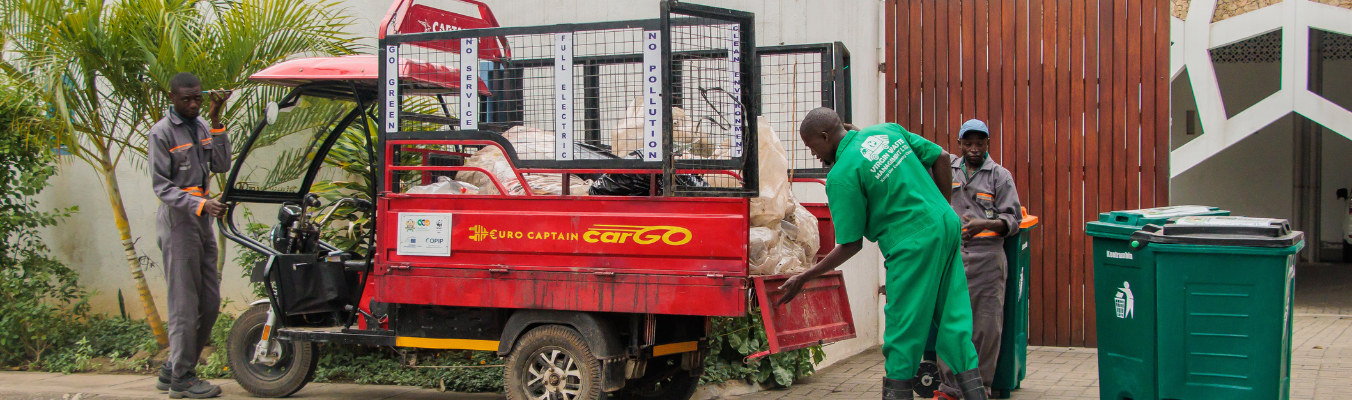
WWF-Indonesia has been working with city governments and local communities to boost cities’ commitments to strengthening their waste management systems. The programme has built a robust foundation that includes comprehensive baseline waste flow studies, strengthened waste banks, and the development of 3R-based (Reduce, Reuse, Recycle) Material Recovery Facilities (MRFs). Additionally, it has focused on behaviour change in over 200 schools through educating students and raising awareness about improper waste management.
In 2021, Bogor become Indonesia’s first Plastic Smart City, setting a model for urban action in the country, followed by Depok similarly declaring its commitment to plastic reduction. This was followed by conducting baseline waste flow studies and collaborating with relevant stakeholders to develop action plans. The implementation model started with stakeholder mobilisation through collaboration with waste banks, local Civil Society Organisations, TPS3R (MRFs), and waste operators in each area. It also supported the development and revitalisation of three MRFs in Bogor along with community education through the Panda Mobile Activation and the Zero-Waste School activities, engaging students for behavioural change. The early implementation phase proved that community-based systems can generate measurable outcomes when linked to operators, adequate facilities, and relevant stakeholders. Earlier this year, the MRFs in North Jakarta officially began its operations in May 2026.
Through collaboration with local implementing partners, waste banks, and communities, the grassroots initiatives began to create impact reducing plastic leakage in Bogor, Depok, and Jakarta.
From City Commitment to a National Programme Platform
Beyond these local improvements, WWF-Indonesia has scaled its engagement to a wider reach. From renewed city-level collaboration through Memorandum of Understandings (MoUs) with Jakarta, Depok and Bogor, an MoU with the Ministry of Environment was also signed in October 2025 to formalise WWF support for plastic pollution reduction.
The programme has also been actively supporting the development of the national EPR roadmap. This work includes navigating complex financing discussions, exploring eco-modulation and sustainable product design, and hosting capacity-building workshops. By bringing together producers, the hospitality industry, government agencies, and development partners, we are helping to create a more coordinated and sustainable approach to plastic management.
Reflection and Pathways Forward from the WWF Plastic Smart Cities Programme
The Plastic Smart Cities programme in Indonesia has shown that reducing plastic pollution requires a total systems change, combining government policy, operational efficiency, and community habits. After more than five years of learnings, WWF‑Indonesia organised a discussion forum of lessons learned, field practices, and academic studies on waste management and the implementation of EPR in Indonesia. The activity was initiated to encourage and strengthen cross‑sector collaboration.
The programme’s experience in Jakarta, Depok, Bogor proves that success factors depend on the collaboration with all stakeholders, focusing on sustainable financing along with the physical infrastructure, and making waste sorting at the source a standard practice.
By securing local ownership and supporting community systems like waste banks, the programme has built adaptable models that fit local needs. Moving forward, the programme will shift the focus towards scaling these solutions to new areas while using field evidence to push for national policies on Circular Economy, EPR, and a Global Plastic Pollution Treaty.
Also read other resources and stories on WWF-Indonesia’s effort in managing plastic waste