Bogor’s Jambu Dua Traditional Market Piloting Clean and Eco-Friendly Local Market Initiative
In a joint effort to improve waste management in traditional markets, the Bogor City Government and WWF-Indonesia are piloting an awareness and capacity-building programme for vendors, market managers and sanitation workers hired by Pakuan Jaya – a regional public company that owns and runs several local markets in Bogor. The pilot aims to transform Jambu Dua Traditional Market – popularly known as Bogor’s vegetable wholesale hub – into a model for clean and sustainable local markets.
This initiative is part of WWF-Indonesia’s Plastic Smart Cities programme, which provides technical assistance to reduce plastic waste leakage and promote integrated waste solutions. The training goes beyond technical skills like waste sorting and transport — it also includes the development of standard operating procedures (SOPs) for market waste management that can be adopted citywide.
A Growing Concern — 68 Tonnes of Waste Generated by Markets Daily
Director of Pakuan Jaya (a registered Perumda, meaning a regional public company in Indonesia), Jenal Abidin, emphasized the urgency of the issue, noting that local markets operated under Pakuan Jaya generate up to 68 tonnes of waste per day.
“We can’t solve this alone. Cross-sector collaboration is essential, and support from organizations like WWF-Indonesia is critical,” he said. He also highlighted the need for improved sanitation worker capacity, independent waste transportation fleets, and ongoing education or behaviour change campaigns for market vendors.
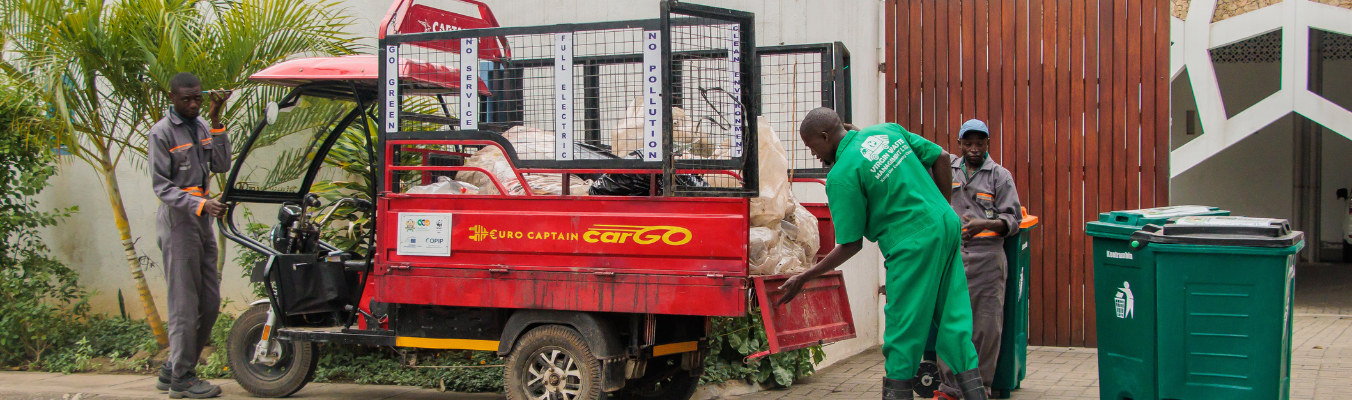
During a launch event on 4 June 2025, WWF-Indonesia officially handed over essential waste management equipment to Pakuan Jaya, marking a key step in operationalizing a more structured and efficient waste system at Jambu Dua Traditional Market.

From Problem to Action: Building a Clean and Responsible Market Culture
Through presentations and discussions, WWF-Indonesia introduced the Plastic Leakage Performance Standards, which focuses on reducing plastic leakage through upstream-to-downstream waste integration, while addressing the importance of social safeguards, stressing the importance of ensuring children are not involved in labour and that vulnerable groups are protected throughout the process.
Inovasi Gerakan Masyarakat (People’s Movement Innovation) – a social enterprise focused on sustainable waste management solutions – highlighted that market cleanliness is not just a sanitation issue, it also directly affects vendor income and market competitiveness.
Participants were encouraged to start small, such as separating wet and dry waste at the stall level. However, challenges remain – low vendor awareness, lack of sorting infrastructure, and mismatched cleaning schedules with peak unloading times.
Market managers from Gunung Batu Traditional Market and Sukasari Traditional Market shared additional concerns, including limited staff and delayed waste collection, as well as the need to educate newly relocated street vendors on waste sorting practices.
Next Steps : SOPs, Technical Training and Vendor Engagement
The launch concluded with a three-month action plan focused on next steps that aim to foster a culture of waste sorting and environmental responsibility from within the community and stakeholders of local markets; these are:
- Developing and implementing SOPs for market waste management
- Providing technical training for waste and sanitation workers
- Conducting education and behaviour change activities for vendors
In July 2025, a workshop was organised to engage key stakeholders of the Jambua Dua Traditional Market on the importance of responsible waste management, reducing single-use plastic usage, and reusing materials that are still usable. Participants included market vendors, members of the trade association, as well as staff and board members of relevant perumdas and other businesses.
The initiative aims to position Jambu Dua Traditional Market not just as a pilot site, but as an inspiring case study that can spark replication and a broader civic change. If successful, the model would demonstrate that with commitment and collaboration, traditional markets can become cleaner, healthier, and more competitive, with hope of scaling across other markets in Bogor and beyond.