WWF | Tipping Point: How Coordinated Market Can Transform Global Plastic Value Chain
After four years of negotiations, the world is still waiting for a global treaty capable of ending plastic pollution. A large majority of countries have continued to support an effective treaty with binding measures across the full life cycle of plastics – but progress has been repeatedly deadlocked in efforts towards universal agreement. This report explores […]
WWF-Germany | Circular Economy Course

Mastering the transition to a climate-neutral and resource-efficient economy is essential for modern sustainable business practices. This course explores the core principles, economic benefits, and commercial opportunities of circularity, guiding organisations from baseline concepts and company operations to policy frameworks, WWF’s strategic vision, and human-centred society building. This course covers the following content:
WWF-Australia | The Case for Reuse: A Packaging Transformation in Australia

Australia’s packaging waste crisis cannot be resolved through recycling alone; establishing a robust reuse ecosystem is vital to prevent over 12 million tonnes of packaging waste from entering the market annually by 2040. Based on research by Deloitte and WWF-Australia, transitioning to reusable packaging models creates higher value-retention loops that cut emissions, lower supply chain […]
World Economic Forum | Plastic Pollution and Biodiversity: a Global Overview
Every year, an estimated 130 million tonnes of plastic waste are unmanaged or improperly discarded, polluting soils, waterways and seas. While efforts continue to promote a circular economy and pursue a global plastics treaty, far less attention has focused on how plastic pollution affects biodiversity and the ecosystem services that underpin economies and human well-being. […]
2030 strategy – No Plastic in Nature Initiative: Driving Systems Change in the Global Fight Against Plastic Pollution
Despite growing global awareness, the plastic pollution crisis continues to escalate. More than 30,000 tonnes of plastic leak into our oceans every day, posing increasing threats to ecosystems, economies, and human health. The WWF No Plastic in Nature 2030 Strategy sets out a comprehensive blueprint to stop environmental plastic pollution by transforming the global plastics […]
Perú Circular Game: Education on Proper Solid Waste Management
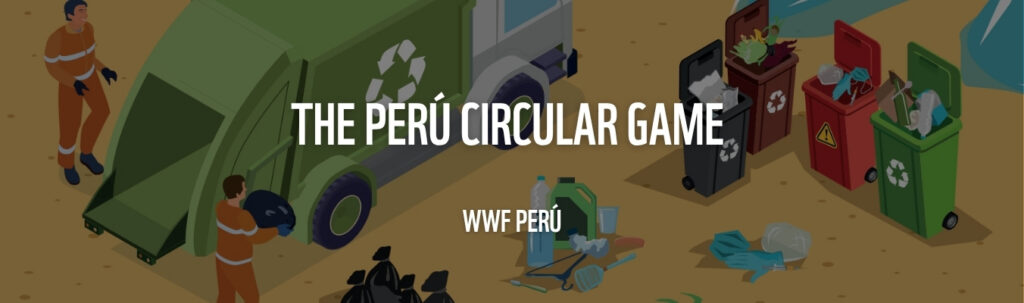
The “Perú Circular” game was developed under WWF’s Plastic Smart Cities initiative in Peru to make learning about plastic waste reduction engaging and accessible. Language: Spanish Developed within the framework of WWF’s Plastic Smart Cities initiative, the “Perú Circular” educational game provides an engaging trivia experience designed to transform household waste habits and deepen public […]
Perpetual | Reuse Realized: Unleashing Solutions in the ASEAN Region
Highlighting a critical paradigm shift in Southeast Asia’s combat against marine and terrestrial plastic waste, this report establishes a comprehensive strategic roadmap for scaling reuse and refill models across Southeast Asia. Covering six key ASEAN nations: Cambodia, Indonesia, Malaysia, the Philippines, Thailand, and Viet Nam, the report evaluates the systemic barriers currently hindering non-disposable alternatives, […]
WWF | Transforming the Plastic Waste Market and Informal Worker Livelihoods in Coastal Kenya
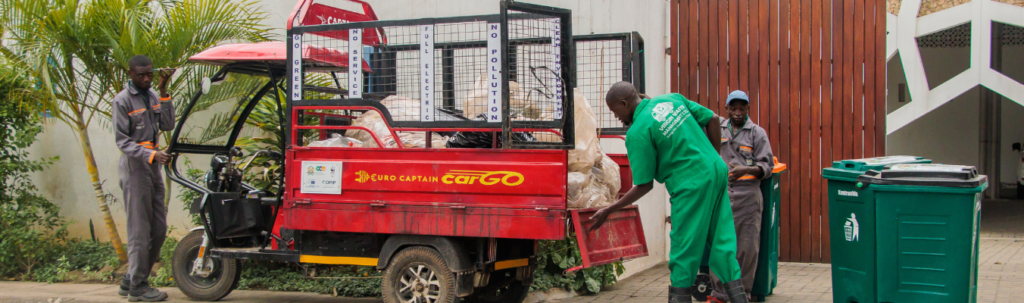
Case Study Kenya: MombasaWWF Involvement: January 2020- December 2024Focus Area: Collection/Recovery and Recycling/Enabling FrameworkPSC Approach: Collection & Separation; Sustainable FinancingSystemic Intervention: Policy Advocacy; Knowledge Strengthening; Systems & Infrastructure For more information, contact: Alex KubasuMombasa, KenyaEmail: akubasu@wwfkenya.org Key Lessons Learned Background Kenya has more than 500,000 tonnes of plastics produced per year, of which only about 15% is recycled. Inadequate solid waste management […]
Colombia National Plastic Action Partnership, Global Plastic Action Partnership | Plastic Pollution and Biodiversity in Colombia: Pathways for Environmental and Economic Resilience
Every year in Colombia, approximately 31,000 tonnes of plastic leak into aquatic ecosystems, 68,000 tonnes end up in soils, and more than 202,000 tonnes are openly burned. WWF Colombia, as the implementor of the Colombian National Plastics Action Platform (NPAP Colombia), with support from the World Economic Forum (WEF) through the Global Plastic Action Partnership […]
ERIA, IGES | Plastic Pollution Countermeasures: Effective Global Actions and Case Studies from East Asia
Plastic pollution represents one of the most pressing environmental threats facing the Association of Southeast Asian Nations (ASEAN) and East Asia, a region where seven nations account for approximately 65% of annual global plastic emissions into the ocean. Published jointly by the Economic Research Institute for ASEAN and East Asia (ERIA) and the Institute for […]