Highlighting a critical yet frequently overlooked component of Southeast Asia’s marine conservation efforts, the World Bank synthesis report, examines the complex realities faced by informal waste workers across Indonesia, the Philippines, and Viet Nam. While these frontline workers collect and recover a substantial portion of the region’s recyclable plastic, preventing vast quantities from leaking into ocean ecosystems, they routinely contend with severe health hazards, economic instability, and social marginalisation. By evaluating both the multi-dimensional risks borne by informal collectors and the innovative community and private-sector models engaging them, this landmark synthesis outlines a strategic roadmap for achieving a socially inclusive, “just transition” towards circular economy practices in the ASEAN region.
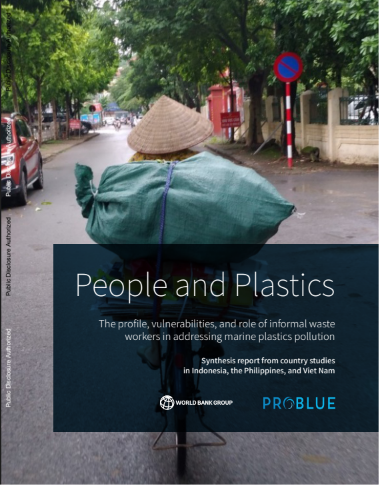
Synthesising primary field data from major urban and coastal hubs, the report details how informal waste workers serve as indispensable links in the plastic recycling value chain while operating under precarious labour conditions. Across the three target nations, informal collectors, a significant proportion of whom are women and seasonal migrants, face systemic challenges including fluctuating material prices, exposure to toxic or sharp hazardous waste, extreme weather hazards, and severe lack of access to formal healthcare or social protection schemes.
To address these structural vulnerabilities, the study showcases actionable enterprise models, ranging from community waste banks in Indonesia and municipal worker cooperatives in Viet Nam to technology-driven waste-to-cash platforms in the Philippines. Ultimately, the World Bank emphasises that evolving national Extended Producer Responsibility (EPR) frameworks and regional marine plastic action plans must actively integrate informal workers through systematic data mapping, microfinance facilities, tailored safety equipment, and official policy consultation to deliver equitable environmental solutions.