2030 strategy – No Plastic in Nature Initiative: Driving Systems Change in the Global Fight Against Plastic Pollution
Despite growing global awareness, the plastic pollution crisis continues to escalate. More than 30,000 tonnes of plastic leak into our oceans every day, posing increasing threats to ecosystems, economies, and human health. The WWF No Plastic in Nature 2030 Strategy sets out a comprehensive blueprint to stop environmental plastic pollution by transforming the global plastics […]
The World Bank, PROBLUE | Technologies and Solutions to Manage Plastic Waste in Small and Remote Islands: Using the Technology Options for Plastic Waste in Island Contexts (TOPIC) Toolbox for Islands in Malaysia
The rapid escalation of global marine plastic pollution has reached a critical breaking point, with ocean-bound plastic waste projected to triple to 29 million tons by 2040. Isolated coastal communities and small islands sit on the absolute frontline of this environmental crisis, facing unique vulnerabilities due to high coastline-to-area ratios, fluctuating tourism spikes, and exorbitant […]
Alliance to End Plastic Waste | The Challenges and Solutions for Flexible Plastic Packaging Waste

How can the global community move beyond the linear “take-make-waste” model for flexible plastics? This technical report by the Alliance to End Plastic Waste provides a critical roadmap for Europe and North America, identifying the most effective collection, sorting, and recycling solutions. By evaluating circularity enablers and systemic barriers, the report offers a blueprint for […]
Rare, GEF, SGP, UNDP | Solutions to Plastic Pollution with Community-Based Behavior Change

Plastic pollution is a global crisis impacting natural systems, wildlife, and human health. Nations are currently negotiating a high-level treaty to coordinate efforts to reduce plastic use worldwide (Chen, Sulan et al., 2024). No single solution can solve this crisis. Tackling plastic pollution requires changes at every stage of production and use: governments must enact […]
From Classrooms to Coastlines: Schools, Communities, and Tourists Unite Against Plastic Pollution

Hue City is emerging as a model for community-driven environmental action in Viet Nam, where schools, citizens, and local institutions are working together to tackle plastic pollution. Through a series of on-ground initiatives, from the Plastic Reduction School Model to large-scale clean-ups and sustainable tourism programmes, Hue is not only reducing waste but also cultivating […]
Institute for Tourism Sustainability | Plastic Waste Flow Baseline in the Tourism Sector and Municipalities of Trang & Koh Tao, Thailand

This report provides a comprehensive assessment of Single-Use Plastic (SUP) consumption and management in two key tourism areas in Thailand: Koh Tao and the Trang region, which includes Koh Libong, Koh Mook, Koh Kradang, and Pak Meng. The focus is on identifying effective voluntary reduction strategies for SUP use within the tourism sector, with recommendations […]
Trang Municipality Establishes its First Informal Waste Workers Network

The initiative aims to better integrate informal waste workers (known as “saleng” in Thai) to into formal recycling systems, strengthen public–private partnerships, and promote sustainable waste practices across the city. 1 June 2025 — Trang’s first informal waste workers network – locally referred to as the Saleng Network – was launched on 29 May 2025 […]
From Classrooms to Cleaner Rivers: School Waste Sorting Success in Bogor
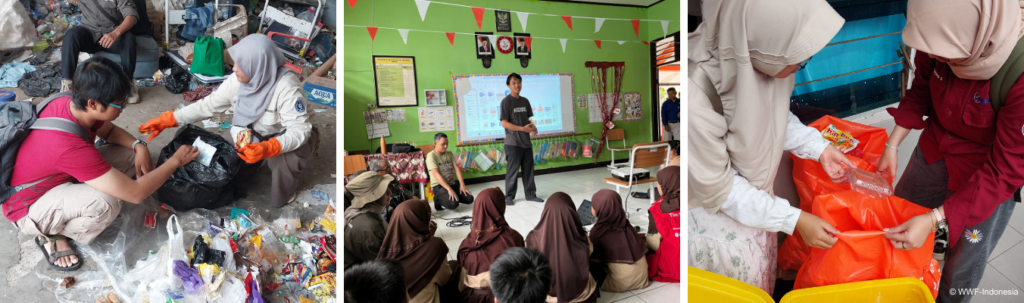
Plastic Smart Cities in Indonesia kicked off the waste sorting curriculum in 3 schools jointly with Rekam Nusantara, Urban Sustainability, the Ciliwung Naturalization Task Force, Plastic Smart Cities, and the participating schools in August 2024. Since the commencement of the waste sorting curriculum, Rekam Nusantara, Plastic Smart Cities’ Indonesian partner in the city of Bogor, […]
Luang Prabang Officially Joins Plastic Smart Cities
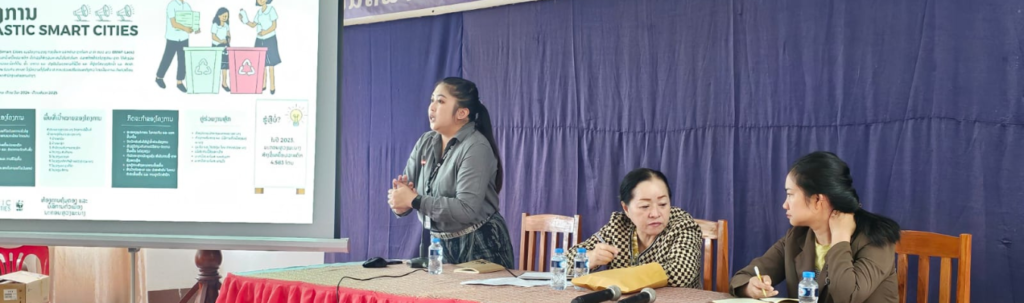
On 3 December 2024, Luang Prabang, a UNESCO World Heritage City in Laos known for its rich cultural heritage and natural beauty, officially joined the Plastic Smart Cities (PSC) initiative in partnership with WWF-Laos. A municipal waste profile study conducted in 2023 revealed that the city generates an estimated 4,583 tonnes of plastic waste annually. […]
WWF-Viet Nam | The Plastic Reduction Journey of Hue City
In Hue City, the project “Hue – A Plastic Smart City in Central Vietnam” (hereinafter referred to as TVA project) funded by WWF-Norway through WWF-Vietnam, with Hue City People’s Committee as the executive agency, has been implemented from 2021 to 2024. The overall objective of the Project is to support Hue city in protection of […]