Case Study
Mantanani Islands, Malaysia
- Activities Undertaken:
Reduce, Recycle, Responsible Disposal - Year: 2023 onward
- Initiator: Reef Check Malaysia
Key Takeaways
- Small islands can establish functional waste segregation and collection systems when supported by community participation, locally managed operations, and appropriate sustainable financing mechanisms.
- Robust segregation and collection systems are needed to allow recyclable materials to be exported to larger recycling markets and generate revenue to offset transportation costs.
- Initial subsidies may be necessary to facilitate waste transportation, as well as consistent monitoring to cultivate widespread participation in waste segregation.

This case study is 1 of 10 that focuses on effective waste management in small islands and coastal communities.
Situation
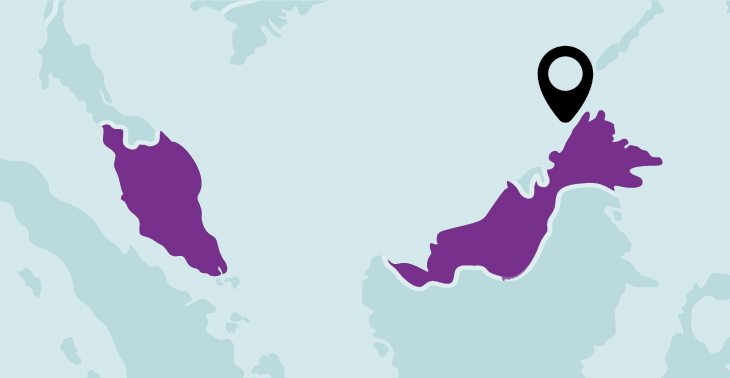
Mantanani Islands, with a population of about 1,000 Bajau Ubian Tribe community members spread across two villages, are located off the west coast of Sabah, Malaysia. Increasingly popular with divers and tourists, the islands went from hosting 50 day-trippers in 2011 to over 3,000 at its peak pre-COVID. Over 80% of the islanders derive part of their income from providing tourism services such as homestay, snorkelling and selling seafood or other local produce. Reef Check Malaysia operates conservation programmes across multiple locations throughout Malaysia, and on Mantanani Island which does not have waste concessionaires delegated for the handling of general waste, its efforts include improving waste management.
Complications
- Limited municipal presence and financing: Lacking in municipal governance presence, much of the housing is informal and untaxed. Residents do not pay “cukai pintu” (public amenities tax) that covers waste collection services usually provided by local councils in Malaysia – a service not available on the island like Mantanani and many remote islands in Sabah.
- Low returns due to low volumes: Recyclables must be transported to the mainland at a cost of RM 1,000 per trip (1-2 hours by speedboat), but sales of the recyclables do not generate enough value to offset this cost. The current collection and transportation system relies on external funding, while more resources are needed to incentivize community participation in waste segregation.
Resolution
- Community-based waste management in Mantanani combines waste segregation, collection, transportation and community participation. The system was codesigned by Reef Check Malaysia with local communities, enabling waste segregation at household level with waste collected being transferred to Waste Storage Facilities (general trash) or the Mantanani Plastic Recycling Centre MPRC (recyclables). Sorted waste is then shipped to the mainland and onwards to a recycling facility or landfill.
- Corporate sponsorships fund operations, specifically for high transportation costs and community outreach programmes.
- Regular performance reviews of participating communities support compliance of waste segregation for house-to-house collection.
Impact
- Across various island/coastal locations where Reef Check Malaysia operates, over 45,000 kilograms of waste have been collected by 2024. In a one-year pilot waste management programme on Mantanani Island, regular collection and transportation to the mainland reduces the burden of plastic waste on Mantanani Island by 62 tonnes/year.
- 60-70% of the local community actively participated in waste segregation, collection and recycling initiatives, where outreach programmes and compliance checks helped improve waste segregation.
- Lessons from Mantanani have been applied to establish similar waste management systems in other Semporna islands, including Selakan Island (Tun Sakaran Marine Park) and one of the coastal villages in Semporna (Kampung Sri Aman). Efforts kickstarted in Larapan Island was transferred to a local NGO (see Semporna Islands case study on Island-based Waste Management Plans), demonstrating potential for local ownership and continuation.
Governance & Policy

- Limited governance presence and budget allocation for waste management services on the island.
- Limited institutional mechanisms to sustain long term compliance and participation in waste segregation practices.

- Highly engaged village leaders and local governance structures provide key support for community participation.
- Community-based approaches strengthen local ownership of waste management activities over time.
- ‘Tried and tested’ models provide practical evidence that supports replication and potential policy adoption.
Capacity, Capability, and Technology
- Low waste volumes limit the operational viability of localised recycling systems, while the lack of local recycling and processing capacity requires recyclable materials to be transported to mainland facilities.
- Establishment of local sorting centres (Rumah Hijau) and trash bins systems supports household waste segregation and collection.
- Availability of solar-powered sorting, storage and small-scale recycling facilities (Mantanani Plastic Recycling Centre) supports waste collection.
Funding, Financing, and Access to Market
- Informal and untaxed housing arrangements do not provide public revenue streams, weakening calls for municipal waste services.
- High transportation costs reduce the economic viability of recycling for small islands, while recycling revenues are often insufficient to offset operational and transport expenses.
- Continued dependence on external funding and sponsorships may affect long-term financial sustainability.
- Employment opportunities linked to collection and recycling activities provide local economic benefits.
- Access to mainland recycling markets enables recovery pathways for segregated recyclable materials.
Cross-Sectoral Collaboration & Other Value Chain Enabling Activities
- Variability in participation and responsibility-sharing across households, businesses, and tourism actors.
- Sustaining long-term community participation requires continuous outreach and engagement efforts.
- Coordination challenges may arise across having multiple stakeholders in waste collection and transport systems.
.
- Collaboration among communities, NGOs, village leaders, and tourism stakeholders (i.e homestay operators) supports programme implementation.
- Community outreach and education activities strengthen awareness and improves waste segregation.
More Resources
Learn more about Reef Check Malaysia’s work on Mantanani Island
Hasim, D., Fatta, A., Rifai, N., Chelliah, A. J., Hyde, J., & Chen, S. Y. (2026). Community-based municipal solid waste management system on Pulau Mantanani: Strategies, challenges and possible solutions. SciEnggJ, 19(Supplement), 90–96. Special Issue on Plastics in the Tropics: From Pollution to Solutions. https://doi.org/10.54645/202619SupJIJ-42