Case Study
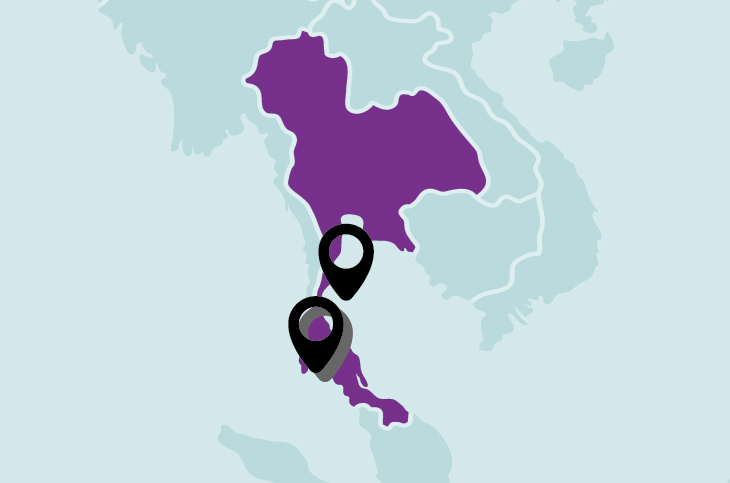
Koh Tao (Surat Thani Province), Ko Muk & Ko Libong (Trang Province), Thailand
- Activities Undertaken:
Refuse, Reduce, Recycle, Responsible Disposal - Initiator: WWF-Thailand
- Year: 2022 onwards
Key Takeaways
- Basic infrastructure and systems for waste separation, collection, and transportation are fundamental for meeting the demands of waste management in island contexts with significant waste quantities.
- Municipal budget allocation for waste management is typically insufficient. However, waste management financing could explore large influxes of visiting tourists as potential sources of financing.
- Reuse system can be scaled with local leadership and economic viability, bolstered by cross-sectoral collaboration and support.
This case study is 1 of 10 that focus on effective waste management in small islands and coastal communities.
Situation
As a major island tourism destination in the Gulf of Thailand with over 700,000 arrivals annually, Koh Tao’s only landfill has become overwhelmed – compounded by an incinerator that has not functioned for over 10 years. Tourism-related activities (from hotels, restaurants, entertainment, dive/snorkel trips, etc.) account for 18% of total waste generated on the island, encompassing 439 – 525 tonnes of plastic waste per year. Facing the Andaman seas, the Koh Mook and Koh Libong in Trang Province are part of Thailand’s western coastal region, home to the country’s largest seagrass meadow and most of its surviving dugongs – a rare marine mammal drawing ecotourism crowds. Without systematic and regular collection, separation/sorting and safe transportation of waste, however, open burning and dumping have become widely observed.
Complications
- Lack of public waste management infrastructure and systems: With only 2 junk shops on Koh Mook and one on Koh Libong, waste collection is not systematic and waste transportation similarly inconsistent. Despite some public bins, needs supersede available facilities, resulting in waste overflowing in many high-traffic areas. Hard to reach areas and lack of suitable vehicles lead to irregular collection, contributing to accumulation of unattended waste.
- Administration issues in municipal waste management: Public budget allocation is based on residential population count and does not take into account high tourism arrivals and waste contribution in contexts such as Koh Tao’s, while sub-district administration of islands like Koh Mook and Koh Libong complicate implementation of waste management strategies with infrequent transport and enforcement.
- High reliance on single-use plastics (SUP): Despite early efforts to reduce SUP (e.g using refillable water stations, providing reusable or biodegradable packaging and utensils), islands experience high reliance on SUP due to logistical constraints, tourist expectations, preference for convenience, and the lack of affordable alternatives.
- Accumulated low-value plastics not being recycled: Lower value plastics such as plastic bags, multilayer packaging and other mixed‐material waste are not consistently segregated or connected to markets, resulting in substantial volumes of potential recyclables being disposed of as general waste.
Resolution
- Projects in Koh Tao, Koh Mook and Koh Libong started with baseline assessments of plastic consumption and waste management practices in the tourism and municipal sectors, engaging key stakeholders, including local governments, communities and businesses, to help determine gaps in hard and soft infrastructure, including the waste value chain. [See plastic waste flow baseline here.] This process facilitated important collective dialogues on ‘plastic waste scenarios’ and proposed solutions, which was key in strengthening engagement and commitment among stakeholders.
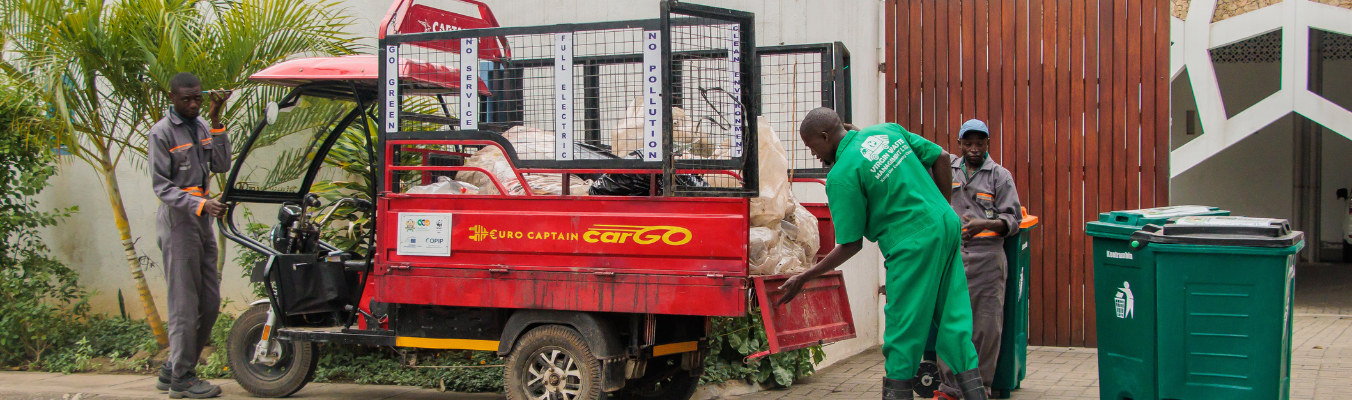
- Provision of basic facilities and cross-sector collaboration support waste segregation, collection, and transportation of recyclables to mainland recycling facilities. On Koh Tao, 4-wheel drive trucks are used to access steep hillsides and narrow lanes, supporting waste collection across the challenging island terrain, while informal waste workers contribute significantly through collecting and sorting recyclables.
- Locally-driven action can improve segregation and reduce SUP consumption in tourism- related activities and events. Through Trash Treasure Tao Community Enterprise on Koh Tao and through hospitality engagement on Koh Mook and Koh Libong, local leadership is key for replicating and scaling solutions in reducing avoidable plastic waste through refill and reuse initiatives, and maintaining segregation and collection for junk shops. Engagement with schools and students allows for education and increased public awareness as well as long-term behavioural change.
Impact
- Community Enterprise Waste Bank: Projected to be capable of receiving ~ 3 to 5 tonnes of recyclable materials per day, amounting to ~ 14% of the total waste stream in Koh Tao, a newly established waste bank to be run by the local community enterprise Trash Treasure Tao will also act as a learning centre on proper waste segregation for local residents and business operators. Four waste banks in schools and communities were also established in Trang to actively promote waste separation and collection strategies.
- Reuse models: After learning from EcoCrew who was contracted to supply the Koh Tao Spotlight 2025 event, Trash Treasure Tao started operations in time for Spotlight 2026 where reusable bowls, plates, and cups could be rented with a refundable deposit of 20 THB. In just 3 events in May and June 2026, around 11,931 pieces of SUP were avoided. In Trang, hospitality businesses including hotels and restaurants also piloted glass bottle reuse models for water refill.
- Education while providing alternatives improves capacity for behaviour change: Engagement with local CSOs, businesses, schools and communities support ongoing education and capacity- building on proper segregation to improve recycling rates, while the provision and uptake of SUP alternatives signals potential for scaling of reuse models. Educational materials were also developed for use by schools.
Governance & Policy

- Sub-district administrations in Ko Muk and Ko Libong complicate enforcement, as they lack direct municipal governance.
- Jurisdictional challenges weaken policy enforcement in remote and decentralized areas.
- Delays exist in receiving government approval for initiatives like waste transport to mainland facilities.
- Low community engagement in waste segregation exists, particularly among households and migrant workers.

- Some local authorities, such as in Koh Tao, are motivated to pursue greener island initiatives.
- Stakeholders, including communities and businesses, show interest in tackling waste management issues.
Capacity, Capability, and Technology
- Lack of functioning incinerators and landfill management infrastructure in Koh Tao.
- The number of trash trucks for waste collection is insufficient across all islands.
- Local workers and sub-district administrators have limited technical capacity to implement advanced waste management practices.
- Local stakeholders express interest in capacity-building initiatives and waste management training.
- Koh Tao’s tourism sector and businesses, particularly dive shops, have adopted waste separation practices.
Funding, Financing, and Access to Market
- Budget allocations are based on underestimated official population counts (Koh Tao), limiting available funding.
- Dependence on transporting recyclables to larger islands increases costs due to a lack of local recycling infrastructure.
- Junk shops in Ko Muk and Ko Libong provide basic recycling pathways.
- A proposed recovery bond system is recommended to incentivize more robust waste segregation and recycling.
Cross-Sectoral Collaboration & Other Value Chain Enabling Activities
- Despite awareness campaigns, tourists in Koh Tao exhibit behavioural resistance.
- The implementation of segregation bins is ineffective due to perceived inconvenience and inconsistent local collection and processing infrastructure.
.
- Schools are identified as critical platforms for promoting environmental awareness and fostering long-term behavioural change.
- Clean-up efforts and net collection initiatives contribute to reducing waste leakage.