Case Study
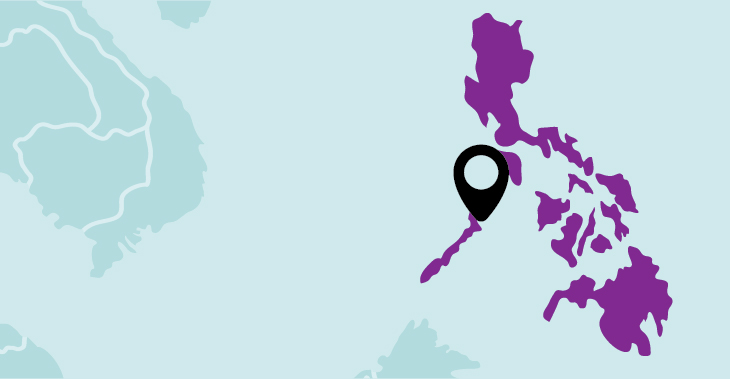
Taytay, Philippines
- Activities Undertaken:
Reduce, Recycle, Responsible Disposal - Initiator: WWF-Philippines
- Year: 2023 onwards
Key Takeaways
- Local government commitment: Partnering with enthusiastic local government officials is central to driving the successful development of policies and their enforcement.
- Strong community support is necessary to ensure that official waste management plans are well implemented, helping to reduce costs when household separation and collection are well practised and composting supports waste reduction.
- Progress can be stalled by bureaucratic hurdles and leadership changes. There is a need to develop clear action plans with multiple key stakeholders that take ownership and are committed.
This case study is 1 of 10 that focus on effective waste management in small islands and coastal communities.
Situation
Palawan represents Philippines’ leading source of fisheries and seaweed —the latter being the country’s top fishery export. As a premier nature tourism destination, it attracts over 1 million visitors annually. Located in the north of Palawan Island, Taytay grapples with increasing plastic pollution. Due to its rising population (3rd most populous in Palawan) and tourism arrivals, both highly reliant on SUPs, and the absence of recycling facilities, waste management capacity has become critically strained. Seaweed farmers use PET bottles, Styrofoam pieces and plastic strings to keep lines afloat. These are often lost as debris, and once degraded by saltwater and sunlight, cannot be recycled. Income disparities between tourism-rich islands and fishing-reliant islands create imbalance in municipal budget and resources, with inadequate provision of waste management capacity across coastal communities most in need.
Complications
- Marine debris accumulation: Ocean currents especially in the monsoon bring large influx of marine plastic debris to the shores. Irregular waste collection and lack of infrastructure lead to accumulated waste with high risk of plastic leaking into nature.
- Marine debris accumulation: Ocean currents especially in the monsoon bring large influx of marine plastic debris to the shores. Irregular waste collection and lack of infrastructure lead to accumulated waste with high risk of plastic leaking into nature.
- Remote location challenges enforcement: Implementing and monitoring waste management regulations is challenging due to the remote nature of the islands. Local waste regulations like plastic bag bans exist but are not socialised nor well enforced.
- Competing use of PET bottles: Seaweed farmers buy used PET bottles to use as buoys or floaters, paying better prices and directly competing with waste aggregators. Bottles are often lost in the sea or
- degrade quickly, contributing to marine plastic pollution.
- Leadership changes shift priorities: Change of local government leadership shifts priorities and increases project uncertainty.
Resolution
- Three island barangays (Beton, Debangan and Paly) officially adopted Barangay Ecological Solid Waste Management Action Plans (BESWMAP), in collaboration with the Municipal Environment and Natural Resources Office (MENRO), revitalising existing BESWM Councils that were not functioning optimally.
- Establishment of collection and transportation systems: Small collection points (local MRFs) are established at the barangay level, with waste segregation policies implemented and contributing waste data to authorities. Further development of transportation for recyclables is required with stronger connections to recycling value-chains.
- Regular coastal cleanups helped mitigate large influx of marine debris. A total of 1.74 metric tons of segregated waste was collected and transported to the mainland for proper processing. In addition, 59 coastal clean-up activities and 8 marine debris operations engaged over 3,200 participants and removed more than 5 metric tons of waste from coastal and marine environments.
- Awareness and capacity building for barangay and other officials, community representatives, teachers and students, via initiatives like Train of Trainers, aim to build local leadership and ownership in proper waste management practices.
Impact
- Decreased waste generation: Across all 3 island barangays, total household waste generation decreased significantly (40% to 62%), with notable reductions in biodegradable waste, indicating improved composting and waste minimization practices at the household level.
- Waste data for management decisions: Beyond managing perpetual influx of marine debris, regular clean-ups with clear intention to provide data support waste monitoring for management decisions and incentivise local governments to earn recognition.
- Improved waste separation and collection: Since the start of household collection and MRF operations, a total of 1.74 metric tons of segregated waste has been collected and transported to the mainland for further processing and management. Next steps are to engage seaweed farmers to practise proper recovery of the used PET bottles which are used 1 – 2 years.
- Community-inclusive waste management: Strong government and community participation through public engagement and revitalisation of barangay waste management plans help ensure that plans are in action. With waste transportation piloted, future plans to expand collection to more barangays and develop municipal baling operation is expected to improve the economy of scale for waste transportation.
Governance & Policy

- Insufficient allocated municipal budget and human resources for waste management.

- Solid waste management action plans with official committees formed help to support awareness campaigns, promote household waste segregation and host clean-up drives and data collection.
- Strong support from municipal and local governance units (LGUs), including the Municipal Environment and Natural Resources Office, plays a critical role in developing localized regulations and budgets and encouraging community engagement.
The Taytay municipal government views plastics and waste management as a major issue across the board now, with work and budgets to be included in government projects.
Capacity, Capability, and Technology
- Enforcing regulations in remote locations where government presence is low is challenging.
- Low level of waste management awareness is complicated by language, dialect and cultural differences.
- Lack of a recycling factory in Palawan increases costs, as recyclables need to be transported to Manila or other large cities.
.
- Critical waste infrastructure (MRFs) provide space for safe collection, sorting and storage while key technology (baling machines) can help reduce plastic waste volume, enabling easier transportation to potential recyclers and saving costs.
- Simple equipment suited to the local context, such as bins and pushcarts, improve waste collection in islands.
- Designating and training waste workers in recording waste data enables wider collection and better waste monitoring .
Funding, Financing, and Access to Market
- Price competition between seaweed farmers and junkshop aggregators create disparities, as seaweed farmers use PET bottles and pay more than junkshops.
- High cost of transporting waste from islands to the mainland limit frequency, while low returns for selling recyclables create little incentives.
.
- Connecting recyclables to local markets through MRFs can create livelihood opportunities.
- Linking local government and private operators to potential recycling partners increases plastic waste recovery.
- User fees administered through local ordinances help to pay for waste collection services.
Cross-Sectoral Collaboration & Other Value Chain Enabling Activities
- High demand for reusing SUPs in fisheries complicate the recycling value-chain.
.
- Effective SWM prevents water pollution and the spread of diseases, building momentum in the public health sector.
- Collaboration with the Municipal Tourism Office improves project success.
- Continuous evaluation of economic factors informs project planning and execution.