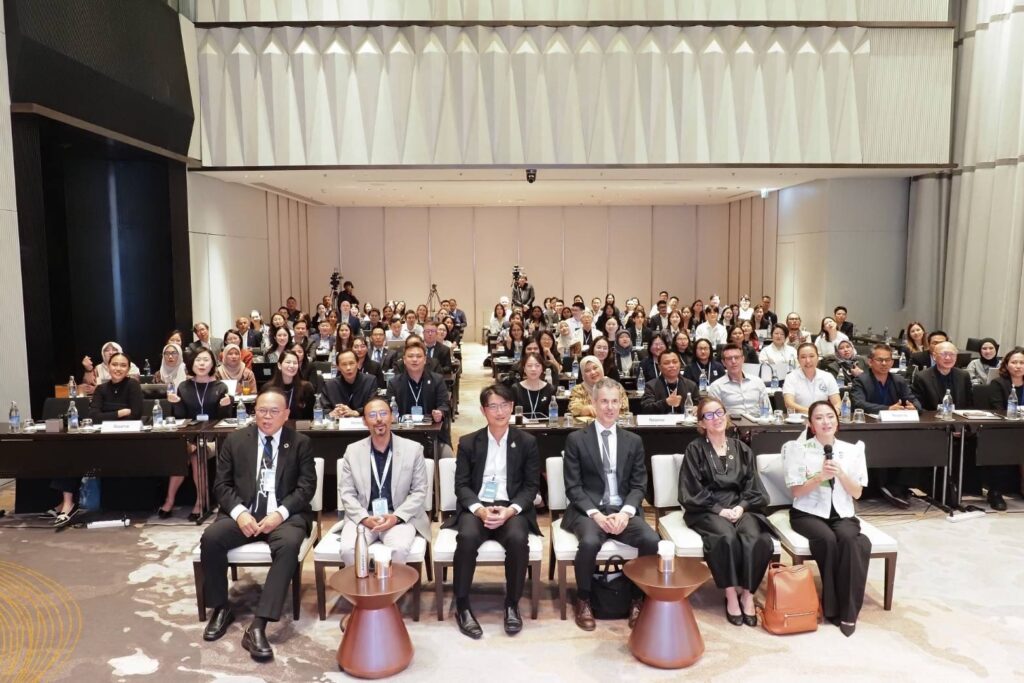
Plastic Smart Cities and WWF-Thailand joined governments, industry leaders, civil society organizations, and coastal communities from across Southeast and East Asia at the Sea of Solutions 2025, convened by COBSEA (Coordinating Body on the Seas of East Asia) and UNEP (16 – 18 December 2025, Bangkok). The event brought together key stakeholders to strengthen regional dialogue on addressing marine plastic pollution and advancing practical, scalable solutions.
Centering Communities in the Transition
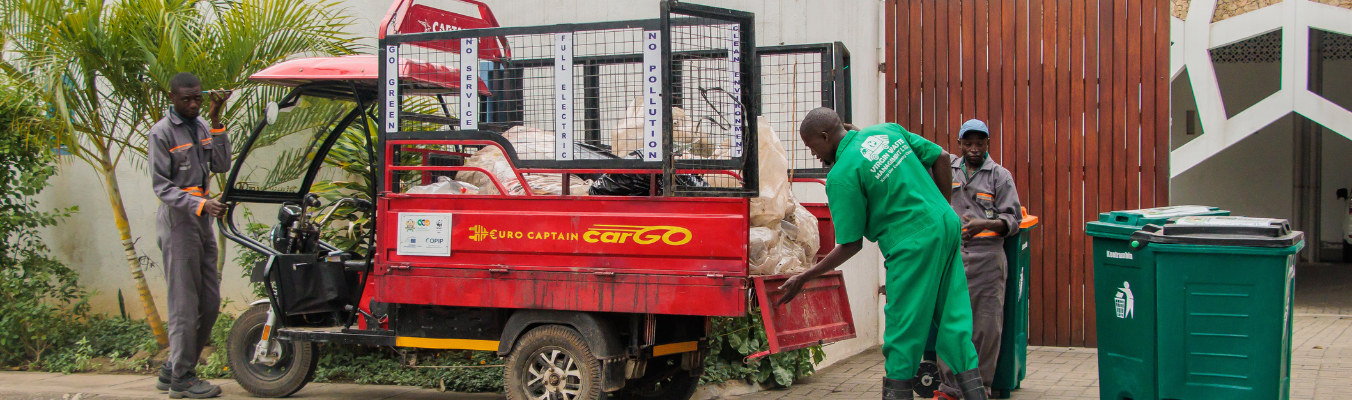
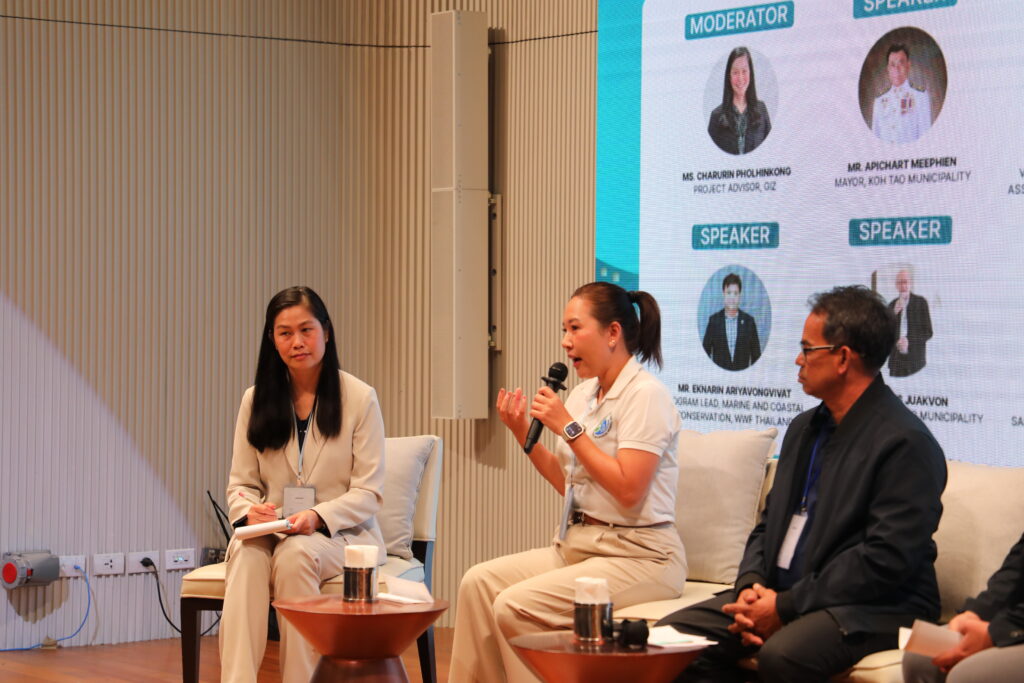
WWF Thailand’s session, “From Communities to Systems: Just Transitions for Plastic-Free Futures,“ highlighted field-based experiences from Koh Tao, Trang, and Surat Thani, emphasizing the critical role of inclusive, community-led approaches in tackling plastic pollution. The session convened policy-makers, local governments, community representatives, informal waste pickers’ networks, and the tourism sector to exchange practical lessons and forge pathways toward equitable solutions.
By amplifying local voices and recognising informal waste pickers as essential partners rather than invisible actors in the waste management value chain, the discussion underscored that a truly plastic-circular future is only achievable when communities, institutions, and private sectors work together — ensuring that no one is left behind.
The session successfully fostered cross-sector dialogue, with participants sharing experiences on reducing plastic waste at source, strengthening local leadership, and advancing fairness and inclusion in the transition toward circular waste management systems. Discussions emphasized that informal waste workers are not just beneficiaries of change but critical agents in building resilient, equitable waste systems.
Connecting Land to Sea, Local to Global
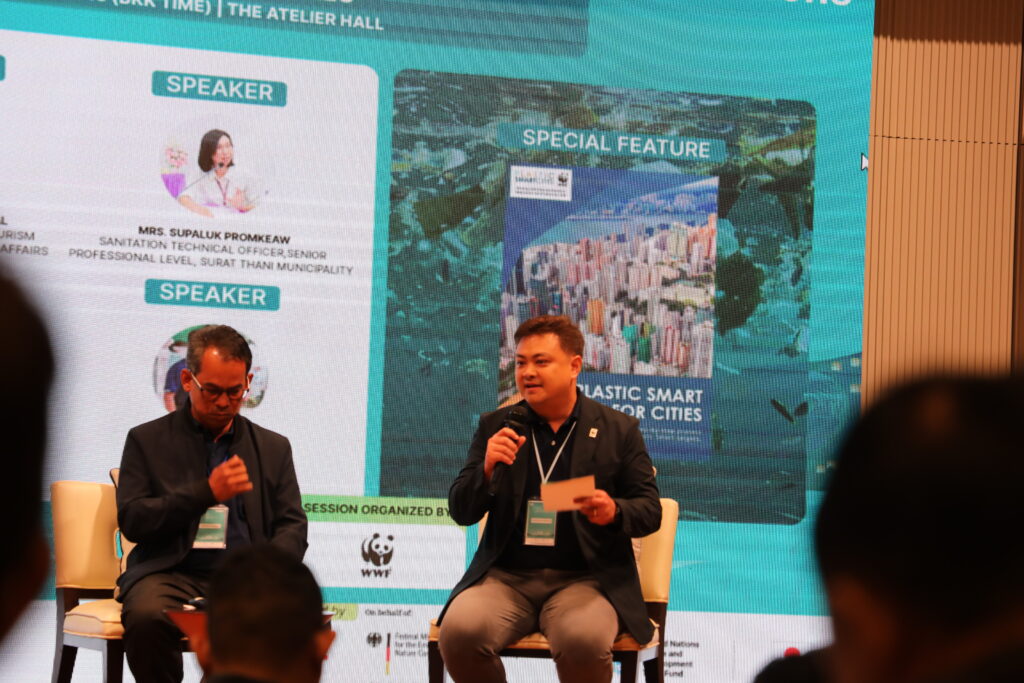
Sea of Solutions also featured two plenary panels moderated by Yumi Nishikawa, Plastic Smart Cities initiative’s Global Lead. The first, “From Land to Sea: Scaling Partnerships for Solving Marine Plastic Pollution,” explored how to translate global commitments into measurable impact in communities and ecosystems while bridging land- and sea-based efforts in meaningful ways.
“This is really about connecting the dots — between global ambitions, regional coordination, and local action,” Nishikawa emphasized. “Plastic pollution doesn’t stop at borders or coastlines, so the way we tackle it must also connect land and sea.”
The second panel, “Behavioural Solutions for Cleaner Oceans,” brought together representatives from Greenpeace Philippines, GIZ, ERIA, and IGES to examine how behavioural change plays a role across the entire plastic lifecycle — from upstream production and consumption to downstream collection, recycling, and disposal. Speakers shared practical tools, monitoring and evaluation frameworks currently being developed, and lessons learned from initiatives such as thenew Behaviour Lab Partnership and GIZ’s global study on reuse systems.
Three Principles for Systemic Change
Across these panels, three core insights emerged:
- Vertical alignment is critical. When global, regional, and local actions reinforce each other, progress moves beyond scattered projects to lasting, system-wide change.
- Integration across land and sea isn’t optional — it’s essential. Plastic pollution moves across the entire continuum, so solutions must too — from solid waste management inland to prevention and recovery efforts at sea.
- Synergy multiplies impact. When stakeholders align frameworks, share data, and build joint initiatives, they don’t just avoid duplication — they accelerate progress and scale proven solutions faster.