Inauguration of Derawan Island Waste Sorting House is set for Wednesday, 11 February 2026, in Derawan Island Village, Berau, East Kalimantan.
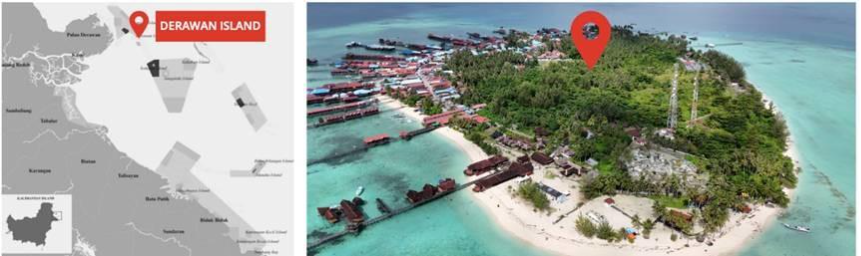
Known for its stunning marine life, Derawan Village in East Kalimantan, Indonesia, has become a growing gateway for marine tourism. But as tourism expands, so do waste management challenges—especially for an island village located inside a Marine Protected Area.
The island’s 80 non-residential buildings—including hotels and restaurants—generate an average of 46.1 tonnes of waste daily, a staggering figure for an island smaller than 45 hectares. Without proper management infrastructure, much of this waste has been burned, buried, or discarded directly into the ocean, threatening the very marine ecosystems that attract visitors and support local livelihoods.
Recent research documented plastic contamination in all sea turtle populations studied globally – in Enggano Island, Bengkulu (another island in Indonesia), 100% of green and hawksbill turtles were found to contain plastic fragments. Candhika Yusuf, Marine Biodiversity Conservation Lead at WWF-Indonesia, emphasised: “These findings underscore the need for serious efforts to reduce marine debris to protect key species and community livelihoods.”
Designing for Derawan Waste System
To address these challenges, the Berau Regency Government and Derawan Village Government—together with WWF-Indonesia—are developing an integrated waste management system through TPS3R (Reduce–Reuse–Recycle Waste Processing Facility). By combining improved waste services with active community engagement, the initiative supports healthier ecosystems and more sustainable marine tourism.
Based on the developed design and in reference to the Waste Management Master Plan, the RUPIAH (stand for RUMAH PILAH SAMPAH DERAWAN – DERAWAN WASTE SORTING HOUSE) facility will serve as a waste management center implementing the principles of reduce, reuse, and recycle (3R) in line with the TPS3R concept. The facility is designed to meet the waste management needs of 1,703 residents of Derawan Island. Currently, waste generation in Derawan Village reaches approximately 572.95 kg per day and is expected to continue increasing in line with population growth and the expansion of tourism activities.
The journey of Derawan’s first-ever TPS3R initiative
- Before June 2024: The early phase focused on building strong local ownership. WWF-Indonesia worked closely with local communities and the local government to raise awareness of coastal waste issues in Derawan Island and encourage active participation. During this period, the idea of establishing a waste sorting facility gradually moved from a discussion point into a clear and shared target to pursue.
- June 2024 – July 2025: With growing commitment on the ground, the initiative progressed into the preparation stage. The project moved forward with the land procurement process in Derawan Island, while also completing the necessary legal, permit, and administrative documentation required for constructing RUPIAH Derawan.
- July – September 2025: Once key approvals were in place, attention shifted to implementation readiness. A procurement process was carried out to identify and select the most suitable construction vendors, ensuring quality work and reliable delivery for the development of the RUPIAH Derawan facility.
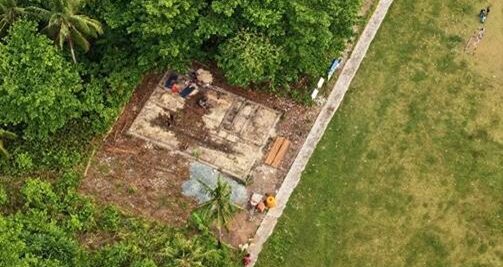
- 10 September 2025: A major milestone was marked through the groundbreaking ceremony of RUPIAH Derawan. The event was officiated by the Vice Regent of Berau and accompanied by a traditional blessing led by Derawan Island elders—symbolizing both official support and local cultural recognition for the project.
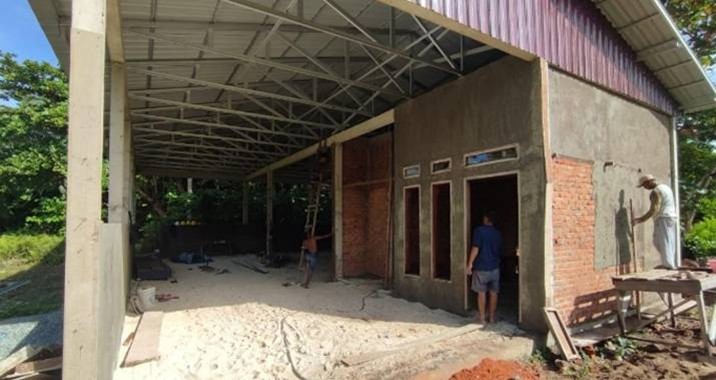
- September 2025 – end of January 2026: Following the groundbreaking, the project entered the construction phase. Work advanced on developing the facility while the team simultaneously began procuring key tools and equipment needed for future operations. This ensured that RUPIAH Derawan was prepared not only as an infrastructure investment, but also as a practical system ready to support day-to-day waste sorting and management on the island.
From inauguration to replication
In early February 2026, an inauguration ceremony is expected to be attended by the Head of Berau Regency, along with around officials representing the Berau Regency Government, East Kalimantan Province, the Ministry of Marine Affairs and Fisheries, and the Ministry of Environment.
Alongside the facility’s construction, WWF-Indonesia—working closely with the Derawan Island Village Government and local communities—has also advanced the operational set-up for RUPIAH Derawan. This includes establishing a local operations team made up of Derawan youth, developing key standard operating procedures (SOPs), and supporting the drafting of a Derawan Village Regulation on waste management.
Vice Regent Gamalis stressed that environmental considerations, particularly cleanliness, are as crucial as infrastructure for tourism success, “Having waste processing capabilities, such as this TPS3R facility is crucial, not only for Derawan Island. We hope this can become a pioneer to be replicated in other tourist destinations in Berau Regency, while maximizing existing waste to be recycled so it can have economic value for the community.”
The project demonstrates how Plastic Smart Cities solutions can be adapted for small island contexts within biodiversity-rich regions like the Coral Triangle. Local champions and cleanliness operators have received specialized training to ensure sustainable operations, while the traditional Bajau ceremony marking the facility’s groundbreaking symbolized deep community ownership of this environmental initiative.