Case Study
Maldives
- Activities Undertaken:
Reduce, Responsible Disposal - Year: From 2019
- Initiator:
Soneva Namoona
Key Takeaways
- Collaborating across islands can improve the viability of waste management systems by sharing infrastructure, logistics and technical resources that may be difficult for individual islands to sustain independently.
- Locally owned solutions that are adapted to island-specific contexts and governance structures are more likely to be sustained over the long term.
Information from this case study is dated to February 2025, and is 1 of 10 that focuses on effective waste management in small islands and among coastal communities.
Situation
- Each island council in the Maldives operates independently under their Local Governance Authority. Councils make decisions autonomously for specific needs, but must operate within the constraints of budget allocations that are made at the national level.
- The Maldives has introduced national waste management policies and measure to reduce single-use plastics, but implementation and enforcement remain challenging across dispersed island communities.
- Influxes of tourists overstrain municipal waste management systems.
- Geographic dispersion, limited land availability and constrained access to waste processing technologies make advanced waste management systems difficult and costly to implement.
Complications
- Insufficient budget allocation: There is often a disconnect between the budgetary resources allocated by the central government and the on-the-ground needs for actual implementation. Budget is allocated based on permanent population size but does not account for fluctuating tourist populations and thus leaves waste management underfunded in areas that require more resources.
- Implementation and enforcement challenges: Monitoring and enforcing waste management requirements across geographically dispersed islands remains resource- intensive.
Resolution
- Island waste management centres (“Eco Centros”) were established, providing locally managed waste segregation, storage and processing systems tailored to individual island contexts.
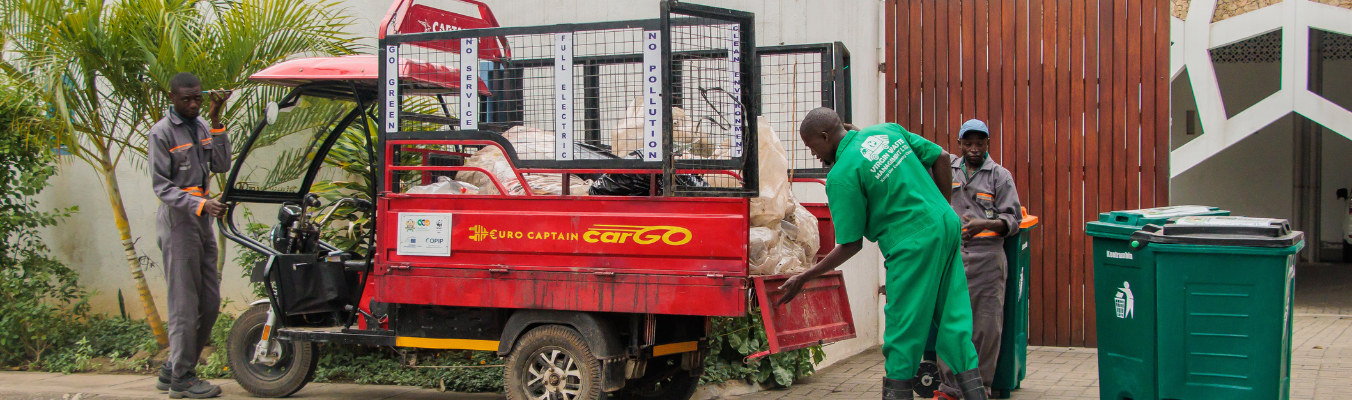
- Shared logistics and transportation systems were introduced to improve waste collection and movement between islands and processing facilities.
- Refillable water systems and household water filtration initiatives were introduced to reduce reliance on single-use plastic water bottles.
- Reusable products, including menstrual products and alternatives to disposable household items, were promoted through partnerships with local organisations.
- The Alun Balun Resale Market Initiative promotes second-hand consumption, reuse and upcycling.
- Home composting programmes reduce waste burdens.
- The program uses the “Namoona Model”, a stepwise framework that enables island councils to progressively improve waste management through locally owned actions, shared resources and peer learning.
Impact
- Collaboration across communities: Multiple islands across Baa and Noonu Atolls have participated in shared waste management initiatives and knowledge exchange activities.
- Preventing waste: 1,000,000 plastic water bottles have been averted by producing 500,000 litres of desalinated water. Eliminated single-use diapers in pilot areas.
- Waste diversion: More than 800+ tonnes of waste have been diverted from open burning or environmental leakage, with substantial volumes sent for recycling through coordinated collection and processing systems. Infrastructure across islands: Island waste management centers and Eco Centros have been established across partner islands, improving segregation, storage and processing capacity.
- Holistic community engagement: Environmental stewardship was taught alongside swimming lessons for 6,000 children and adults.
- Reduced open burning: The Namoona model provides a structured approach for island councils to improve waste management practices, with some islands successfully eliminating open burning.
Governance & Policy

- Gaps in enforcement and compliance mechanisms for national waste management policies.
- Insufficient budget allocation for waste management implementation across islands.
- Variations in local capacity and resources can lead to inconsistent implementation across decentralized island governance systems.

- Strong engagement with island councils and community leaders has enabled locally appropriate implementation approaches.
- Existing national waste management policies provide a framework for island-level implementation.
Capacity, Capability, and Technology
- Limited local technical support, suppliers, and infrastructure for advanced waste processing.
- Geographic dispersion and transportation challenges complicate waste collection and processing.
- Tourism-related population fluctuations place additional pressure on waste management systems.
- Shared infrastructure, logistics and waste management services improve operational efficiency across participating islands.
- Existing household-level alternatives that support waste reduction, including composting and refill systems.
Funding, Financing, and Access to Market
- Initial costs associated with reusable products and household filtration systems may limit uptake.
- Budget allocations may not fully reflect fluctuating tourism-related waste volumes.
- Continued reliance on external funding sources for implementation support.
- Availability of concessional financing mechanisms to support household adoption of reusable alternatives.
- Diverse funding sources, including donor and private-sector contributions, support implementation efforts.
- Shared waste management systems can improve operational efficiency and reduce per-island costs.
Cross-Sectoral Collaboration & Other Value Chain Enabling Activities
- Initial community resistance affected adoption of waste management practices.
- Inconsistent implementation of waste collection systems across islands.
- Limited availability of materials needed to scale reuse initiatives.
.
- Collaboration among island councils, communities, NGOs, resorts and development partners has enabled resource sharing, knowledge exchange and coordinated implementation.
- Community-based organizational structures supporting local participation and implementation.
- Cross-island coordination and knowledge-sharing mechanisms supporting collective action.