Case Study
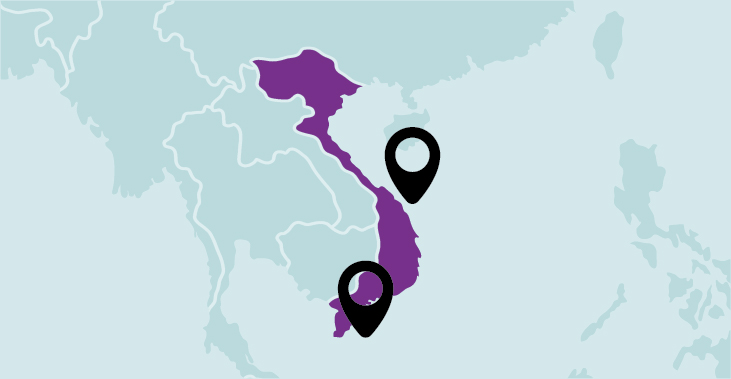
Con Dao & Cu Lao Cham, Viet Nam
- Activities Undertaken:
Reduce, Recycle, Responsible Disposal - Initiator: WWF-Viet Nam
- Year: 2022-2024
Key Takeaways
- Waste treatment facilities must be developed to cope with unmanaged dumping and burning, both extremely harmful to nearby communities. Improved segregation and collection are critical but infrastructure for waste recovery must be developed to ensure long-term viability.
- Co-developing policies with strategically targeted sectors is important for scaling ad-hoc waste reduction efforts.
- Enforcement should be matched with community engagement to drive awareness and uptake of incentives to reduce plastic use or increase circularity.
This case study is 1 of 10 that focus on effective waste management in small islands and coastal communities.
Situation
In Con Dao and Cu Lao Cham, two popular groups of islands in Viet Nam, PSC has introduced key interventions including waste separation and collection, community-led cleanups, engaging schools and businesses to improve waste management, and supporting local authorities in regulations such as single-use plastic bans. Highly dependent on fishing and tourism, commercial activities account for a large part of plastic waste — over 50% for Con Dao which received more than 500,000 visitors in 2023. Local authorities, including local government and MPA officials, have organized regular cleanup projects to address waste management challenges. However, the absence of adequate waste management facilities has resulted in over reliance on open landfills that have reached overcapacity, posing significant environmental and health risks. Despite this, the initiative has significantly improved waste collection rates, strengthened local policies on plastic reduction and integrated sustainability practices within markets, tourism and community activities, fostering a long-term commitment to improved waste management.
Complications
- Limited stakeholder buy-in: Due to initial limited stakeholder buy-in among local authorities, communities, businesses, implementing action plans took longer.
- Limited market access: Recycling markets are inaccessible due to high transport costs while local recycling value-chains and infrastructure remain underdeveloped, with limited connectivity between local MRFs (Cu Lao Cham) or junk shops (Con Dao) and broader recycling systems.
- Uneven coordination capacity: Focal points of action plans play a critical role but their coordination capacity vary, e.g. Cu Lao Cham MPA focal point’s proactiveness made a strong difference in coordinating stakeholders but this is not across the board.
Resolution
Con Dao expanded public collection services, installed more trash bins, conducted regular cleanup drives on public and MPA beaches, while organising community events that encouraged segregation (e.g. exchanging plastic for gifts) and training in composting to reduce waste volumes. By engaging the public and stall vendors to replace SUPs with organic vessels at the highly popular Hàng Dương Memorial, Con Dao reduced 85% in SUP use and ~40% in styrofoam bricks (used as flower holders in worship ceremonies).
In Cu Lao Cham, a World Biosphere Reserve site, banning SUP bags, improving household waste segregation and establishing an MRF (2021) helped divert 50% of landfill-bound waste. Diverted organic waste was converted to 500KG of compost and 150L of bio-detergent, while 280kg of low-value plastics were sent to a recycling social enterprise to make school benches. Further, applying the Plastic Free School and Green Hospitality models in both island groups have proved successful pilots that can be replicated. See Cu Lao Cham’s case study here.
Impact
Improvements to separation, collection and recycling in Con Dao:
- Expanded public collection services now aim to cover a larger area, including installing trash bins in rural areas to enhance waste collection accessibility.
- Improved waste segregation helps facilitate the recycling process. A decentralized composting facility now converts 3-5 tonnes of organic waste per month. By March 2025, 50 tonnes of organic waste had been composted and diverted from landfills.
Improvements to separation, collection and recycling in Cu Lao Cham:
- A high formal collection rate of 73.4% was achieved, and an additional 25.12% was captured through informal systems transporting waste to the mainland. Rate of uncollected waste was reduced to only 1.48%.
- Over 200 fishing vessels were equipped with waste collection tools.
- Plastic Free Schools, which reached 242 students, and focusing on SUP reduction helped push for upstream solutions and reduce pressure on downstream, but necessary, waste management and treatment.
Governance & Policy

- Where there is no clear focal point in coordinating across various government units, this can lead to inaction or delays.

- Top-down engagement and approval by the governments in Con Dao and Cu Lao Cham are essential for mobilising regulatory resources.
Capacity, Capability, and Technology
- Without established recycling infrastructure, islands face high costs and logistical challenges in safely transporting recyclable materials.
- New collection routes, providing additional bins and replicable home composting programmes can improve quality of segregated waste and collection, which helps reduce costs.
Funding, Financing, and Access to Market
- Limited connectivity between local junk shops in Con Dao or Cu Lao Cham’s new MRF and more mature recycling markets on the mainland hinders processing and sale of recyclables.
- Public campaigns can increase capacity for reducing SUP (e.g. bags, foam bricks, bottles) use while strong involvement of women, youth and fisherfolk in hands-on segregation, collection and cleanups prove helpful in shifting social norms and behaviours.
Cross-Sectoral Collaboration & Other Value Chain Enabling Activities
- Lack of a focal point or clear leader in coordination.
.
- Concerted focus on baseline data for waste management has enabled robust impact assessment.
- Applying the Plastic Smart Cities framework consistently across various municipalities supports multistakeholder action plans for waste management.