WWF-Malaysia’s No Plastic in Nature (NPIN) initiative has been working in Sabah with local governments, community-based organisations, universities and local businesses to tackle mounting plastic pollution in its coastal and marine environments, particularly in Sempora, a coastal town that sits along the Celebes Sea and serves as the gateway to some of the most biodiverse marine ecosystems in the world.

Based on lessons learned from the Plastic Smart Cities framework, the initiative aims to empower island communities to lead sustainable waste management efforts that in turn help protect critical marine habitats. To date, 30 Plastic Rangers and 7 community-based organizations (CBOs) have been engaged to lead local, on-ground solutions to plastic pollution. The groups include:
- Community of Larapan Island
- Community of Larapan Marine Conservation Group
- Kulapuan Conservation Group
- Wanita Pulau Omadao (WAPO) or Omadal Island Ladies Association
- School Samadhil Laut Omadal
- Scuba Junkies
- Mabu Eco Youth
Island-Based Waste Management Plans in Action

Since 2023, the initiative has been working to empower community-based organizations on several islands off Semporna to increase their skills, knowledge and capacity in driving local waste management solutions. With funding from the European Union, and supported by WWF-Malaysia, community-led action groups on the islands of Larapan and Omadal have developed community waste management plans and started implementing them.
Local action groups rally the islands’ residents in regular coastal clean-ups. Compared to urban or mainland areas with relatively easier access to waste management infrastructure and where infrequent volunteer-based clean-ups may seem cursory, regular coastal clean-ups on remote islands and coasts can make a big difference to the residents’ quality of life. Due to the prohibitive costs of transporting waste to the mainland, island residents are often left with little choice in dealing with non-organic and plastic waste. These are either burned openly, a highly hazardous practice to nature and people as burning plastic releases toxic chemicals into the environment, or disposed into the environment, where the likelihood of leaking into the oceans becomes significantly higher.

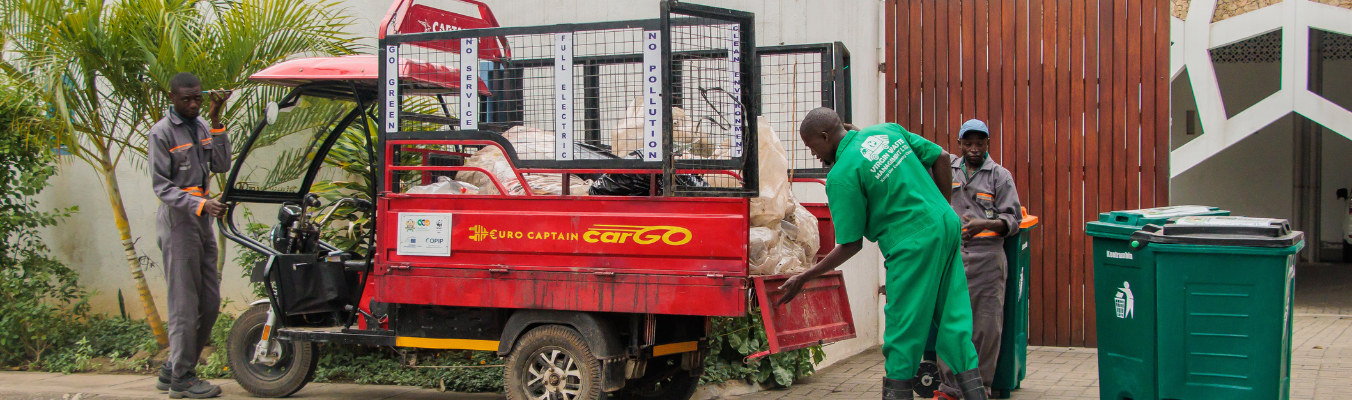
CBOs are also rallying residents to start separating and collecting plastic waste at the household level for regular collections, while sorting hubs/collection points are either being planned or have been set up. To date, the two islands have intercepted more than 5,600 kg of plastic waste from leaking into the seas, and relieving residents of being surrounded by accumulating hotspots of plastic waste.
Household segregated waste is sent to a collection point and weighed. Segregated plastic bottles are then sent to AMWIL in Semporna (the recycling center on the mainland). Although the waste management mechanism seems simple, there was previously no waste management system for the islands. The waste produced was burned, buried in the ground, or thrown into the ocean.
Recognizing that collection points alone are not enough to foster long-term behavioural change, the project is now establishing island-based educational recycling centers on Omadal, Larapan, and Mabul Islands. Expanding and enhancing waste collection and segregation at source in the coastal areas can be achieved through these collection and recycling centers on the islands. These centers aim to serve as educational and operational hubs, promoting a culture of recycling within the communities. However, significant investment is still needed to install modern recycling facilities equipped with advanced sorting technologies to process a wider range of plastics.
In Mabul, the project is also piloting a mobile upcycling initiative. A community upcycling machine was introduced in collaboration with local partners. Though still in its early stages, the initiative has already produced 213 upcycled products between April and June 2025, generating RM 6,030 in income and repurposing nearly 15 kg of plastic waste.

This grassroots model not only addresses urgent environmental challenges but also creates economic opportunities and strengthens community ownership over local sustainability efforts
Building Capacity and Policy Support for a Truly Circular Economy
Beyond community-based waste collection and recycling, the project has also focused on strengthening awareness, knowledge exchange, and policy engagement to build a more resilient and informed response to plastic pollution in Semporna.
On the policy front, the project hosted a Plastic Inception Workshop with state-level stakeholders and organized a Symposium in Kota Kinabalu. At the symposium, community members from Semporna shared their experiences and solutions directly with policymakers and private sector actors, amplifying grassroots voices in formal decision-making spaces.
Achieving this ambitious goal also necessitates unprecedented collaboration. Strong leadership from the Sabah state government, particularly the Ministry of Local Government and Housing and the Ministry of Tourism, Culture and Environment, is essential for policy coordination and enforcement. Active engagement from the private sector, including tourism and F&B industries, to reduce plastic packaging and invest in sustainable practices is vital.
While Kota Kinabalu City has pioneered the “Bawa Beg Bah” (Bring Your Own Bag) campaign and has initiated a campaign to reduce the use of polystyrene and plastic straws effective October 2025, the initiative to reduce single-use plastic must cascade statewide, especially on the east coast of Sabah that boasts stunning islands and a wealth of underwater life.
Long-term Sustainability of Waste Management on the Islands
Looking ahead, the project is exploring two key strategies to ensure long-term sustainability:
- Sustainable Financing Mechanisms: Addressing the high logistical costs of transporting plastic waste from remote islands to mainland recycling centers by exploring Extended Producer Responsibility (EPR) schemes and circular economy models.
- Community–Public–Private Partnerships (CPPPs): Integrating community efforts with government policy and private sector innovation to co-create scalable, sustainable waste solutions tailored to island contexts.