Ranked highest in India for plastic waste generated per capita, Goa’s plastic waste challenge is outsized. Despite being India’s smallest state, Goa produces more than 26,000 tonnes of plastic waste per annum, according to the Central Pollution Control Board’s (CPCB) 2019-20 report. Exacerbated by seasonal tourism, as many visitors flock to Goa’s pristine beaches, leaving behind a trail of unsegregated waste — much of it finding its way into the environment, accumulating in unsanitary hotspots across cities and villages. Beyond these visible signs of pollution, an even greater environmental crisis is unfolding beneath the surface.
The SAIM Goa (Sustainable Approach to Integrated Waste Management) project aims to help Goa accelerate its journey towards a plastic smart city, by demonstrating that a decentralized and community-driven approach can be scaled to other cities and regions facing similar plastic waste challenges. Inspired by the Konkani word saim, meaning nature, the project embodies a sustainable, nature-driven approach to waste management.
Since the launch of SAIM Goa in July 2024, the WWF-India and Saahas Zero Waste (SZW) collaboration has evolved from concept to operational reality.
[Also read: Sustainable Approach to Integrated Waste Management (SAIM Project) in Goa, India]
As part of SAIM Goa, the newly-launched Material Recovery Facility (MRF) near Margao, Southern Goa, is now poised to handle up to 10 tonnes of dry waste daily from 25 wards across Margao’s nearly 45,000 households and over 15,000 commercial establishments.
What sets this facility apart is its improved processing journey that aims to maximize resource recovery. Currently, existing processing plants that manage bulk waste in Goa often overlook material recovery, missing the opportunity to reintegrate valuable resources into the production cycle. Additionally, fragmented contractor networks and logistical challenges hinder ethical waste handling, leaving gaps in traceability and environmental responsibility.
In Goa, the lack of structured local waste management systems has led to rampant dumping, with informal waste workers operating without adequate support or fair compensation. This highlighted the need for a decentralized, community-driven approach—one that prioritizes circularity, ethical waste management, and local environmental impact.
Community-Based Waste Management Drives Success

Incoming dry waste undergoes systematic sorting — first removing sanitary waste, glass, fabrics, and e-waste. Materials then pass through an inclined conveyor into a trommel, separating items smaller than 60mm while larger materials continue to the mezzanine conveyor. The facility achieves 20+ material categories through secondary sorting, with specialized handling for hard plastics (e.g. HDPE, PP) and PET bottles based on end-destination specifications.
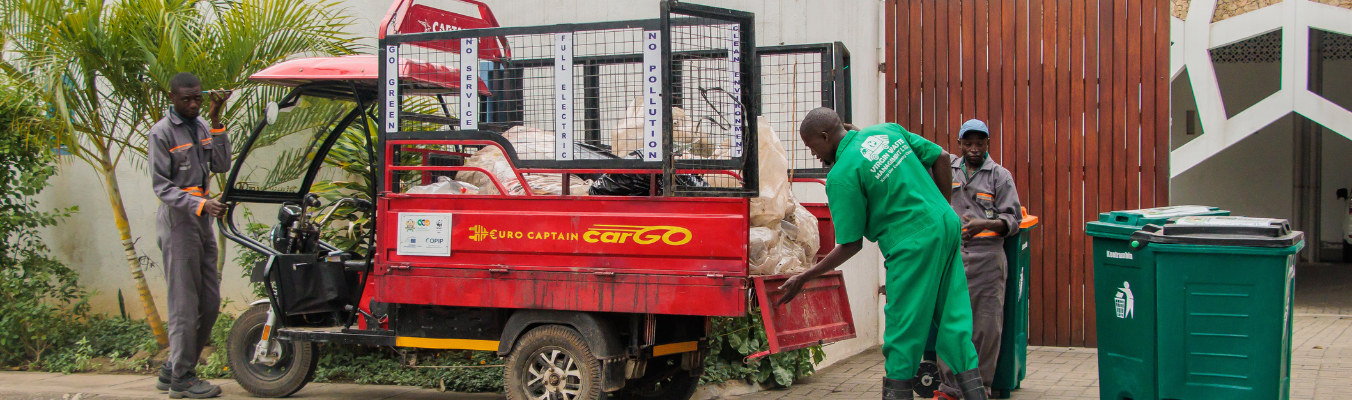
The project’s structured collection system uses music-equipped vehicles following weekly schedules, which alerts residents of its arrival. This is supported by community awareness programmes emphasizing three-category segregation (dry, wet, sanitary).
This approach has proven effective in engaging residents and businesses, where a user fee model implemented with local village panchayats and businesses has fostered waste ownership culture, while hyperlocal WhatsApp groups enable real-time communication between collectors and residents. Community participation extends beyond collection—beach and hotspot clean-ups are organised to instill collective environmental responsibility.
SAIM’s commitment to its 15+ waste workers distinguishes it from informal collection systems. Workers receive fair wages through direct bank transfers, protective gear, formal training, insurance coverage, and state-mandated minimum wages. This ethical approach ensures both operational efficiency and social responsibility.
Every processed material follows a traceable path to authorized recycling or co-processing facilities. Daily baling outputs serve as key performance indicators, with weights recorded at both the MRF and external weighbridges before dispatch. This transparency ensures materials genuinely re-enter the production cycle rather than ending up in landfills.
Non-recyclable materials are diverted for co-processing as fuel, demonstrating the facility’s commitment to zero-waste-to-landfill operations.
The initiative specifically targets waste leaking into the Sal River — South Goa’s vital freshwater ecosystem that has become a conduit for plastic debris flowing to the Arabian Sea. By intercepting mismanaged waste upstream in Margao, this helps to protect a critical wetland biodiversity while addressing broader marine pollution that threatens human health.