WWF-Greece is advancing a concrete Extended Producer Responsibility (EPR) model to ensure tobacco producers, rather than taxpayers, foot the bill for the toxic plastic pollution generated by cigarette filters.
The Challenge: Cigarette Filters Fuel the Plastic Crisis
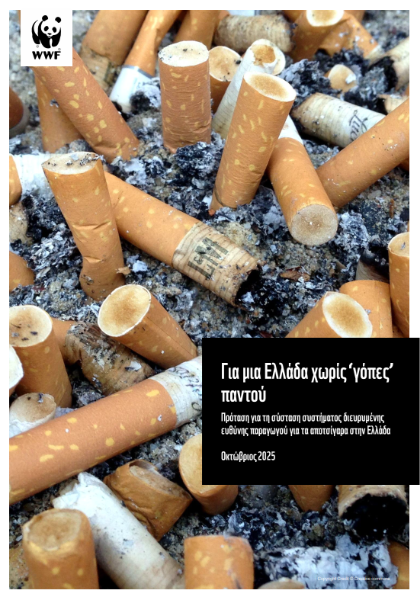
Cigarette filters are among the most pervasive and toxic plastic litter items in the environment. Despite their small size, their environmental footprint is anything but invisible. In Greece, they remain one of the most common waste streams found in coastal and urban areas.
While EU and national legislation have required an Extended Producer Responsibility (EPR) system for these items since January 2023, an operational mechanism has yet to be established. This policy gap has left local municipalities and taxpayers to shoulder the significant costs of cleanup, collection, and disposal.
A Data-Driven Solution for Accountability
In early 2026, WWF Greece presented a comprehensive, data-driven proposal to bridge this gap and operationalise the “polluter-pays” principle. By analysing legal loopholes, municipal cost data, and international best practices, the team developed a blueprint for a collective Producer Responsibility Organisation.
The proposed model suggests a per-filter fee of €0.019. This funding would provide full cost recovery for:
- Municipal cleanup and collection efforts
.
- The development of dedicated waste infrastructure
.
- National awareness campaigns and environmental monitoring
By shifting financial responsibility from the public sector to the producers, this initiative strengthens corporate accountability and creates a systemic financing stream for long-term plastic reduction.
Strategic Insights: Turning Policy into Practice
The work of WWF Greece offers several key learnings for environmental advocates and policymakers working on hard-to-regulate plastic streams:
- Operational Clarity is Key: Strong legal frameworks are insufficient if they lack clear governance and operational mechanisms.
- Evidence-Based Advocacy: Data-driven cost models significantly increase credibility and provide the necessary “policy traction” during government discussions.
- Design for the Future: A maximalist EPR design helps prevent loopholes and “free-riding”, ensuring all market players contribute fairly.
- Market Dynamics: Concentrated markets with few producers can simplify the administration of EPR schemes, making them easier to monitor and enforce.
Looking Ahead: From Proposal to Action
While the proposal is currently awaiting formal policy adoption, it has already strengthened the evidence base for enforcement and heightened awareness of the financial burden placed on municipalities.
The next phase of the project involves intensive policy advocacy to trigger formal government action and public consultations on the system’s design. WWF Greece remains committed to pushing for transparency, supporting municipalities with robust data, and ensuring that existing legal obligations are finally enforced to protect Greece’s natural ecosystems from toxic plastic leakage.