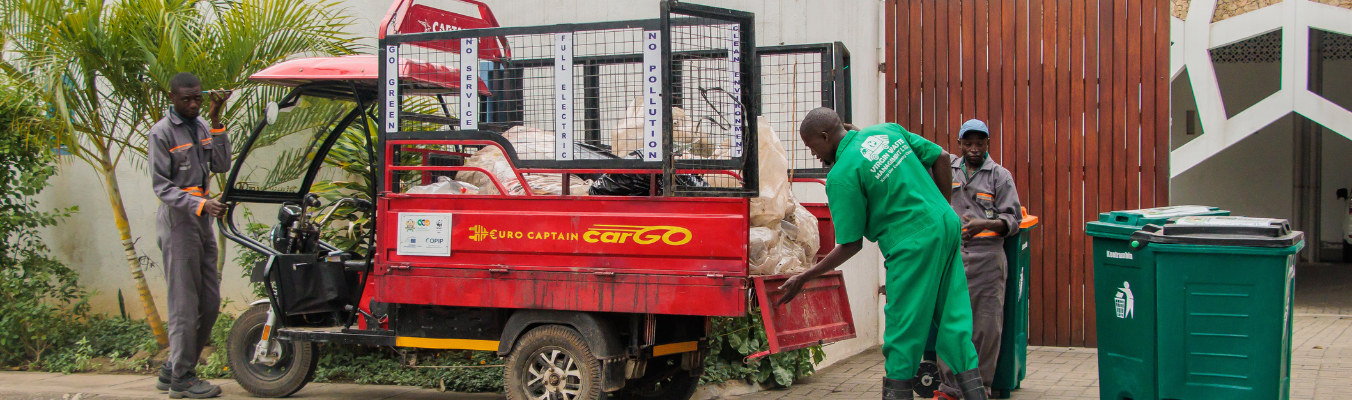
Since 2024, WWF-Türkiye has been implementing the project “Waste pickers and Waste Not to be Wasted in Gaziantep” to strengthen waste management systems and improve the living conditions of waste pickers. By partnering with local stakeholders to deliver immediate, tangible support, ranging from protective equipment to health and language training, directly to waste pickers and their families, the project promotes more inclusive and sustainable waste management practices, with a particular focus on integrating waste pickers into the system.
To enable sustainability, this programme was designed to strengthen the capacity of civil society organizations and increase the impact of initiatives working with disadvantaged groups such as waste pickers. To date, three of the supported projects have been completed, while activities under the remaining two projects are still ongoing.
Partnerships for Social Inclusion
Over a period of six to nine months, WWF is working with four different organizations — Şahinbey Social Assistance and Solidarity Association, Sevgi Social Assistance and Solidarity Association, Gaziantep University, and Etki Çemberleri Foundation — to deliver training sessions on health, hygiene and child health for waste pickers and their families, along with activities raising awareness on occupational health and safety and basic rights. In addition, through field research on the working and living conditions of waste pickers, the programme distributed personal protective equipment, supported them with Turkish language courses, and social cohesion activities. It is notable that academic collaborations and communication activities also contributed to increasing the social visibility of waste pickers.
As a result, the programme benefited a wide range of stakeholders, including waste pickers and their families. A total of 56 women and 10 children* who came with their mothers directly participated in training activities; while 125 waste pickers received personal protective equipment, and health and hygiene support. In addition, different groups were reached through social cohesion activities, language courses and field research, and 43 university students were also involved through academic collaborations. This approach helped to expand both the direct and indirect impact of the programme in a more inclusive way.
This multi-dimensional approach developed through this programme working with local organizations also helped to better understand the needs of waste pickers and to design more targeted capacity building activities.
Capacity Building for Waste Pickers in Gaziantep
In line with this, a comprehensive needs assessment was conducted in the last quarter of 2025, followed by the development of a capacity building programme based on the identified needs. The trainings were delivered in February 2026 through two sessions held on the same day, reaching 50 waste pickers. The training sessions were delivered in three modules covering occupational health and safety, professional knowledge on waste collection and sorting, and social rights and entrepreneurship.
Post-training evaluations showed that all participants found the training useful and stated that they could apply the knowledge acquired in their daily work. Feedback from the training process also suggests increased awareness and a better understanding of their role within the recycling system, particularly in occupational health and safety, as well as a tendency towards more careful working practices.
The findings highlight the importance of supporting such efforts with approaches that are adapted to field realities and sustained over time.
The Road Ahead: Strengthening Local Integration and Guidelines
Building on these results, the next steps of the project will focus on strengthening collaboration with local stakeholders and supporting the inclusion of waste pickers in waste management practices. The findings from the needs assessment and training activities will be used to improve future activities and better respond to needs on the ground. The data collected from the field will contribute to the development of a policy document for public institutions and guidelines for municipalities.
Read more about the prior phases of the project at:
- Recycling Solutions Empower Waste Pickers in Türkiye
- Capacity Building Program Strengthens Civil Society in Gaziantep