Kenya’s EPR Implementation Journey
With the Sustainable Waste Management Act (2022) and EPR Regulations in place, Kenya has moved from designing its EPR system to implementation. Several Producer Responsibility Organisations (PROs) now operate alongside each other, while the country is preparing a national Central Registry System to track producers and their packaging.
To support this transition, WWF-Kenya, working closely with WWF-Germany and WWF-Denmark, organised an EPR Governance Knowledge Exchange study tour from 13 to 19 September 2026. Building on a previous visit to Germany in 2022, which focused on developing Kenya’s EPR framework, this study trip focuses on shifting from design to practice — exploring how PROs, compliance, data, financing, collection and recycling are coordinated within mature EPR systems.
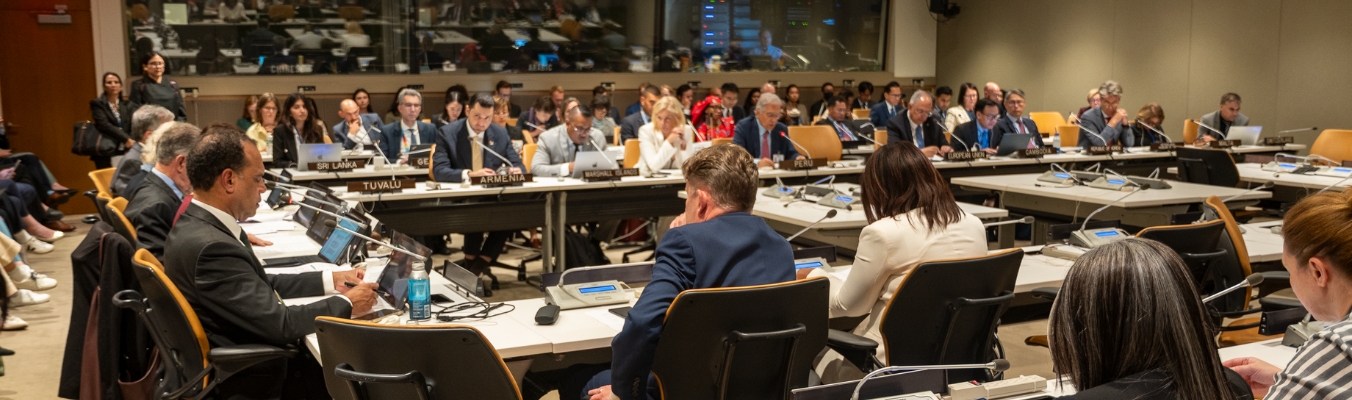
The delegation brought together key institutions involved in Kenya’s EPR system, including the Environment Secretary and representatives from the Ministry of Environment, Climate Change and Forestry; the National Environment Management Authority (NEMA), with officers working on EPR implementation, compliance, enforcement and ICT; the Council of Governors, representing Kenya’s 47 counties; the Kenya Association of Manufacturers (KAM); three PROs — KEPRO, PAKRO and EPROK; a waste-management company; and WWF-Kenya and its technical partners.
Rather than presenting Germany and Denmark as models for Kenya to replicate, the exchange focused on drawing practical lessons from their experiences and challenges to strengthen Kenya’s approach to EPR implementation and support the broader transition towards a circular waste management system. This premise provided a basis for discussing what Kenya’s multiple-PRO system needs in order to function as one coherent national system.
Germany and Denmark: seeing mature systems in practice
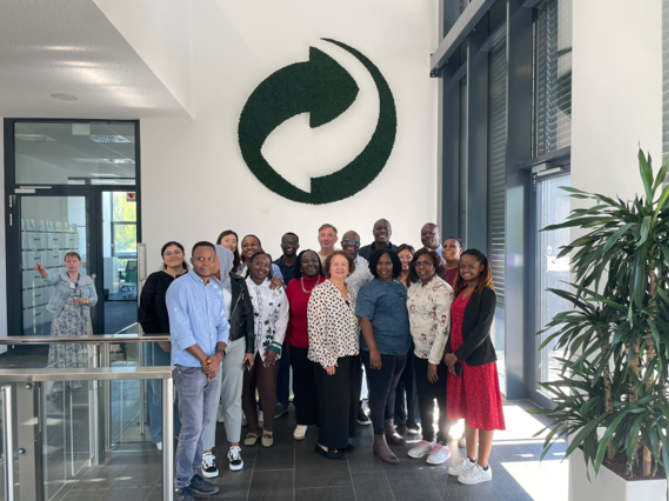
In Cologne, Germany the delegation explored how a multiple-PRO system operates in practice through visits with organisations including Reclay, the Central Agency Packaging Register (ZSVR) and Green Dot, and joined a tailored session on capacity building with Cyclos. Germany started with a single PRO (Green Dot) before opening the market to several more. Competition brought cost reductions, leaner administration and stronger customer orientation.Germany’s experience highlighted both the benefits and challenges of competition between PROs. While opening the market helped reduce costs, it also brought aggressive pricing, disputes over reported volumes and periods of instability. Today, German PROs compete for clients while sharing household collection with the Central Register cross-checking producer and PRO declarations. The visit also highlighted why collection volumes alone can be misleading: around 31.7% of collected lightweight packaging was residue or non-target waste.
In Copenhagen and Roskilde, Denmark, the delegation examined how producer registration, reporting, collection, recycling, and end-market development are coordinated across the system. At Dansk Producentansvar (DPA), the delegation looked at producer registration and digital reporting, while REMONDIS Denmark shared how collection, sorting and recycling are managed. At the ARGO plant, which processed about 358,757 tonnes of residual waste in 2025, delegates saw how energy recovery is used for waste that cannot be recycled. At Cirkulær, the discussion focused on collaboration between regulation and industry, including how industry can help create markets for secondary materials.
Key learnings from the study tour
- Plurality requires stronger coordination. The more PROs there are, the more important common rules and shared coordination mechanisms become.
- Shared systems need to have an owner. Infrastructure, consumer communication and collection-quality improvement benefit every PRO but are rarely the priority of any single one.
- Independent, trusted data underpins accountability. Central registration and cross-checked reporting determine producer compliance, market shares, cost sharing and fairness between PROs.
- Collection does not equate recycling. PRO performance must be measured along the whole chain, from collection quality to actual recycling outcomes, rather than by tonnes collected.
- Harmonise the rules, not the organisations. PROs can differ in structure and approach provided they apply the same definitions, reporting rules and performance measures.
- Circularity depends on markets. Recycling capacity does not create demand for recycled materials on its own; product design, recycled-content requirements and investment certainty are also needed.
Next Steps: Towards a Coherent EPR System in Kenya
Lessons from the study tour are already informing discussions on the next phase of EPR implementation in Kenya. Stakeholders are working towards harmonised methodology for calculating EPR fees, alongside discussions on a possible PRO Alliance, drawing on the Danish experience in coordinating multiple PROs.
The participating institutions are also expected to use the findings in the design and rollout of the Central Registry System. The next steps include bringing together the PROs, NEMA, KAM and counties to discuss common rules and shared-financing arrangements, as well as identifying areas where further technical support from WWF and partners could be useful.
For cities and counties, the message is clear: producer responsibility alone is not enough. Source separation and household communication, working together with the counties, will affect whether collected packaging can move into recycling or remains waste that needs to be managed. While Germany and Denmark do not provide a model that Kenya can directly replicate, their experience offers practical lessons on what needs to be in place for a multiple-PRO system to work as one national system and deliver better environmental outcomes.