Informal waste pickers play a vital role in recovering recyclable materials that would otherwise end up in landfills or the environment. In Thailand, these workers, known locally as Saleng (named after the Thai word for the motorcycles with sidecars they drive), help keep valuable materials in circulation despite often operating informally with limited access to recognition, welfare support, and municipal planning processes.
WWF-Thailand is working closely with municipalities to strengthen the role of informal waste pickers as key partners in building circular cities. Recent activities in Surat Thani and Trang highlight how training, recognition, and municipal collaboration can improve both recycling systems and the livelihoods of informal waste workers.
Continuous Training and Monitoring for Waste Workers in Surat Thani
On 2 September 2026, WWF-Thailand and Surat Thani City Municipality organised a training for 140 participants, including 114 Saleng Association members. The training was designed to strengthen both legal compliance and operational efficiency for informal waste collectors. With a municipal staff representative present, participants were briefed on the Saleng Association’s membership rules, responsibilities, and welfare benefits meant to support their livelihoods.
The session generated immediate interest, with 12 new membership applications submitted and the Saleng LINE communication group more than double — from just over 20 members to more than 50.
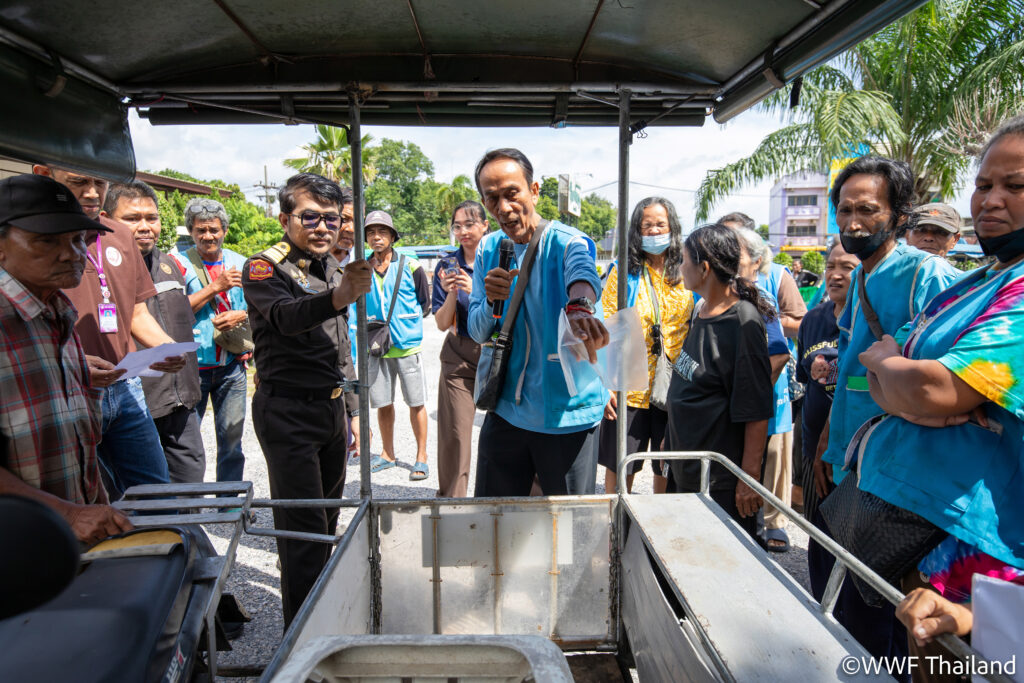
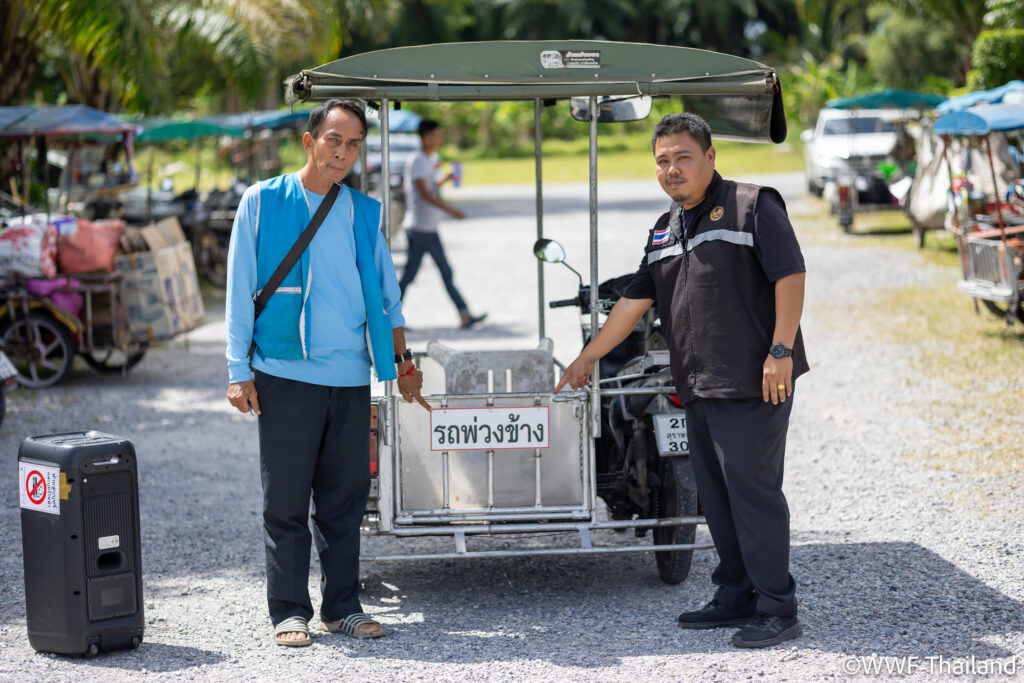
A Provincial Land Transport Office officer and Saleng Association members inspect a motorcycle sidecar during the session
Since Saleng workers often use motorcycles with sidecars to collect, transport, and sort recyclable materials, the project also included a Provincial Land Transport Office representative to conduct sidecar inspections and ensure the vehicles met legal standards and safety requirements.
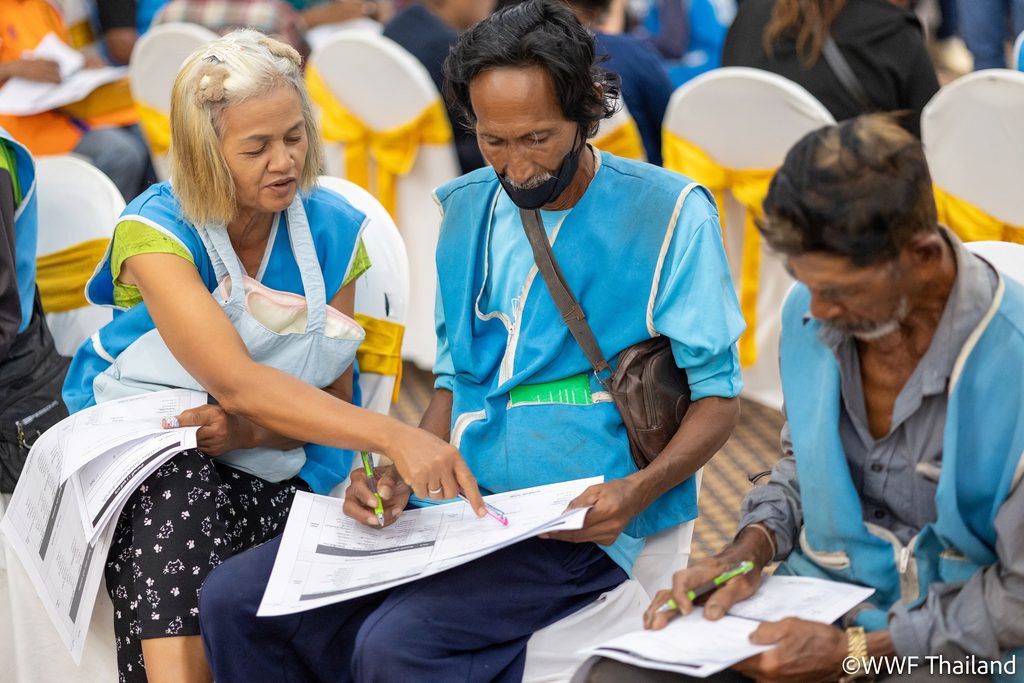
To design a better, more coordinated waste collection zoning system, WWF-Thailand and Surat Thani Municipality facilitated a participatory mapping exercise to identify current collection routes, working hours, and challenges faced by the workers. The municipality gathered data on the streets and neighbourhoods that they cover, and the collection time to help the municipality understand the patterns. They also identified challenges in accessing certain residential areas, such as gated communities, which the municipality will grant access to through further coordination. Lastly, members also discussed how annual dividends should be distributed, balancing immediate cash needs with longer-term savings and welfare options.
“Our work with WWF-Thailand has strengthened members’ understanding of money management and helped them see the value of saving for the future. The dividend survey reflects this growing awareness, with members choosing savings and welfare fund options alongside cash,” Municipal officer, Surat Thani City Municipality.
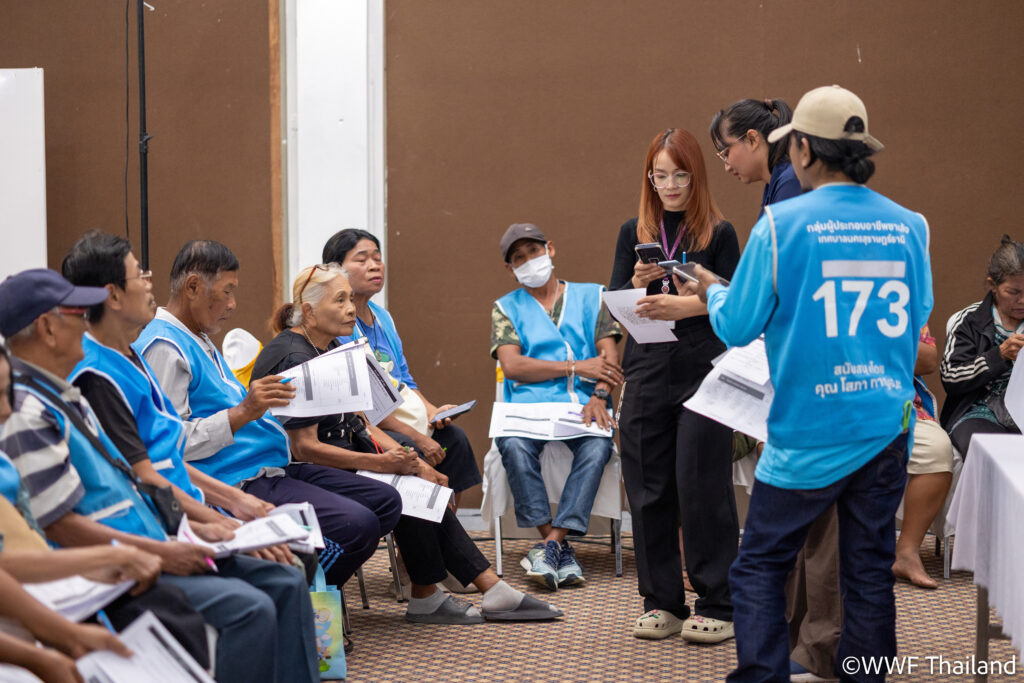
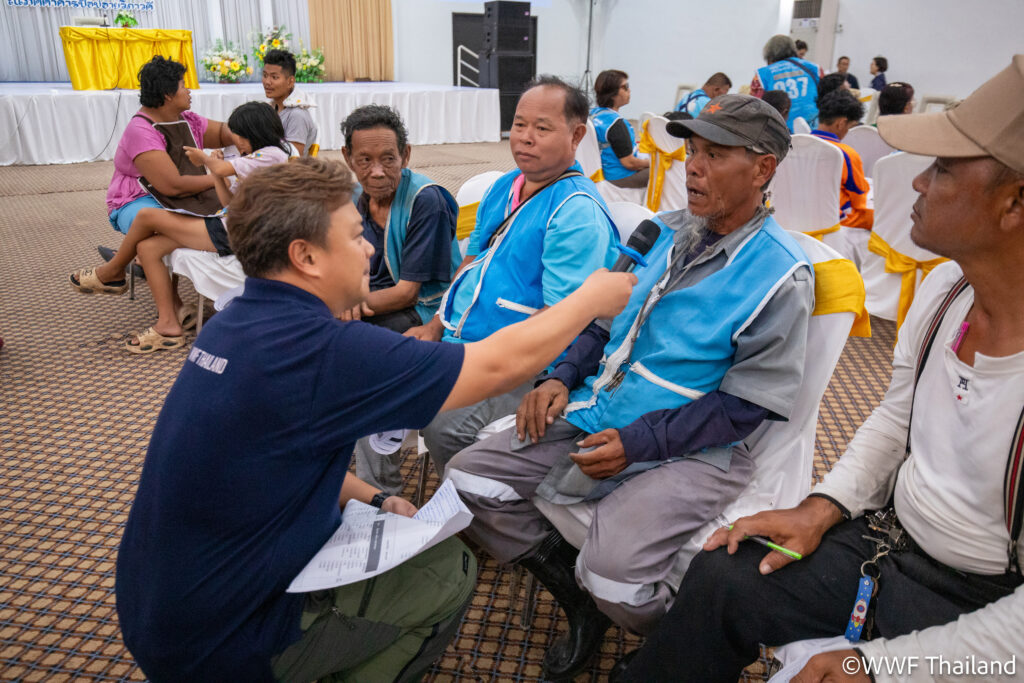
Saleng Association members discuss collection routes and housing-estate access during the group activity
Formal Recognition for Informal Waste Pickers in Trang
WWF-Thailand and Trang City Municipality have also begun replicating the Saleng Association model. – At a field visit 28–29 September, 20 informal waste pickers were formally registered and presented with municipal identification cards and vests. Members reported improved visibility and legitimacy of their work, while discussions focused on adapting membership systems, collection routes, welfare, and data management to Trang’s local context. Formal registration provides waste pickers with greater recognition from local authorities and residents, helping strengthen trust and legitimacy in their daily work.
“Coming together as a Saleng group and receiving vests and municipal ID cards have given us greater visibility and recognition, helping people see the value of our work and our role in the community, ” said a saleng representative in Trang.
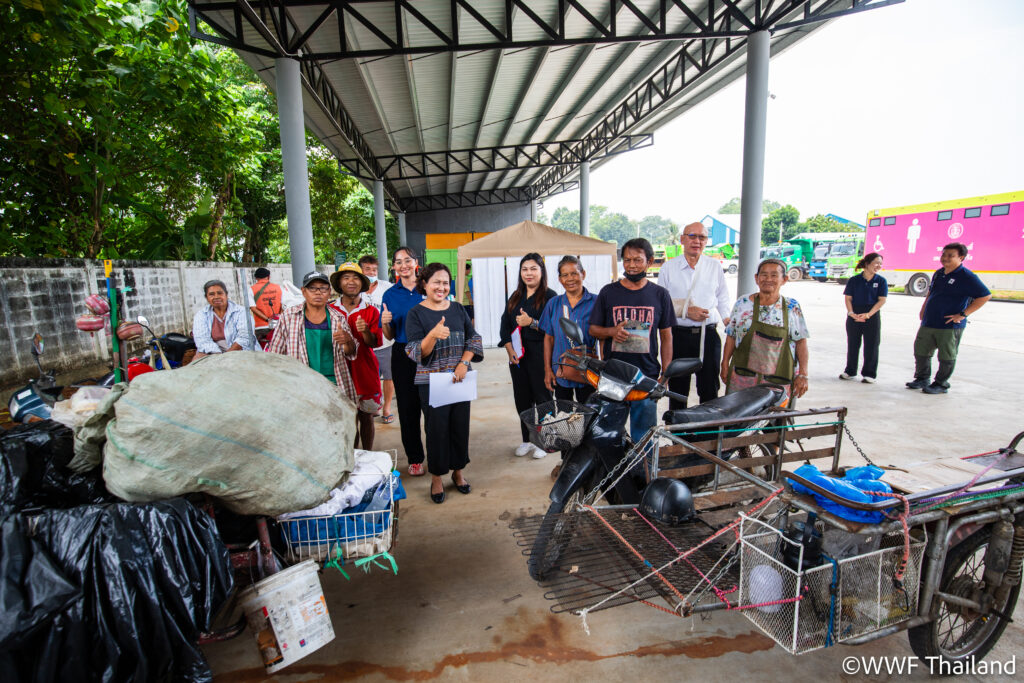
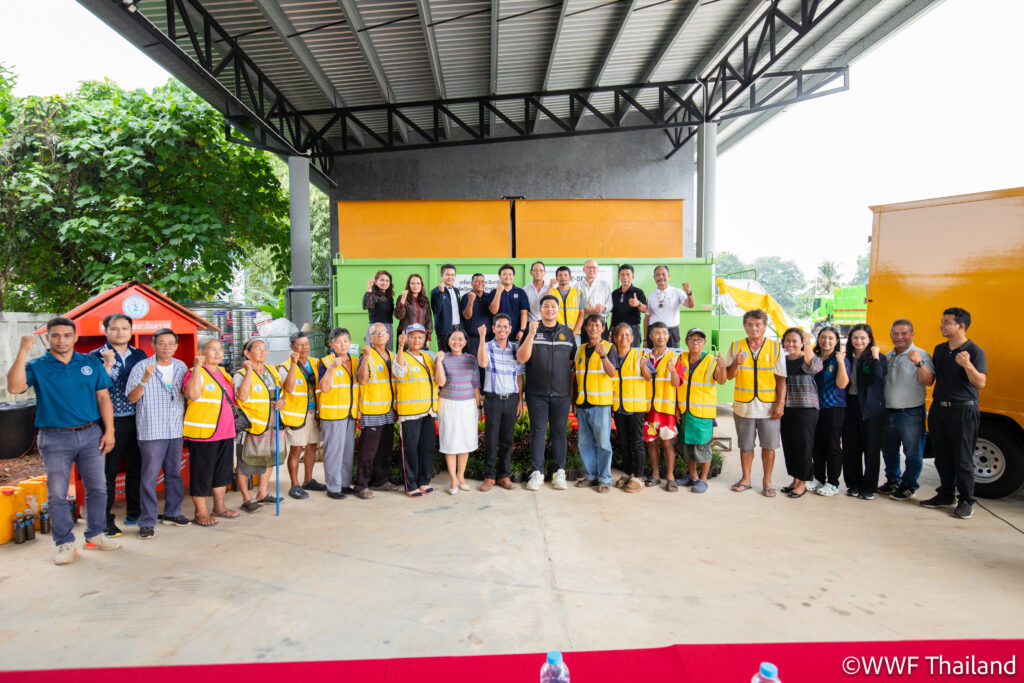
Together, these initiatives demonstrate how municipal recognition, practical training, and stronger coordination can elevate informal waste pickers as essential contributors to urban solid waste management. By combining legal guidance, occupational health support, and livelihood benefits, WWF- Thailand and its partners are helping to integrate Saleng into circular economy strategies that benefit both communities and the environment.