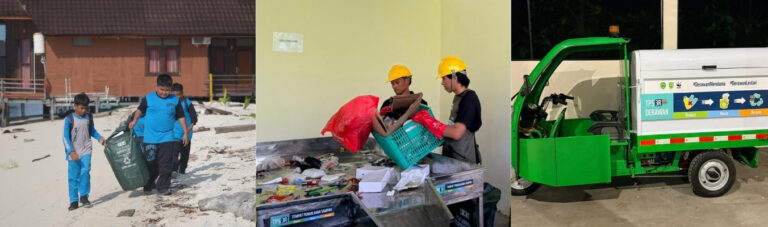
Derawan Village in East Kalimantan is one of the main gateways to marine tourism, renowned for its rich marine ecosystems. However, the rapid growth of tourism has also increased waste management challenges, particularly because the village is located within a marine conservation area.
In response, the Berau Regency Government and the Derawan Village Government, in collaboration with WWF-Indonesia, initiated the development of an integrated waste management system through the MRF. This initiative aims to preserve the environment, encourage active community participation, and support sustainable marine tourism. The programme is expected to serve as a waste management model for other small islands across Indonesia in promoting responsible marine tourism practices.
The Challenges
Managing waste in a small, isolated marine ecosystem presents distinct logistical and ecological barriers:
High Generation & Infrastructure Gaps: Coastal communities generate an estimated 11 tonnes of waste per year without traditional, formal collection infrastructure. Daily waste generation in Kampung Derawan reached approximately 572.95 kg in 2023.
High Ocean Leakage: Prior baseline surveys indicated that up to 40% of the generated waste ended up directly in the ocean, threatening local marine life such as sea turtles.
Logistical Constraints: Limited physical space and complex transport requirements hamper regular waste removal from the island to mainland processing facilities.
Waste Composition Profile: Data from a May 2023 baseline assessment shows that non-household sources generate more daily waste (318 kg/day) than households (255 kg/day). The primary components include:
In response to these challenges, the Berau District Government and the Kampung Derawan Local Government, in close collaboration with WWF-Indonesia and private sector partners, launched an integrated waste management system. Centred around the newly established TPS3R (Reduce-Reuse-Recycle) facility named “RUPIAH” (Rumah Pilah Sampah Derawan / Derawan Waste Sorting House), the initiative transforms the island’s traditional waste stream into a circular model.
How the System Works
Source Segregation: Households and non-household entities (businesses, hotels, tourism operators) sort their waste directly at the source.
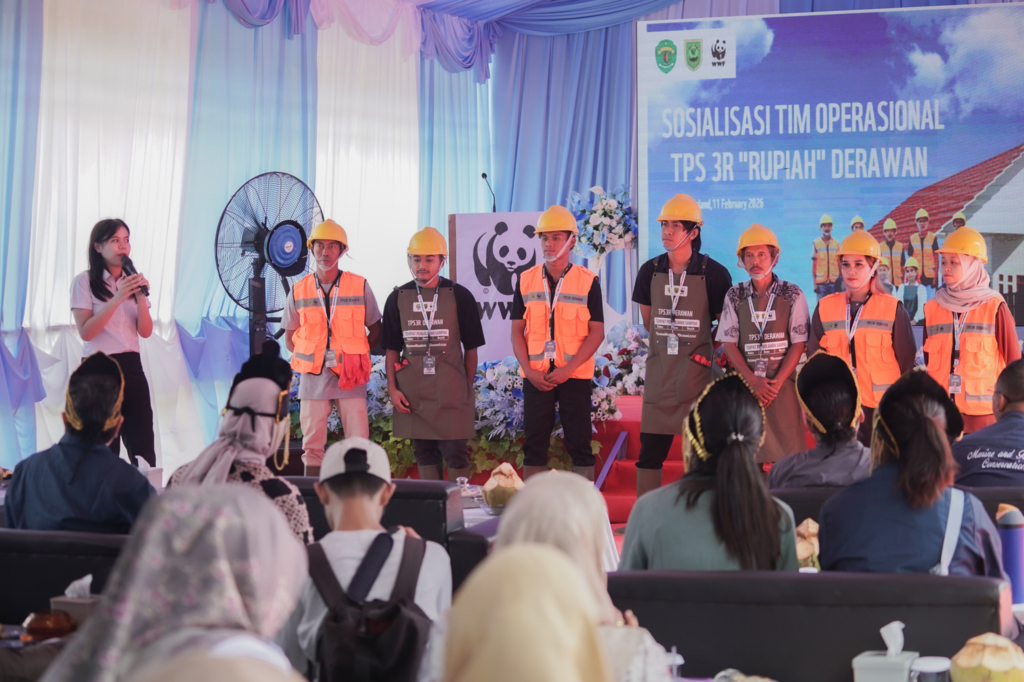
Collection: The dedicated TPS3R operational team collects and transports sorted waste from across the island.
Processing at TPS3R:
Organic waste is converted into compost or processed utilising maggot cultivation.
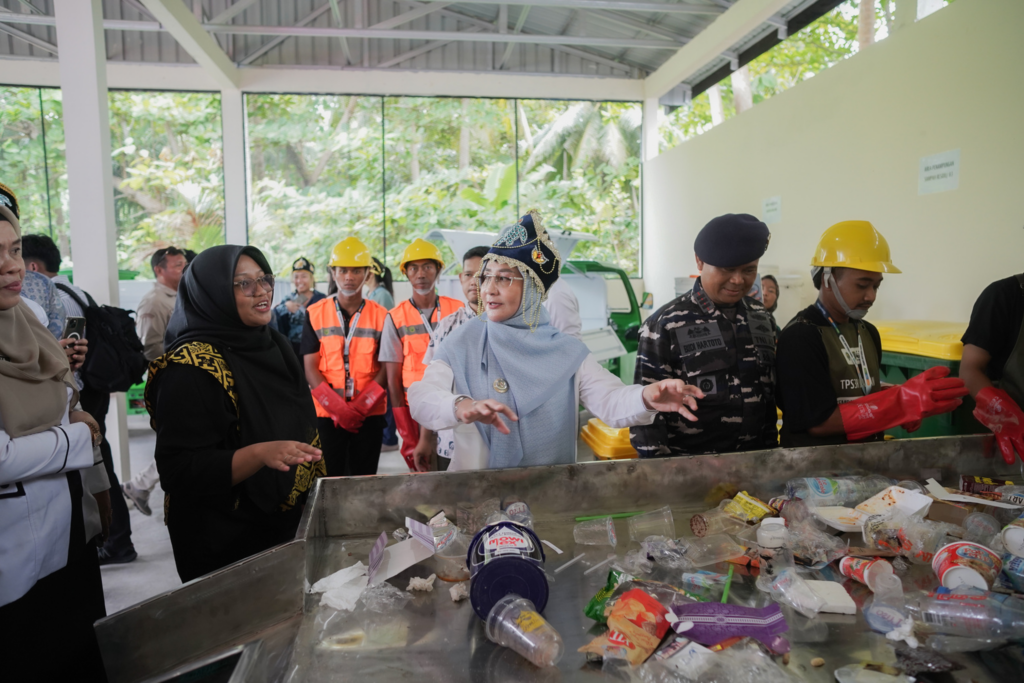
Inorganic materials are sorted and processed using an on-site bailing press machine to condense plastic and recyclables.
Mainland Transfer & Circular Economy: Processed materials are sent onwards to commercial recycling partners (pengepul), while unavoidable residual waste is transported to the mainland Tanjung Batu Landfill (TPA), minimizing any environmental leakage on the island.
Integrated Waste Management with the Community in Conservation Area
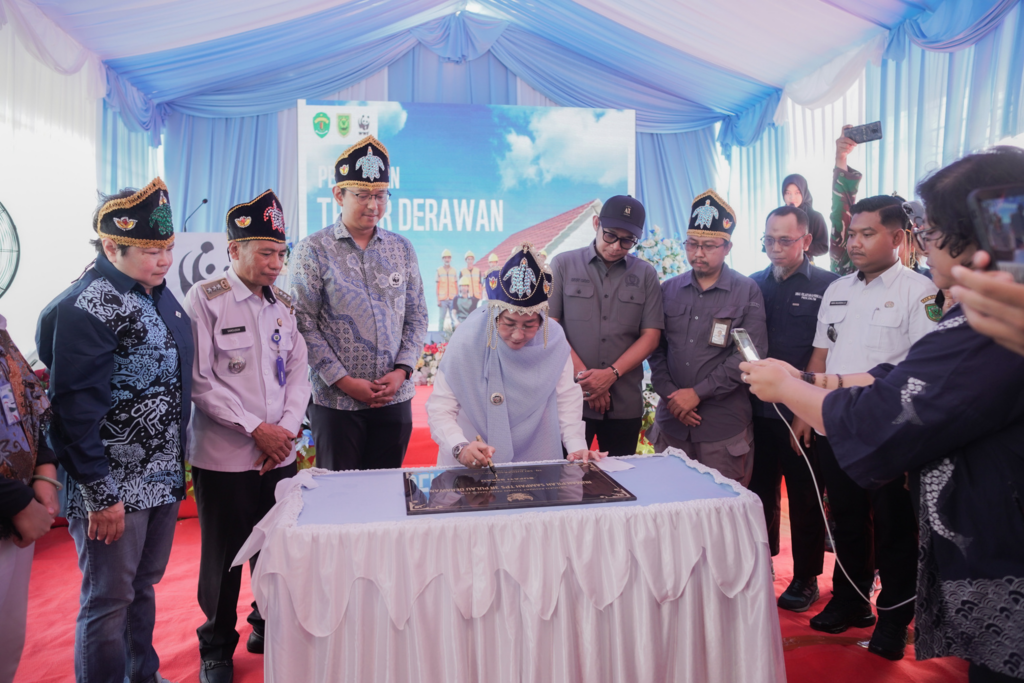
Inaugurations of the Rupiah MRF by the Regent of Berau
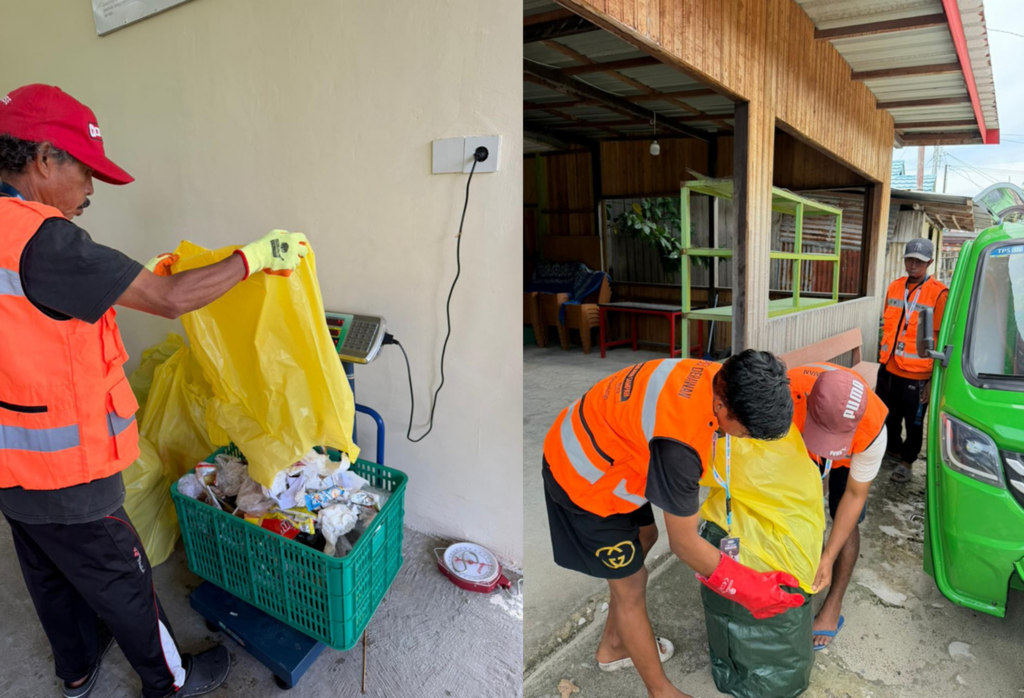
The MRF infrastructure and the operational teams collect waste from the households