FAO, IMO | Fishing Gear Recycling Technologies and Practices
The recycling of fishing gear contributes to more sustainable fisheries by supporting responsible fishing gear stewardship. It achieves this by preserving and prolonging the use of valuable gear materials and components, incentivizing the collection and recovery of damaged and end-of-life fishing gears and abandoned, lost or otherwise discarded fishing gears, and by providing a valuable […]
World Bank, PROBLUE | People and Plastics: The profile, vulnerabilities, and role of informal waste workers in addressing marine plastics pollution
Highlighting a critical yet frequently overlooked component of Southeast Asia’s marine conservation efforts, the World Bank synthesis report, examines the complex realities faced by informal waste workers across Indonesia, the Philippines, and Viet Nam. While these frontline workers collect and recover a substantial portion of the region’s recyclable plastic, preventing vast quantities from leaking into […]
WWF-Viet Nam | Guide to Reduce Plastic Waste in School: An Education Program in Hue City
This document was compiled within the framework of the project “Hue – Plastic Reduction City in Central Vietnam” (TVA project) of the World Wide Fund for Nature in Vietnam (WWF-Vietnam) with contributions of time and expertise from many individuals and organizations. Hue City has developed a plan to raise awareness, change behavior, and respond to single-use […]
WWF China | Guide to Plastic-Free Cities in the Yangtze River Delta—Case Study of Yangzhou Plastic-Free City
Yangzhou’s “Plastic-Free Nature” Campaign aims to address the growing issue of plastic pollution, particularly marine microplastics. Recognizing the environmental and health threats posed by plastic waste, China has taken significant steps in plastic pollution control, including national policies and local initiatives. In April 2020, Yangzhou partnered with WWF to launch the “Plastic-Smart Cities” initiative, becoming […]
WWF | Plastic Policy Summit Report: Domestic Solutions for a Global Problem
Building a Vision for a Plastic Pollution-Free Future Plastic waste in nature is an urgent issue with major adverse impacts on wildlife, ecosystem health, the integrity of food supplies, communities, and livelihoods. Currently, the equivalent of one dump truck’s worth of plastic enters our oceans every minute. By 2040, plastic production is predicted to double […]
WWF | Regulating High-Risk Plastic Products

The UN Environment Assembly’s decision, in March 2022, to start international negotiations on a plastic pollution treaty marked a watershed moment. Following a successful first session of the Intergovernmental Negotiation Committee (INC), states and other stakeholders are now committing to paper what the new treaty should contain. As states prepare for the INC’s second session […]
WWF | Breaking Down High-Risk Plastic Products
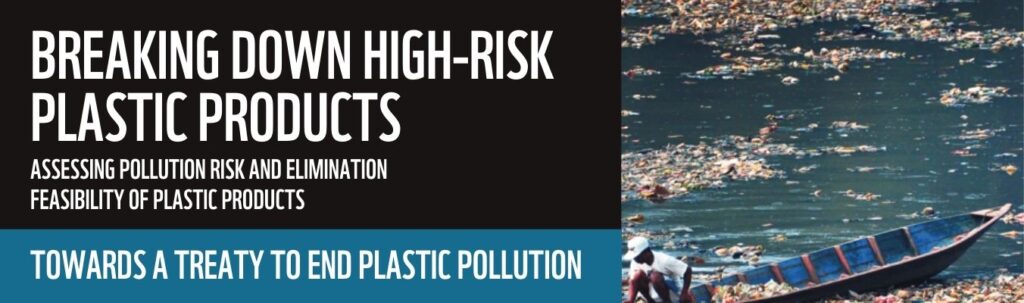
The UN Environment Assembly’s decision, in March 2022, to start international negotiations on a plastic pollution treaty marked a watershed moment. Following a successful first session of the Intergovernmental Negotiation Committee (INC), states and other stakeholders are now committing to paper what the new treaty should contain. As states prepare for the INC’s second session […]
C40 | Inclusive Waste Management in Cities

Analysis and recommendations for city-led actions to making waste management value chains more inclusive, green, and socially just. Informal waste workers: key players in solid waste management within cities, and yet still under recognized Informal waste pickers collect between 50 and 100% of cities’ waste in the Global South, contributing significantly to environmental and social […]
APEC Ocean and Fisheries Working Group | Enhancing Labor-intensive Separate Waste Collection and Utilization in APEC Economies
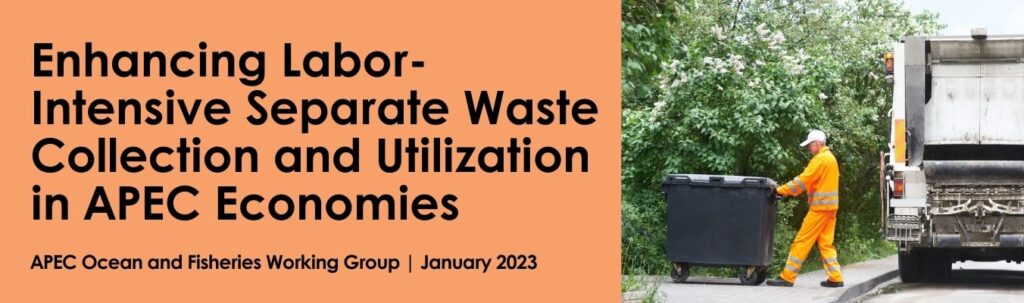
Decision-makers and practitioners often focus on technological solutions for recycling, treating and disposing of waste. However, the key to successful comprehensive waste recovery lies in collection, which accounts for 60 to 80 percent of the total disposal costs. Mistakes made here cannot be compensated for by any technology, no matter how sophisticated. This guide targets […]
Proven Practice Guide to Improve Waste COBSEA, COBSEA, UNEP | Management and Address Plastic Pollution in Southeast Asia
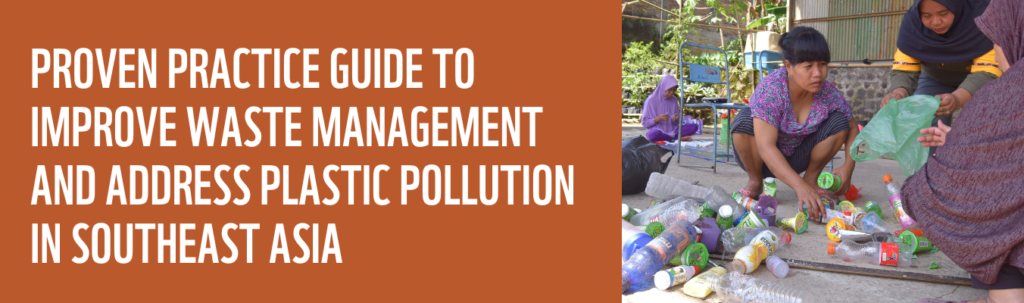
Proven Practices to Improve Waste Management and Address Plastic Pollution in Southeast Asia was codeveloped by Battelle and the Coordinating Body on the Seas of East Asia (COBSEA), along with qualitative data gathered across a select group of organizations and programs with demonstrated experience successfully designing and implementing ocean plastics pollution mitigation efforts across Southeast […]