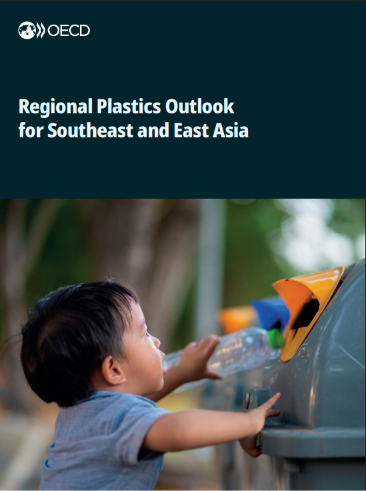
According to the OECD’s Regional Plastics Outlook for Southeast and East Asia, the ASEAN Plus Three (APT) region—comprising the 10 ASEAN Member States alongside China, Japan, and Korea—accounts for nearly one-third of global plastics use and over one-third of global plastic leakage. Without intervention, regional plastic waste generation is projected to more than double from 113 million tonnes in 2022 to 242 million tonnes by 2050. However, implementing ambitious, high-stringency policy roadmaps across the full plastic lifecycle can reduce regional plastics use by 28% and curb environmental plastic leakage by more than 95% by 2050, delivering a sustainable, circular future at a modest macroeconomic cost of just 0.8% of GDP.
Plastics use across the APT region grew nearly nine-fold between 1990 and 2022, reaching 152 million tonnes. In 2022, the region generated 8.4 million tonnes of plastic leakage into the environment, representing over one-third of the global total. Under existing policies, plastics use will escalate to 280 million tonnes, waste will reach 242 million tonnes, and annual leakage will surge to 14.1 million tonnes by mid-century. A comprehensive policy mix across the lifecycle can boost average recycling rates to 54%, cut mismanaged waste by 97%, and virtually eliminate regional plastic leakage by 2050.