WWF-Viet Nam | Plastic Pollution Comic Book

For the last decade, plastic pollution has become one of the biggest challenges for our environment. Our biodiversity, natural habitats, and the lives of many creatures, especially those living in the oceans and on islands, are at risk. To commemorate World Environment Day and World Children’s Day, WWF-Viet Nam produced the “Mystery on Big Island” comic for […]
WWF | WWF’s Extended Producer Responsibility (EPR) Project
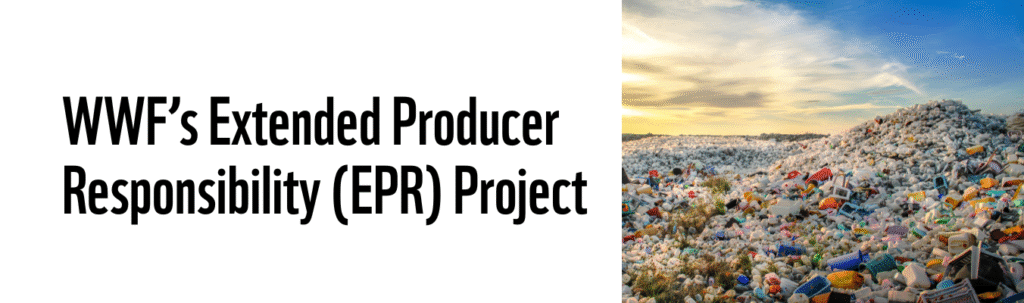
WWF has identified the Extended Producer Responsibility (EPR) scheme as a critical policy tool with a track record to hold manufacturers accountable for their plastic products and packaging’s end-of-life impacts, as well as to encourage holistic eco-design in the business sector. WWF tackles the root of plastic pollution. Together with our partners we developed an […]
ESCAP | Changing Sails: Accelerating Regional Actions for Sustainable Oceans in Asia and the Pacific
The oceans and its resources are the lifelines of Asia and the Pacific. While being the resource for some of the region’s key economic sectors, such as seaborne trade, fisheries and tourism, oceans are also the source of well-being, culture and identity for thousands of coastal communities. The conditions of the oceans are inextricably linked […]
WWF | The Business Case for a UN Treaty on Plastic Pollution

Plastic Pollution is a global problem that requires a global solution. Currently, more than 11 million metric tons of plastic are flowing into the ocean each year. Despite the exponential growth in voluntary initiatives and national regulations to tackle plastic pollution, there is no sign that leakage rates are slowing. A coordinated global response in […]
GIZ | Waste Flow Diagram Toolkit
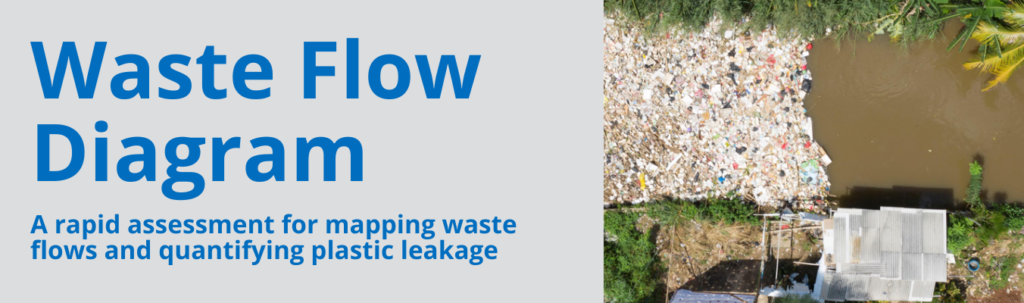
GIZ, University of Leeds, Eawag Aquatic Research, and wasteaware created this Waste Flow Diagram toolkit, which is an excel-based model allowing users to perform a rapid assessment of municipal solid waste flows within a city or municipality. The tool maps these waste flows using Sankey diagrams and quantifies the plastic waste that is emitted from […]
WWF | Sustainable Retailers Scorecard 2019

WWF-Malaysia conducted an inaugural sustainability performance study focusing on the environmental aspects of the retail industry. WWF-Malaysia conducted an inaugural sustainability performance study focusing on the environmental aspects of the retail industry that include fast-moving consumer goods (FMCG), grocery, convenience chain, health and personal in Malaysia. The Sustainable Retailers Scorecard (SRS) aims to assess the […]
WWF | Plastic Packaging in Southeast Asia and China
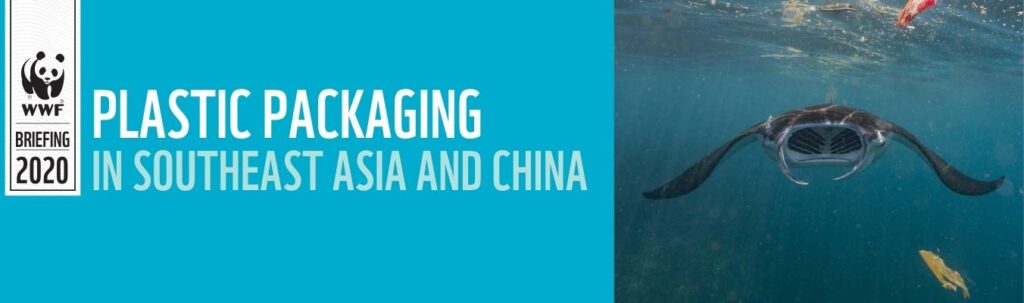
TACKLING THE PLASTIC CRISIS: Preventing waste from entering the ocean through Southeast Asa and China is key to addressing the global plastic emergency. This briefing looks at the volume of plastic packaging placed on the market in China, Indonesia, Malaysia, the Philippines, Thailand and Vietnam. As well as showing the scale of the challenge, the […]
Ocean Conservancy, Trash Free Seas Alliance | Plastics Policy Playbook: Strategy for a plastic-free ocean
Addressing the global marine debris crisis with targeted policy mechanisms, the Plastics Policy Playbook: Strategies for a Plastic-Free Ocean provides a comprehensive blueprint for national and sub-national leaders striving to eliminate ocean plastic pollution. By bridging the critical gap between waste collection economics and policy intervention, this actionable guide outlines systemic solutions ranging from Extended […]
WWF-Kenya | Plastic Waste Management: A Training Manual for Waste Managers and Recyclers in Kenya
Designed to transform an escalating environmental crisis into a catalyst for economic growth, the Plastic Waste Management Training Manual developed by WWF-Kenya serves as a comprehensive roadmap for waste managers and recyclers along Kenya’s coast. By bridging the gap between informal collection practices and a formalised circular plastic economy, this practical guide empowers local communities, […]
WWF Position: Extended Producer Responsibility (EPR) For Plastic Packaging

Plastics pollution has been recognized as a global crisis. This cross-cutting issue touches on several of WWF’s conservation priorities, including Oceans, Freshwater, Wildlife and more. To address this crisis, the WWF network has set a goal of “No Plastic in Nature by 2030” which aims to stop the flow of plastics into nature by eliminating […]