Situated on Mexico’s Pacific coast along the sweeping Bay of Banderas, Puerto Vallarta is a world-renowned tourism destination framed by the lush Sierra Madre mountains and rich marine ecosystems. The municipality has a resident population of roughly 291,800 people according to the 2020 census, and the greater metropolitan area surpassed 578,000 inhabitants in 2025. As one of Mexico’s most important tourism hubs, Puerto Vallarta welcomed 6.26 million visitors in 2025, generating substantial seasonal pressure on local services and waste systems.
On June 5th, 2026, Puerto Vallarta became the third city in Mexico to join WWF’s commitment in taking action against plastic pollution and protecting its coastal environment and vibrant tourism industry. Puerto Vallarta aims to strengthen local capacity to sustain a circular economy for plastic waste, setting a target to reduce plastic leakage to nature.
Despite its eco-tourism ambitions, Puerto Vallarta faces severe waste management challenges driven by its rapid urban growth and massive seasonal tourism influxes. The overwhelming demand for single-use products, particularly packaged food and single-use water bottles, heavily strains local collection and sorting infrastructure. Furthermore, the city’s unique hydrographic landscape, characterised by steep coastal terrain and major rivers like the Cuale, Ameca, and Pitillal that flow through urban centers into the ocean, creates direct pathways for unmanaged waste to wash into the bay during heavy seasonal rains.
This results in significant macro- and micro-plastic accumulation along its beaches and nearshore waters, threatening fragile marine life, local fisheries, and the very natural beauty that sustains the region’s economy. Previous beach clean-up campaigns have also revealed that plastic waste accounts for majority of the total waste collected, and there is a documented presence of microplastics in coastal sediments, especially in high-use recreational areas.
The implementation will be led by the Puerto Vallarta Municipal Government, mainly undertaking on plastic leakage assessment and supporting the development of a local action plan. The current work is located in the Bay of Banderas, a large, deep bay on the Pacific coast of Mexico, focusing on the issue of ghost nets in the coastal areas. Ghost nets can trap and kill marine life, destroying coral reefs, and polluting the ocean with plastics. The aim is to support the local community whilst protecting local biodiversity in the areas, especially since Puerto Vallarta is known for their aquatic animals as one of their main tourist attractions.
The implementation will be led by the Puerto Vallarta Municipal Government, mainly undertaking on plastic leakage assessment and supporting the development of a local action plan. The current work is located in the Bay of Banderas, a large, deep bay on the Pacific coast of Mexico, focusing on the issue of ghost nets in the coastal areas. Ghost nets can trap and kill marine life, destroying coral reefs, and polluting the ocean with plastics. The aim is to support the local community whilst protecting local biodiversity in the areas, especially since Puerto Vallarta is known for their aquatic animals as one of their main tourist attractions.
One of the first activities under the collaboration between Puerto Vallarta Municipal Government and WWF-Mexico was an exhibition at Puerto Vallarta Airport in June 2026. The exhibition featured an augmented reality experience where visitors could scan a photograph with their mobile phones to visualise a pile of PET bottles representing half a tonne of uncompacted PET waste . This visual experience was enhanced with an audio explanation available in both English and Spanish to raise public awareness around environmental leakage.
Priority Interventions:
- Improving collection through a plastic waste flow analysis to determine the areas of highest leakage for intervention through multi-stakeholder collaboration together with the local government, private sector, informal waste sector, and collection and sorting hubs.
- Strengthening end markets through the mapping of existing efforts to use locally sourced recycled plastics as well as validating the performance, quality standards, and processing needs.
- Support long-term commitment of the government through the development of a practical toolkit for coastal collection and end-market development to build long-term municipal capabilities and governance for replication while facilitating the co-creation of a roadmap for multi-stakeholder collection and recycling as well as knowledge and experience sharing with other cities.
Puerto Vallarta Joined the Plastic Smart Cities Programme
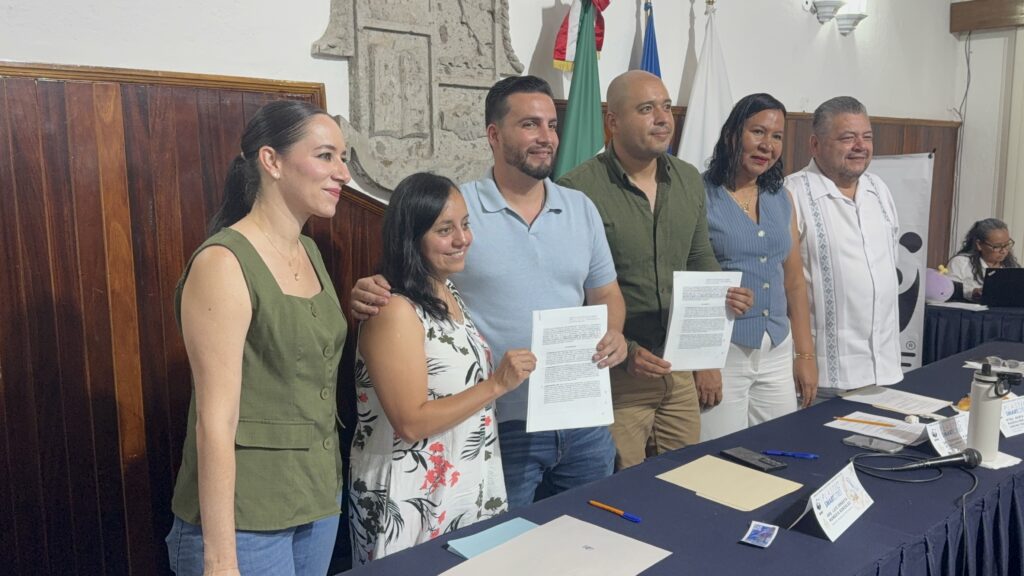
On June 5, 2026, the Municipality of Puerto Vallarta officially signed a Declaration of Intent to launch the Plastic Smart Cities.
Augmented Reality Exhibition: PET Bottles
The interactive exhibition of massive plastic bottle waste at the Puerto Vallarta Airport.